

Ever wondered about exploring a place where the sky is closer, and Himalayas surround you, a place where silence is the way of life, a place you feel, absorb, and carry with you long after the journey ends? Tibet is your answer. Regarded as the ‘Roof of the World’ and the ‘Third Pole’, Tibet is an ultimate destination that offers a rare blend of varied geographical diversity, spiritual depth, dramatic landscapes, and ancient traditions, all in one. For a modern traveler seeking purposeful travel experiences, Tibet offers a journey unlike any other. And this detailed Tibet travel guide includes everything you need to know before planning your journey to Tibet.
Where is Tibet?
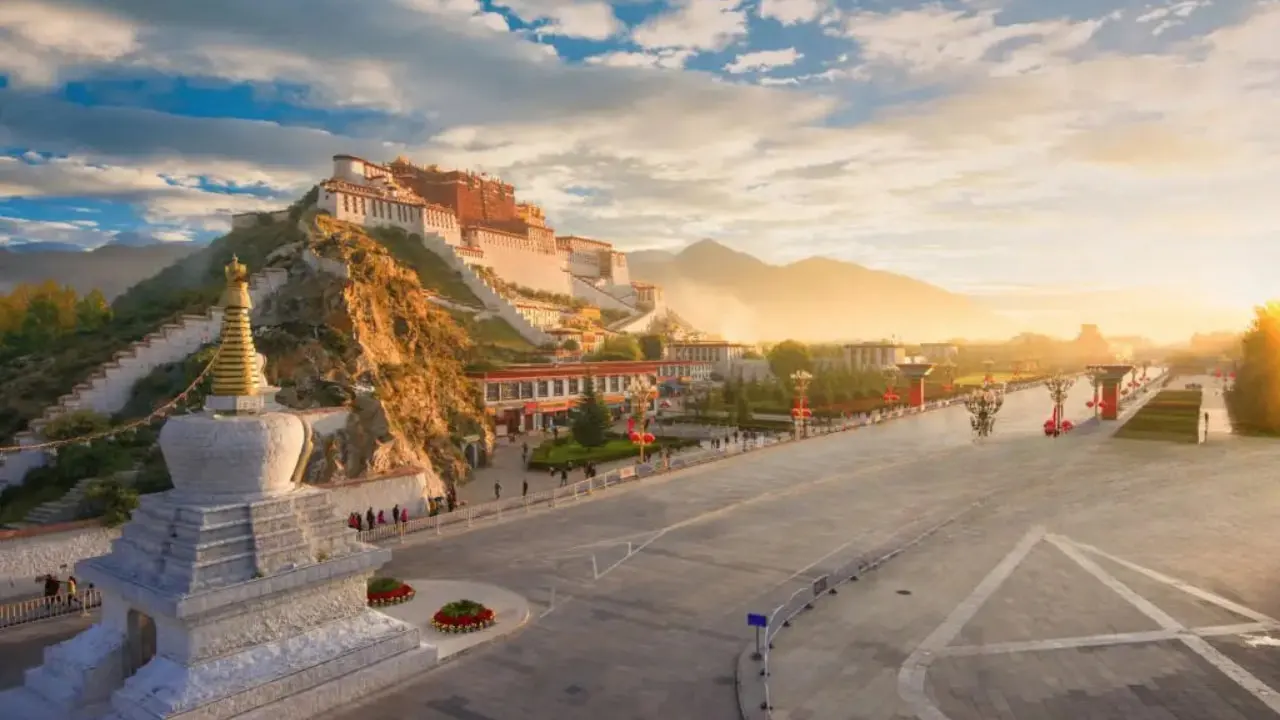
To begin, let’s first understand where exactly Tibet is located. It is a high-altitude region located on the highest and largest plateau in the world, the Qinghai-Tibetan Plateau, which averages over 4,500 meters (14,800 feet) above sea level.
Tibet shares its borders with Nepal, India, Bhutan, Myanmar, and mainland China. It is also bordered by the massive Himalayas. Widely regarded as the Tibet Autonomous Region (TAR), its capital lies in Lhasa. The high altitude of Tibet is what has earned it the title of the ‘Roof of the World’ and it predominantly shapes the weather, architecture, as well as the lifestyle of people living here.
Why Visit Tibet in the Age of Conscious Travel?
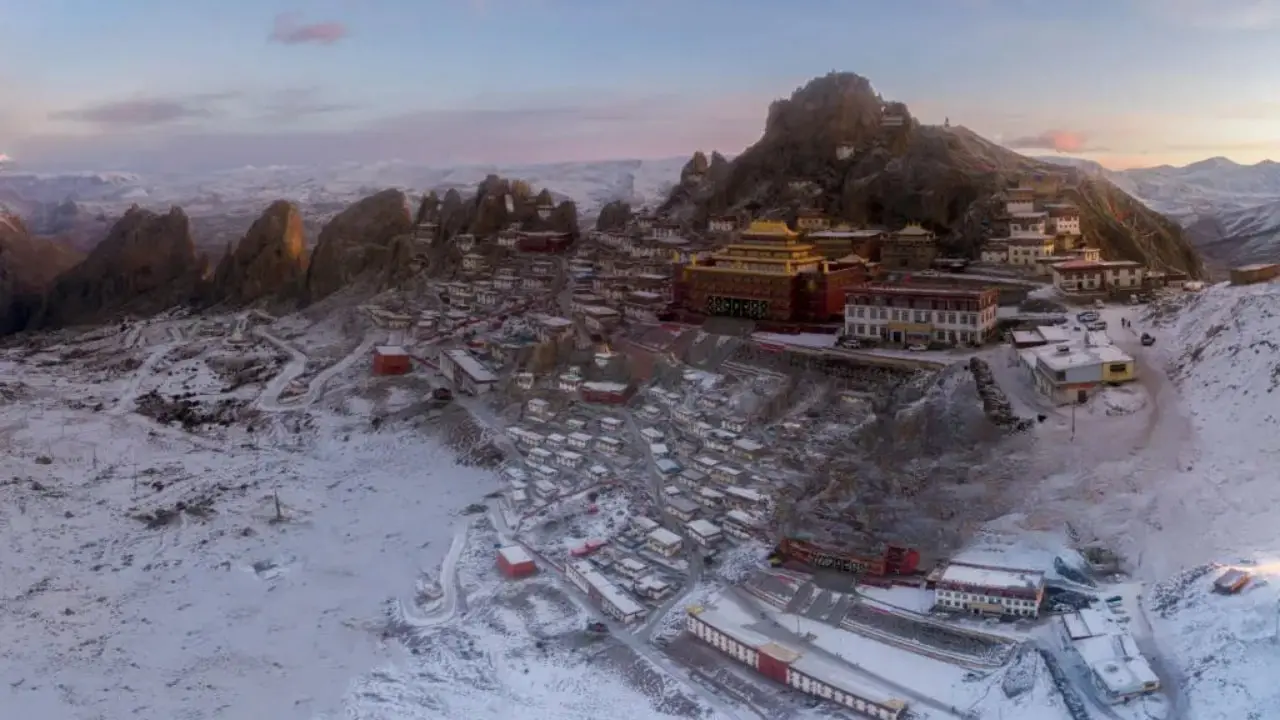
The stunning Himalayan landscapes surrounding Tibet are undoubtedly one of the major reasons why so many travelers are attracted to visiting the country. However, is there any other reason beyond this to visit Tibet? Indeed, there is. The first of the many reasons being the quiet and peaceful getaway that it offers all thanks to the high-altitude landscape where the sky is closer and the hustle and bustle of your daily life far away. Also, if you are someone wanting to explore spirituality, Tibet is the best place for it as people here are strong followers of Tibetan Buddhism and spirituality lies in every nook and corner of Tibet with monasteries, mani walls, and prayer flags covering the entire high-altitude landscapes.
The peaceful monasteries and temples of Tibet, often featuring stunning Himalayan views, allow you a quiet space to disconnect with the world and reconnect with your inner self.
Best Time to Visit Tibet:
The Tibetan plateau has something to offer during every season. However, the golden period to visit Tibet are undoubtedly the months of Spring (March to May) and Autumn (September to November). But you will see a higher number of crowds during these seasons.
Spring season in Tibet features clear skies with perfect views of the Himalayas along with mild temperatures. You will see the landscapes dotted with local flora and fauna as wildlife is highly active during this season.
In Autumn, the climatic conditions are similar to that of Spring with clear skies and moderate temperatures. You might also start seeing the Himalayas starting to get covered by snow by the end of autumn if you are lucky.
For those wanting to explore a snow covered Tibet with less crowd, you can also visit Tibet during winter (December to February). During this adventurous season, the skies are pristine, prices are lower, and Lhasa is filled with thousands.
Tibetan pilgrims, offering the most authentic cultural experience.
It is not recommended to explore Tibet during monsoon (June to August) as the region experiences frequent rainfall and cloudy weather which can obscure mountain views. Also, the hilly region becomes slippery which might increase chances of injury. The only highlight is that you will see the entire plateau covered with lush greenery.
Know Before You Go:
1) Visa and Entry Requirements:
Navigating the visa and entry requirements in Tibet is slightly challenging as you need a valid visa as well as travel permits to enter the country. The visa is different based on where you enter from. If you are traveling from any country except Nepal, you need a valid passport and a Chinese Visa, mostly an ‘L’ visa, obtained from a Chinese embassy or consulate in your home country. Remember, you need to secure the ‘L’ visa from your home country before even booking your tickets. Meanwhile, if you are entering Tibet from Nepal, you'll need a Chinese Group Visa, obtained via the embassy in Kathmandu. Refer to this table for better understanding:
Now, as Tibet is a restricted region, once you secure your visa, you need to apply for a permit to enter Tibet. There are three types of permits:
- Tibet Travel Permit (TTP): mandatory for all travelers and required to board any flight or train to Lhasa.
- Alien Travel Permit: for restricted areas outside Lhasa such as Everest Base Camp, Shigatse, and Mount Kailash
- Military Permit: for border and remote regions and is not available easily due to security reasons
Keep in mind that securing any of the visa or permits is not possible on your own as independent travel is restricted in Tibet. So, hire a reliable local travel agency like Beyond the Limits Treks and Expeditions who can help you with the visa navigation process.
2) Navigating Travel Regulations:
As mentioned above, solo travel is strictly not allowed for foreign travelers in Tibet. This is done mainly due to strict Chinese government regulations focused on political control, cultural preservation, and safety of the travelers and the country. Due to this, all travelers are required to book tours with registered agencies, guides, and drivers for a permit. This ensures adherence to rules, prevents negative media, and manages high-altitude risks as you have a guide with you.
3) Currency:
The official currency of Tibet is the Chinese Yuan (CNY), also known as the Renminbi (RMB). You will find ATM in major cities like Lhasa, and it is recommended to withdraw cash from here so that you don’t struggle in your journey ahead.
4) Dealing With Altitude:
Given the high-altitude region of Tibet, it is expected that you will easily cross an altitude of 3,500 meters to even 5,000 meters while exploring Tibet. The capital, Lhasa, itself sits at an altitude of 3,650 meters.
And this high-altitude poses a high risk of altitude sickness which can start with basic symptoms like nausea, vomiting, loss of sleep, but can quickly transform into life threatening conditions like High Altitude Pulmonary Edema (HAPE) and High Altitude Cerebral Edema (HACE).
Thus, it is very important that you acclimatize well while in Tibet. Ascend slowly and don’t rush to explore. Preferably, spend the first 2 to 3 days of your journey in Lhasa before ascending to higher altitudes. Drink at least 3 to 4 liters of water every day and avoid drinking alcohol or caffeine as it can dehydrate you and accelerate altitude sickness. You can also discuss preventive medicine like Diamox (Acetazolamide) with your doctor before the trip. Worry not as in worst case scenario, your guide will always carry emergency oxygen.
Famous Tibet Tour Packages:
Places to See in Tibet:
1) Lhasa: The City of Gods:
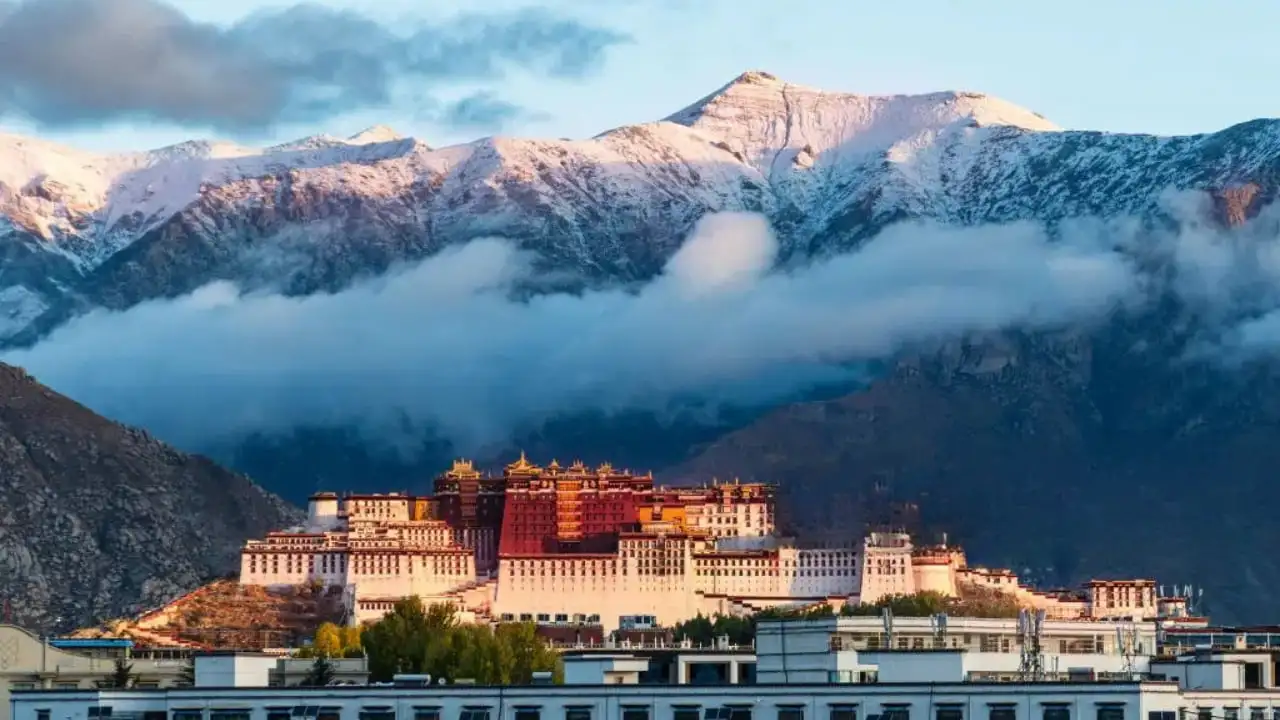
The spiritual heart of Tibet, Lhasa is the entry point as well as the spiritual epicenter of your journey to Tibet. The main highlight of Lhasa is the Potala Palace which is a UNESCO World Heritage Site. Perched atop the Red Hill, this used to be the former winter residence of the Dalai Lamas. Now, it is a fortified monastery and a powerful national symbol with stunning architecture. Another highlight is the Jokhang Temple which is the most sacred temple in Tibet which holds the Jowo Shakyamuni statue which is believed to have been blessed by the Buddha himself. The temple is surrounded by Barkhor Street where you can join the locals for a Kora (circumambulation).
A unique experience you can have is at the Sera Monastery where the monks gather in the courtyard to engage in energetic, theatrical debates, punctuated by dramatic gestures and loud claps every weekday afternoon as a way of imparting monastic knowledge.
2) Sacred Lakes of Tibet:
Some of the holiest sites of Tibet lie in the form of sacred lakes like Yamdrok Lake, Namtso Lake, and Basum Tso. These turquoise alpine lakes are surrounded by snow-capped peaks and open skies, and they offer moments of stillness.
The Yamdrok Tso, also known as the ‘Coral Lake’ is a stunning turquoise lake which keeps changing its shade throughout the day. This lake is best viewed from high altitude regions and it is perfect for photography and mindful travel.
Not to forget the iconic Lake Mansarovar surrounding Mt. Kailash which is situated at an altitude of 4,590 meters. A dip in this lake is considered to cleanse sins and grant enlightenment to the visitors.
3) Mount Kailash:

Referred to as the center of the world by four religions (Hinduism, Buddhism, Jainism, and Bon), Mt. Kailash can be the spiritual highlight of your visit to Tibet. This peak is regarded as the home of hindu deity Lord Shiva. This sacred 6,638 meter peak with its striking black rock and symmetrical shape is surrounded by the sacred Mansarovar Lake, making it a powerful spiritual landmark that has never been successfully climbed. This peak has also challenged and amazed science for years now.
You cannot climb Mt. Kailash, but you circumambulate it, which is known as Kora. Thus, the trek to Mt. Kailash is often regarded as the Kora Trek. It can be a life-defining physical and spiritual accomplishment for you as a traveler.
4) The North Face of Mt. Everest:
Many might not know it, but Tibet is also home to the north face of Mt. Everest. You can get spectacular views of Mt. Everest from the north base camp located at 5,200 meters. Also, this side is much more accessible as compared to the south base camp from Nepal as you can drive by vehicle via a road from China's G318 highway to get iconic views of Everest's north face and Rongbuk Monastery (world's highest). You will also spot the world’s highest post office located here.
5) Rongbuk Valley and Monastery:
A dramatic glacial valley located on the north side of Mt. Everest in Tibet, the Rongbuk Valley is home to the highest monastery in the world, the Rongbuk Monastery. It also features the Rongbuk Glacier which is a massive, 26-kilometer-long glacier system with spectacular ice towers, bridges, and caves. From Rongbuk Valley, you can get stunning views of Everest, diverse glacial landscapes, and Tibetan cultural immersion.
Other Things to do in Tibet:

Besides sight seeing, there are other adventures that you can do in Tibet. This includes trekking, cycling, motorbiking, and mountain climbing. These activities allow you to experience the landscapes of Tibet in depth as well as to understand the culture.
1) Trekking in Tibet:
Trekking in Tibet means you get to go to the heights of the world’s highest plateau and explore the untouched corners of the country deeply etched in cultures and traditions. The trekking routes here are formed in a way that allows you to traverse through the unique flora and fauna, varied landscapes, authentic life in the Himalayas, crystal clear lakes, and sacred ancient monasteries. Along with your group members and trekking guides, the snowcapped mountains will be your companions while trekking in Tibet. The most popular trek here is to reach the north base camp of Mt. Everest. While there is transportation to reach here, you can also take the trekking route. Despite being on an altitude lower than the South Base Camp located in Nepal, this trek is more challenging. However, the rewards are unmatched and similar if not better than that of the Everest Base Camp trek. You can also explore the Rongbuk monastery and the highest post office in the world located here.
Another popular trek is the Kora Trek which takes you to Kailash Mountain via Simikot where hundreds of other pilgrims will join you to experience the wonders of Kailash.
2) Tibetan Culture and Way of Life:
The culture and way of life in Tibet is predominantly shaped by Tibetan Buddhism and its teachings. Everything starting from daily life, art (Thangkas, mandalas), architecture (monasteries), music, and festivals has a hint of Tibetan Buddhism in it. The people here will welcome you with their warm hospitality, and you will experience life full of compassion, resilience, and harmony with nature as you explore the traditional life with a hint of urbanization. Throughout your Tibet exploration, you will be surrounded by prayer flags, mani walls, spinning wheels, and monasteries which are not just tourist attractions but an expression of faith of the locals.
3) Food in Tibet:
For the fans of exploring new cuisines around the world, the Tibetan cuisine will not disappoint you as the food items here provide warmth, fuel, and simple yet flavorful dishes that will satiate your taste buds. The dishes are highly influenced by the surrounding countries like India, Nepal, Bhutan, and China. The rugged yet nourishing food is best suited to sustain life at high altitudes.
The staples of Tibetan cuisine include dishes like roasted barley flour (Tsampa) which is the cornerstone of the Tibetan diet mixed with butter tea, rich noodle soups (Thukpa, Thenthuk), meat (yak, mutton, goat), dumplings (Momos), and dairy products (yak butter, cheese).
You will also find unique Tibetan version of popular Nepali dishes like momo (dumplings) which are often filled with yak meat, and Thukpa (noodle soup) which is the perfect antidote against the cold temperatures of Tibet. The Yak butter tea (Po Cha) is a unique delicacy of Tibet which is salty and rich and is a part of the culture. While it can be an acquired taste, the high fat content is excellent for combating the cold and high altitude. So, it is a must try!
Travel Ethos While in Tibet:
Cultural Etiquettes:
When in Tibet, you will be exploring lots of cultural heritage sites. Thus, it is important that you stick to a set of cultural etiquettes to show your respect to the country’s culture:
- Walk clockwise (the Kora) around religious sites like monasteries
- Ask before photographing people, rituals, or monks
- Dress modestly by covering your shoulders and knees
- Avoid using flash while taking a picture
- Respect silence and sacred spaces
- Speak quietly and avoid touching religious artifacts
- Use a few basic local phrases to break the ice and show respect. A simple "Tashi Delek" (hello) goes a long way.
- Spend time in a local teahouse and simply absorb the local conversation and atmosphere.
Responsible Travel:
As a modern traveler, traveling not only comes with fun but also with a set of responsibilities. Some of them are as listed below:
- Never photograph military or police checkpoints.
- Political matters are sensitive. For safety reasons, please refrain from initiating political discussions.
- Do not carry plastic and if you do, carry out the waste and dispose of it properly.
- Embrace the ‘Leave No Trace’ principle. Do not litter, even biodegradable waste.
- When buying or taking any service, choose Tibetan owned so that the money directly benefits local Tibetan guides, drivers, and communities.
Digital Detox While in Tibet:
The internet and connectivity in Tibet are limited and restricted due to the geography as well as the political sensitivity of the region. And as a traveler, you ought to respect that. Do not try to find ways to connect and go online in places where you cannot. Instead, take this opportunity for a digital detox when instead of doom scrolling, you can do journaling, reflection, and build genuine connections.
Conclusion
Despite being a complex and sensitive region, Tibet is an unforgettable destination which challenges, humbles, and transforms you. The snippets of memories made in this Himalayan landscape will stay with you forever. In this modern age where speed and screens dominate, Tibet shows you a slower pace of life where simplicity resides in every person while also allowing you to witness the stunning panorama and cultural depth of the country.
Planning a journey to Tibet can be challenging, but at Beyond the Limits Treks and Expeditions, we help you not only navigate the intricate web of visas, permits, and high-altitude logistics, but also to experience Tibet like never before. Contact us today for your Tibet adventure!
