The Manaslu Circuit trek begins with a scenic drive from Kathmandu to Machha Khola, following the valley of the Budhi Gandaki River. The trail passes traditional villages such as Jagat, Deng, Namrung, and Samagaun before crossing the spectacular Larkya La Pass and descending to Dharapani, where the route joins the Annapurna Circuit trail.
The Manaslu Circuit Trek is one of Nepal’s most authentic and less crowded trekking adventures, circling the mighty Mount Manaslu (8,163m). Unlike popular routes, this restricted area trek offers untouched landscapes, deep Tibetan-influenced culture, and a true off-the-beaten-path experience. From the Low Valley with Paddy field lush river valleys to the dramatic crossing of Larkya La Pass (5,106m), this trek is perfect for travelers seeking adventure, solitude, and raw natural beauty.
Manaslu Circuit Trek Highlights:
Trek around the world 8th Highest Mountain Mt Manaslu(8,163m / 26,781ft
Few crowds and more wilderness
Spectacular views of the towering Manaslu mountain and other surrounding peaks, including Annapurna II, Lamjung Himal, and Himlung Himal.
Immersing in the vibrant culture of the region, with a unique blend of Nepalese and Tibetan influences.
Trekking through breathtaking landscapes that vary from lush forests to high-altitude deserts, and passing through charming traditional villages with friendly locals.
Crossing the challenging Larkya La Pass (5,106m)
Fully supported small groups or private treks
Duration
15 Days
Trip Grade
Moderate-Strenuous
These treks Require good fitness, and prior trekking experience is recommended.
Country
Nepal
Maximum Altitude
5106meters
Group Size
1-16
Starts
Kathmandu
Ends
Kathmandu
Activities
Trekking and Hiking
Best Time
September to December and March to May
Know Before You Book Manaslu Circuit Trek
The Manaslu Circuit Trek is one of the most spectacular and less crowded trekking adventures in Nepal, offering an unforgettable journey around Mount Manaslu (8,163 m/26,781 ft), the world's eighth-highest mountain. This remote Himalayan trail is considered the best alternative to the Everest Base Camp Trek and Annapurna Circuit Trek; it combines breathtaking mountain scenery, authentic Tibetan-influenced culture, traditional villages, and the thrilling crossing of Larkya La Pass (5,106m).
The trail includes several Tibetan-influenced villages, picturesque valleys, countless waterfalls, and rivers. It is a remote trekking experience that only a handful of travelers visit, making it a perfect option for anyone looking for solitude. Compared to the Annapurna & Everest Regions, the Manaslu Circuit offers untouched beauty, a real local mountain village experience, and fewer crowds, all with the view of the massive 8000-meter Mt Manaslu.
Starting from the lower hills of the Budhi Gandaki Valley, the trail gradually ascends through dense forests, terraced farmlands, and narrow gorges before opening into high alpine terrain. As you gain altitude, the landscape becomes more rugged and spectacular, leading to the crossing of the challenging Larkya La Pass (5,106m) - thehighlight of the Manaslu Circuit Trek, and one of the most rewarding viewpoints in the region.
This trek is ideal for those seeking a less crowded, off-the-beaten-path experience without compromising on scenery or cultural encounters. Manaslu Circuit lies in the Manaslu region, which is a restricted area for trekking, and you cannot trek solo in a restricted area; you have to go with a licensed local guide and go through a registered local company like Beyond the Limits Treks & Expedition.
With proper acclimatization, well-paced itineraries, and experienced local support, the Manaslu Circuit Trek is suitable for trekkers with a reasonable level of fitness who are prepared for longer days and basic mountain accommodations. In return, it offers one of the most diverse and rewarding trekking experiences in Nepal.
In Larke Pass - 5,106m
The trek offers more rewarding options than just about any other trek. One potential alternative is to take the Upper Manaslu route, a scenically spectacular and rarely taken path across the mountain. Another detour is the pathway to the magical Tsum Valley, long locked away from public view and only opened on a restricted basis in recent years. And you can also combine Tsum Valley with the Manaslu Circuit Trek if you are looking for a more challenging and culturally immersive trek experience.
Many trekkers compare the Manaslu Circuit with routes like Everest Base Camp or Annapurna Circuit. While all are incredible, Manaslu stands out for its balance of wilderness, culture, and solitude.
Unlike the Everest region, the Manaslu Circuit sees significantly fewer trekkers, allowing for a more peaceful and immersive experience. Compared to Annapurna, it remains less commercialized, with a stronger sense of untouched Himalayan life.
The combination of dramatic landscapes, authentic villages, and the rewarding crossing of Larkya La Pass makes it one of the most complete trekking experiences in Nepal. Moreover, you can also combine Manaslu Circuit with Tsum Valley, offering a deeper cultural experience with ancient monasteries, Tibetan-influenced traditions, and a rarely visited hidden valley that adds both spiritual and scenic depth to the trek.
Trek Comparison: Manaslu Circuit vs Annapurna Circuit vs Everest Base Camp
Trek Route
Max Altitude
Typical Duration
Difficulty
Crowds
Manaslu Circuit Trek
5,106m
14-16 Days
Moderate-Strenous
Low
Annapurna Circuit Trek
5,416m
10-15 Days
Moderate
Medium
Everest Base Camp Trek
5,545m
13-16 Days
Moderate-Strenous
High
Manaslu Circuit Trek Difficulty Level
Manaslu Circuit Trek is considered a moderate to strenuous level of difficulty trek and is suited for all trekkers who are physically fit. The trail involves walking 5-8 hours daily, through steep ascents and descents, rocky terrain, and high-altitude passes, including the Larkya La Pass, which sits at an elevation of 5,106 meters and is one of the most spectacular mountain passes in Nepal. So, it's important to acclimatise properly and follow a gradual ascent.
If you have previous trekking experience, it would be helpful, but it is not essential. We advise you to train yourself physically and mentally before starting on the journey to the Manaslu Circuit Trek. It's recommended to walk for 10-15 days for a couple of hours each day before you arrive in Kathmandu.
Note: If you are wondering if the Manaslu Circuit is more difficult than the Annapurna Circuit or the Everest Base Camp, then you should know that these three treks require almost the same level of physical fitness. If you can do one of the treks, you won't have much difficulty doing another.
Who is the Manaslu Circuit Trek best suited for?
This trek is a great choice for trekkers who are looking for a more remote and authentic locale life style Himalayan experience compared to the popular Everest or Annapurna regions. It is especially suitable for those who enjoy quieter trails, rich culture, and diverse landscapes. You will enjoy this trek if you are modarate feet and mountain lover
Looking for an authentic trekking experience avoiding crowds
Have previous trekking experience or are physically prepared for 6–7 hours of walking per day
Are comfortable with basic teahouse accommodations in remote areas
Are interested in Tibetan-influenced culture, monasteries, and local villages
Want a challenging but highly rewarding high-altitude trek
Previous trekking experience is helpful but not mandatory. With proper preparation, a positive attitude, and guidance from experienced trekking leaders, most physically fit trekkers can complete the Manaslu Circuit Trek.
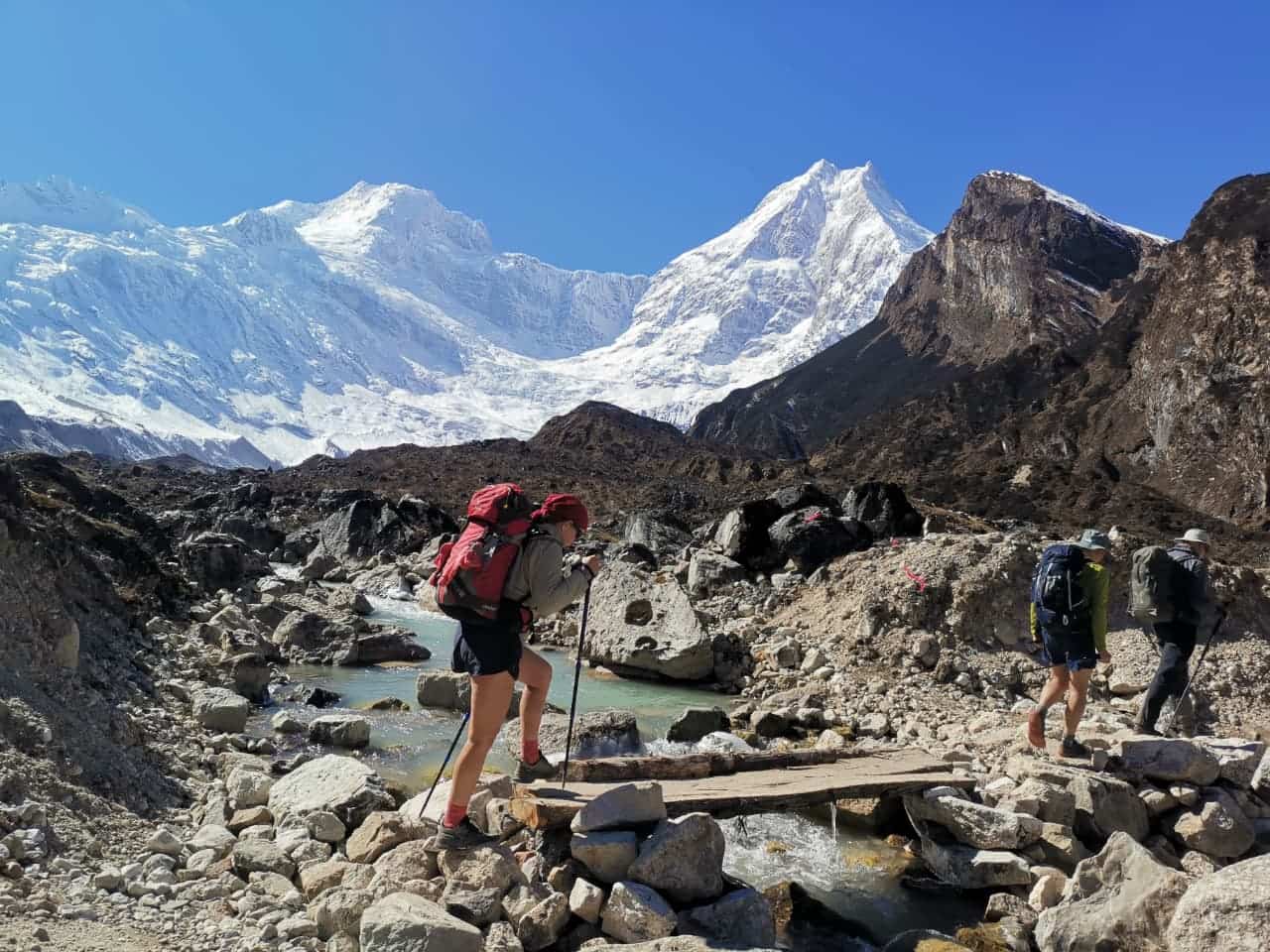
On the way to Pungyen Gompa from Shyala
Why Manaslu Circuit Trek with Beyond the Limits Treks & Expedition?
Beyond the Limits Treks team members are mostly born and raised in the Manaslu region; we are very familiar with the region, Landscapes, people, culture, and have deep knowledge about the region. We could provide various alternative options and side walks to you that many trekking agencies do not know in detail. Here are a few points that make us different than other companies you find on the internet;
Local trekking company operating since 2000
Local Licensed Trekking Guides and helpful porters from the Manaslu region
Fully organized restricted-area permit management
Small group, private trekking and solo trekking options
Satellite communication for remote trekking safety
Certificate of Achievement after completing the trek
Our goal is not only to help you complete the Manaslu Circuit Trek but to ensure you experience the culture, landscapes, and people of the region in the most meaningful way possible.
Why Choose This 15-Day Manaslu Circuit Trek Itinerary?
The Manaslu Circuit Trek is one of Nepal's most rewarding high-altitude adventures, but choosing the right itinerary can make a significant difference to your overall experience. Our carefully designed 15-day Manaslu Circuit Trek itinerary focuses on proper acclimatization, cultural immersion, safety, and maximizing mountain views rather than rushing through the trail.
One of the major advantages of this itinerary is the overnight stay in Shyala Village. Unlike many standard itineraries that continue directly to Samagaun, spending a night in Shyala allows trekkers to gradually adapt to the altitude while enjoying some of the most spectacular mountain scenery in the entire Manaslu region. From Shyala, you can enjoy breathtaking views of Mount Manaslu, Himal Chuli, Ngadi Chuli, Peak 29, and the impressive Pungen Glacier.
The itinerary also includes a dedicated acclimatization hike to Pungyen Gompa on the same day to Samagaun, which plays an important role in preparing trekkers for the challenging crossing of Larkya La Pass (5,106m). With this itinerary, you will visit both Pungyen Gompa and Manaslu Base Camp,which offer unforgettable views, making your trek more adventurous and memorable.
Unlike shorter itineraries that rush through the region, this route follows a gradual ascent through traditional villages such as Jagat, Deng, Namrung, Shyala, Samagaun, and Samdo. This helps reduce the risk of altitude-related issues while allowing more time to experience the rich Tibetan-influenced culture, ancient monasteries, prayer walls, and authentic mountain lifestyle that make the Manaslu region unique.
With proper acclimatization, experienced local guides, carefully planned trekking days, and the unforgettable crossing of Larkya La Pass, this itinerary offers one of the safest, most scenic, and rewarding ways to experience the Manaslu Circuit Trek in Nepal.
We at Beyond the Limits Treks & Expedition provide fully customized treks to our customers who have limited time but want to explore the beauty of the trek. The cost of the Manaslu Circuit Trek can range from 900 to 1500 USD per person, depending on the group size, number of trekking days, your requirements, and the standard of service you prefer. Our 15-day all-inclusive package costs USD 999 per person in a group of two, which includes permits, guide, porter, meals, accommodation, transportation, and other complementary services. Please refer to the table below for the detailed group pricing.
Contact us for a detailed quote tailored to your plan.
Trip Gallery
Manaslu Circuit Trek - 15 Days Itinerary
This Itinerary is about the idea for this Manaslu circuit trek, if you would like to make your own Itinerary we are flexible
Kathmandu to Kathmandu
Expand all
You will be arriving at Tribhuvan International Airport in Kathmandu Nepal, where the representative staff from Beyond the Limits Treks & Expedition will warmly receive and greet you. They will then transfer you to a comfortable vehicle that will take you to the hotel. Once you arrive at the hotel, you will be provided with a briefing on the detailed itinerary. This will give you all the necessary information about your upcoming adventure and help you prepare for the journey. You will be spending the night at the hotel and will be provided with bed and breakfast. This will give you time to rest and experience the warm hospitality of Nepal.
Max Altitude: 1,350meters Accommodation: Standard Hotel
Today, after having breakfast in a Hotel or ordering a packed Breakfast and you will depart from Kathmandu to Machha Khola, and you have the option to travel by local bus or Jeep, depending on your preference. If you choose the Jeep, there will be an additional cost of $250, and it can accommodate up to 7 people. During the journey, you will have the opportunity to witness stunning views of the Bhudhi Gandaki valley, complete with picturesque paddy fields, and immerse yourself in the rich local culture.
You will be spending the night at a guesthouse in Machhe Khola, and your package includes breakfast, lunch, and dinner (B.L.D).
Max Altitude: 890meters Meals: Breakfast, Lunch & DInner (B.L.D)Accommodation: TeahouseMode of Travel: BusDuration: 8-9hoursDistance: 160km/100miles
Have breakfast at a teahouse in Machha Khola and set out to Jagat. After leaving Machhe Khola, your trek will take you through the villages of Khorla Besi and Tatopani. At Tatopani, you will have the opportunity to take a short break for warm showers.
As you continue along the trail, you will come across a suspension bridge over the Budi Gandaki River that will lead you to Doban. After crossing the bridge and hiking upward, you will reach Jagat. Jagat is known for its beautiful scenery, including lush forests, terraced fields, and stunning mountain views. The village has a unique blend of cultures, with residents belonging to various ethnic groups such as Gurung, Magar, and Tamang. The village also has a small checkpoint where special trekking permits are checked as from here you enter into the restricted zone.
Max Altitude: 1,350meters Meals: B.L.DAccommodation: TeahouseDuration: 7-8hoursDistance: 22km/13.67miles
Starting the day with a hea.bas. As you ascend, you will be treated to stunning views of the Sringi Himal, which will leave you in awe of the beauty of the region. The climb is challenging but rewarding, and as you reach Sirdibas, you will feel a sense of accomplishment.
Continuing on the trail, you will descend to the river and then climb steeply to reach Phillim, a large Gurung village. Here, you can experience the unique Buddhist culture of the region, and immerse yourself in the vibrant traditions and customs of the Gurung community.
Then, walking through the picturesque Gata Khola, you will witness breathtaking views of the Ganesh Himal, which will leave you mesmerized by the grandeur of the mountains. As you make your way towards Deng, you will feel the rhythm of the trek and the stunning scenery of the Manaslu region working its magic on you.
Max Altitude: 1,860meters Meals: B.L.DAccommodation: TeahouseDuration: 6-8hoursDistance: 19km/11.81miles
As you continue trekking from Deng, you'll find yourself immersed in the beautiful Alpine region, with stunning views of the surrounding mountains. You'll also come across Mani walls, which are traditional Buddhist structures made of stones engraved with prayers and mantras, indicating that you are entering Tibetan territory.
The trail will take you across the Budi Gandaki river and through various villages, until you finally reach Namrung. This charming village is nestled amidst the beautiful Himalayan mountains and is known for its traditional Tibetan culture and friendly locals.
At Namrung, you can relax and soak in the serene atmosphere while exploring the village's unique architecture and stunning natural surroundings. Don't forget to sample some of the delicious local cuisine and interact with the friendly villagers.
Max Altitude: 2,630meters Meals: B.L.DAccommodation: TeahouseDuration: 5-7hoursDistance: 19km/11.81miles
Trek Starting from Namrung, the trek leads towards the alpine region of Manaslu. The trail takes you through lush green forests and past several mani walls before you reach the typical Tibetan village of Sho. Our path takes us through lush forests and opens up to stunning views of Mt. Manaslu as we cross the peaceful Lho village. The village is surrounded by picturesque agricultural fields and offers several wooden resting places to take a break and soak in the serenity.
The trail to Shyala passes through the hillside and offers stunning views of the Pungen Glacier and the snow-capped mountains, including Peak 29 and Mount Manaslu. You can also observe the glacier up close from the lateral moraine, making for a spectacular sight.
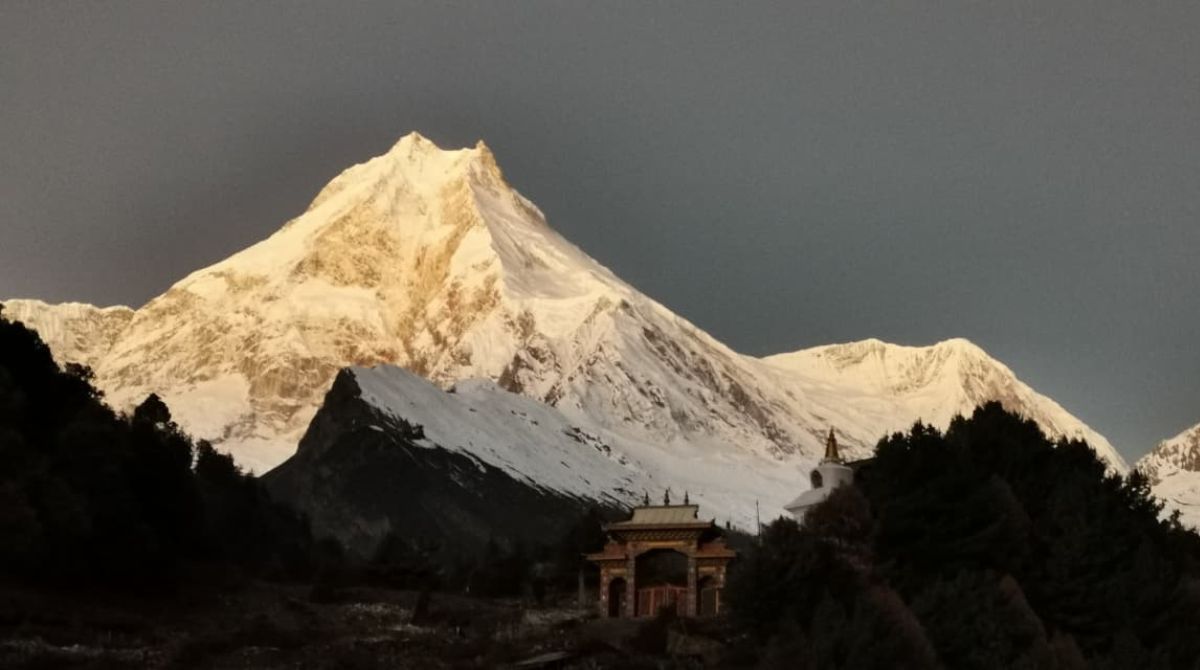
As you arrive in Shyala, you will be greeted by a large Gompa. You can witness the majestic beauty of Mount Manaslu and various other peaks. During sunrise, as the morning glow shines on its top, it is one of the best spot for mountain views in whole Manaslu Circuit Trek.
Max Altitude: 3,500meters Meals: B.L.DAccommodation: TeahouseDuration: 4-5hoursDistance: 11km/6.8miles
Starting early from Shyala village, we set out on a picturesque trek towards Sama Village.
Samagaun is the principal village of the Nubri people and is situated at the foothills of the Manaslu peak. It boasts a large gompa, numerous shops, a health post, telephone and wifi access, and a heliport. It's also the closest village to the Manaslu Base Camp, which makes it a popular stopover for trekkers.
Max Altitude: 3,530meters Meals: B.L.DAccommodation: TeahouseDuration: 4-5hoursDistance: 17km/10.5miles
This is a crucial day in the trek as it helps your body to adjust to the increasing altitude and prepares you for the upcoming challenges of the trek.
While it is a rest day, there are plenty of opportunities to explore the beautiful surroundings of Sama Gaun. You can take a hike to Manaslu Base Camp or Birendra Lake. These activities not only help you acclimate but also provide you with a chance to immerse yourself in the unique culture and traditions of the region.
During the trek, you will already be at a higher altitude and will be ascending further, so it is essential to take this acclimatization day seriously. By resting and acclimatizing properly, you will be better prepared for the upcoming challenges of the trek.
Max Altitude: 3,530meters Meals: B.L.DAccommodation: Teahouse
You'll embark on a journey from Samagaun to Samdo. The trek will take you through lush forests filled with birch, juniper, and rhododendron trees. As you make your way up, you'll pass under a beautiful stone arch that adds a touch of grandeur to your trek.
As you approach Samdo, you'll be met with awe-inspiring views of the Manaslu Glacier. This glacial landscape is a sight to behold, with its icy-blue hues and majestic peaks towering in the distance.
Samdo is a pivotal point on the trekking trail, as it marks the intersection between Nepal and Tibet. This unique location provides an opportunity to soak in the culture and traditions of both countries. You'll be captivated by the spectacular mountain views that surround you and have a chance to observe the daily lives of the locals who inhabit this remote region.
Max Altitude: 3,875meters Meals: B.L.DAccommodation: TeahouseDuration: 3-4hoursDistance: 8.2km/5.1miles
As you leave the village of Samdo, you'll cross several rivers and make your way towards Larkye Bazar. Along the way, you'll encounter some of the most spectacular views of the surrounding mountains and valleys. You'll also have the opportunity to explore the unique culture and traditions of the local communities that inhabit this remote region.
As you ascend to higher altitudes, you'll be rewarded with breathtaking views of the Larkya Glacier, which is a true sight to behold. You'll trek through dense forests of juniper trees, which create a serene and tranquil atmosphere that's perfect for experiencing the wonders of nature.
Continuing on your journey, you'll eventually make your way to Salka Khola, where you'll continue to climb upwards towards Dharmasala. The scenery on this part of the trek is truly awe-inspiring, with majestic peaks and valleys stretching out before you as far as the eye can see.
As you arrive at Dharmasala, you'll be treated to a warm and welcoming guesthouse accommodation where you can rest and recharge your batteries after a long day of trekking. The meals served at the guesthouse are delicious and nourishing, providing a welcome respite from the rigors of the trek
Max Altitude: 4,460meters Meals: B.L.DAccommodation: TeshouseDuration: 3-4hoursDistance: 7km/4.4miles
As you make your way through the snow-covered rocks and challenging terrain, you'll eventually reach the Larkya La Pass, which offers a truly unforgettable panoramic view of the surrounding mountains. From this vantage point, you'll be able to see Kangguru, Himlung, Annapurna II, and Cheo in all their glory, creating an awe-inspiring sight that you'll never forget.
After taking in the incredible views, you'll begin your descent towards Bhimthang, passing through picturesque landscapes and quaint mountain villages along the way. You'll have the opportunity to explore the local culture and traditions of the people who call this region home, gaining a deeper understanding and appreciation of their way of life.
Max Altitude: 3,590meters Meals: B.L.DAccommodation: TeahouseDuration: 7-8hoursDistance: 23km/14.3miles
The trek from Bhimtang to Gowa is a long yet rewarding day, which starts as a gradual descent, which you will cross to enter a beautiful rhododendron forest. The descent is very rewarding after walking for like 30 mins, you will enter the Annapurna region and enter beautiful ehododendron forests. While walking you Mt Manaslu will be at your back, waving you goodbye, you have to keep looking at back, eventually the mountains will disappear.
The trek will take you through a scenic route as you follow the riverbank of Dudh Khola to reach Gowa. This picturesque village is situated at an elevation of 2,515 meters and offers stunning views of the surrounding mountains and landscapes. Overall, this day's trek is not very taxing and offers a chance to enjoy the natural beauty of the Manaslu region.
Max Altitude: 2,515meters Meals: B.L.DAccommodation: TeahouseDuration: 4-5hoursDistance: 10km
The trail starts with crossing the suspension bridge over the Marshyangdi River, leading to a forest of rhododendron and pine trees. As you continue trekking, you'll pass through small villages like Tilije and Thonje, where you can witness the unique culture and traditions of the region by interacting with the friendly locals.
As you journey through the trail, you'll also witness the stunning views of the mountains, waterfalls, and landscapes. The trek is particularly beautiful as you follow the path along the riverbank of the Marshyangdi River. Eventually, the trek leads to Dharapani, situated at an elevation of 1,960 meters. Have lunch in Dharapani and take shared Transportation towards Beshisahar. Overnight Besisahar
Max Altitude: 1350meters Meals: Breakfast and Lunch and DinnerAccommodation: TeahouseDuration: 6 hours
Have Breakfast at the hotel in Pokhara, then drive to Kathmandu according to your trek arrnagement if you would like to go pokhara the city of tourist capital, we will arrange the transportation
From this day, you are free from the Program. If you have time left and want to do another activity such as Rafting, Paragliding or visiting another place like Chitwan National Park, or anything else, please ask us. If you are leaving Nepal, then we will arrange an airport departure.
Not Satisfied with this Manaslu Circuit Trek - 15 Days itinerary?
Are you interested in planning custom trip? It only takes 2 minutes.
Pickup service by private vehicle from Kathmandu Tribhuvan International Airport on your arrival
Tribhuvan International Airport drop-off service by private vehicle on Departure days.
Ground Transportation Kathmandu to Machha Khola by available luxury Bus (if you want to use a private Scorpio Jeep, $263)
Ground Transportation from Dharapani to Beshisahar by sharing a jeep(If you would like to take a private jeep, talk with our 265contact us)
Ground Transportation from Beshisahar to Kathmandu by Luxury Bus ( if you would like to travel by private transport, talk with our expert)
Accommodation
3-star standard hotel with Bed and Breakfast for 3 nights. (if you like a Luxury hotel, a 4-star or 5-star standard hotel, consult with our tour expert.
12 nights of accommodations during the trek in teahouses
Food and Drinks
All meals:13 Breakfast,13 Lunch,12 Dinner as per the Itinerary in the teahouse during the Trek.
3 times of tea per day during the trek
2 breakfasts in Kathmandu
Seasonal Fresh Fruits after dinner on the trek
Trekking Staff
A highly experienced English-speaking, trained, Government license holder trekking guide with all his salary, food, drinks, accommodation, transport, and insurance.
1 Assistant Guide for every 8 trekkers, including their accommodation, transportation, food, salary, and insurance
If you like to take a porter. Extra cost $20 per day between two clients (20*12=240 per porter total), including his salary, food, accommodation,n and Insurance
Permits and Taxes
Manaslu Trekking permit (Restricted area special permit $75 for spring seasons, December to August and 100 for fall seasons, September to November).
Manaslu Conservation Area Project permit (MCAP).
Annapurna Conservation Area Project permit (ACAP).
All government Taxes, VAT, and office service charges.
Complimentary
Medical and Evacuation Insurance for staff (guide).
Trekking maps for the trek
First Aid box to be carried by the guide
Emergency rescue service arrangement ( Please do Insurance from your country that covers Medical and Evacuation)
Sleeping bag on request (you have to return it after your Trek)
Down Jackets (you have to return it after your Trek)
Trekking poles
Spikes for walking boots in winter seasons
Complimentary Beyond the Limits Treks Duffel bags to keep your belongings to be carried by a porter if required
Certificate of Achievement
Farewell Dinner
Flexible and Guaranteed Booking Policy
Trip departure is 100% guaranteed after booking the trip
Once you send the booking advance, that amount will be your lifetime deposit. allowing you to postpone or reschedule your trek without any fuss. You can also transfer your deposit to your friends or family who want to visit Nepal if you have been unable to travel to Nepal.
City sightseeing if you would like to do it (please let us know)
Meals in Kathmandu
Extra drinks (tea, coffee) more than 3 times a day
All the cold beverages( Coke, beer, mineral water, whiskey)
Personal expenses such as hot showers, battery charging, bottled water, snacks, Wi-Fi, and alcoholic drinks during the trek.
Emergency evacuation cost (please ensure that the policy covers medical and evacuation )
If any circumstances your early arrival or early departure.
Tips for guides and porters
The Extra cost in case of early return from the tour. Anything beyond the included section above or an unforeseen event out of control or beyond the limits may incur additional charges. Where possible, we will negotiate with the client for alternative arrangements.
Add-ons & Options
The prices listed on our website do not include the cost of a porter. Should you wish to hire a porter, the additional cost is USD 240 per porter. This fee covers the porter’s salary, meals (breakfast, lunch, and dinner), accommodation, insurance, and necessary equipment. the tips are Extra
Each porter can carry a total of 22 kilograms, which is typically shared between two clients (approximately 11 kilograms per person). Hiring a porter is highly recommended for a more comfortable and enjoyable trekking experience.
Join our next departure for the Manaslu Circuit Trek, available for group or private booking in 2026 and 2027. If the above dates do not align with your preferred date, please contact us. We will be happy to make a departure date for you. To know more about Group joining and how it works, read our blog Manaslu Circuit Trek Group Joining.
Essential Information
Key Changes & Updates for the Manaslu Circuit Trek
Solo Trekking Rules: Solo trekkers are now permitted to do the trek, however they have to hire a licensed guide and book through a registered trekking agency. The previous minimum of a 2-person group requirement has been lifted.
Permits and Safety Tracking: Traditional permit requirements remain in place, while digital permit tracking and checkpoint safety monitoring have been improved across the trekking area.
Trail Improvements: Trail conditions between Machha Khola and Deng/Ghap have improved, with safer bypass paths, better bridges, and more manageable walking sections in several areas.
Teahouses and Connectivity: Teahouse facilities have improved in many villages, with charging facilities and Wi-Fi available in most populated areas. Connectivity can still be slower during busy periods, while facilities above Samdo remain basic but comfortable.
Weather and Climate Patterns: Suitable weather has been pushed back 2 weeks compared to 10 -15 years ago. Before suitable weather to do Manaslu CIrcuit Trek was Spring(March-May) and Autumn(September-November), now (mid September to December) is considered one of the best times to trek Manaslu CIrcuit. However, (March to May) is still the same, providing us with suitable weather to trek in Manaslu.
Understanding the 2026 Manaslu Circuit Regulations & Solo Trekking Rules
The legal framework for trekking in the Manaslu Conservation Area has evolved to accommodate independent travelers while prioritizing safety through registered management.
Solo Trekking Legality: You can now trek solo without needing the minimum of 2-person rule to trek. However, hiring a licensed government guide and booking through an authorized agency like Beyond the Limits Treks remains mandatory for securing your Restricted Area Permit (RAP).
Permit Requirements: Trekkers require 3 main permits, which are the Manaslu Restricted Area Permit (RAP), Manaslu Conservation Area Permit (MCAP), and Annapurna Conservation Area Permit (ACAP). There is also a Local Municipality Permit, which you can get while trekking.
Trail and Infrastructure Updates: During peak trekking seasons, private jeeps can generally travel up to Jagat, helping trekkers shorten the initial hiking section. Public buses operate on a more limited route and may not reach as far as private jeeps. Road conditions can vary with weather and season, so it is best to confirm the latest access with your trekking agency before departure. Teahouses along the route have also improved, with many offering Wi-Fi, electricity for device charging, and better hygiene standards, although facilities become more basic at higher elevations.
Important Update About the Manaslu Circuit Trek
Due to ongoing road construction around the starting section of the Manaslu Circuit Trail, this iconic trekking route might lose its remoteness and off-the-beaten-path character in the coming years. If you want to experience the authentic, rugged beauty of the classic Manaslu Circuit Trek, now is the best time to do it, before increased road access changes the nature of the trail. We highly recommend booking your trek soon to enjoy this incredible adventure in its purest form. Contact us to book your trip and for more information
Solo Travellers and Group Requirements
The Manaslu region is a restricted trekking area, and it requires special permits issued by a registered trekking company like Beyond the Limits Treks and Expedition. A recent update has made it possible even for solo travellers to do the Manaslu Circuit through an authorised trekking company. Before, you had to have a minimum of 2 foreign nationals to apply for the permits. Now you can trek the Manaslu Circuit even if you are travelling solo, but you have to go with a licensed guide and a registered local trekking company.
At Beyond the Limits Treks & Expedition, we can arrange private departures and assist solo trekkers with all necessary permits and logistics. Trip costs may vary depending on group size, accommodation standard, transportation preference, and additional services requested.
Altitude Sickness and Acclimatisation
Manaslu Circuit is a high-altitude trek and reaches elevations above 5,000 meters, so there is a possibility of Acute Mountain Sickness (AMS). Proper acclimatisation is one of the most important aspects of a successful trek.
Our itinerary includes a dedicated acclimatisation day in Samagaun to help your body adjust gradually to the altitude before crossing Larkya La Pass. If you are unsure about your body you can add an extra acclimatisation day in Samdo, which we can customise in the trip. Drinking plenty of water, walking at a steady pace, avoiding alcohol, and informing your guide of any symptoms are important preventive measures against altitude sickness while trekking.
Common symptoms of altitude sickness may include headache, nausea, dizziness, fatigue, and loss of appetite. Our experienced guides are trained in first aid and take appropriate action if altitude-related issues arise.
What Makes Beyond the Limits Treks Unique ?
Unlike standard agencies that rush travelers through lower motorable roads, our itineraries are structured to maximize scenic wilderness and proper acclimatization.
Flexible Itinerary Options : Choose between the classic 13/15-day routes or our exclusive 17-day Upper Route (via Baseri and Runchet) that completely bypasses modern dirt roads for an authentic off-the-beaten-path experience. We can help you customize your own itinerary as well.
Daily Health & Safety Monitoring : Your physical well-being is our top priority. Our certified guides carry medical kits and perform daily pulse-oximeter checks to monitor your oxygen saturation levels and proactively screen for altitude sickness symptoms.
Transparent Inclusions & Gear Support : We ensure you are fully prepared for alpine conditions without heavy international packing burdens.
What’s Included in Our Trek Package
Category
Provided Essentials & Services
Accommodations
Comfortable lodge / teahouse stays during the trek (twin-sharing basis) and hotel accommodation in Kathmandu before and after the trek (with breakfast).
Food & Drinks
All meals (Breakfast, Lunch, and Dinner) prepared fresh during the trek, plus daily purifying drinking water and a farewell dinner in Kathmandu.
Staff & Leadership
Government-licensed, English-speaking expert guide, experienced porters (1 porter for every 2 hikers), daily health & oxygen checks, and complete staff insurance/wages.
Complimentary Gear
Warm down jacket, all-season sleeping bag, trekking poles, and a sturdy branded duffel bag.
Logistics & Permits
All mandatory trekking permits (RAP, MCAP, ACAP), local taxes, private airport transfers, and all ground transportation to and from the trekking starting/ending points.
Other Services
Official Trek Completion Certificate, complimentary trekking map, free luggage storage at our Kathmandu office, and pre-trip briefing.
Safety & Guarantees
Comprehensive first-aid medical kits, 24/7 emergency rescue arrangements (coordinated with your insurance), and a 100% departure guarantee right after booking.
Essential Trip Logistics & Planning
Daily Walking Hours & Physical Grading
Average Daily Walk: 5 to 7 hours across rugged, uneven terrain, suspension bridges, stone steps, forest trails, and steep mountain ascents. Walking time can vary depending on the itinerary, trail conditions, altitude, and weather.
Trek Grade: Moderate to Challenging. A good fitness level is recommended for this trek because of the long walking days, continuous elevation gain, steep sections, and high-altitude terrain. Previous trekking experience is helpful but not essential with proper preparation.
Hardest Days: Crossing Larkya La Pass (5,106 m) and the side trip to Manaslu Base Camp (4,800 m) are among the most demanding sections. The Larkya La day involves a long ascent to the pass followed by a significant descent, while the Manaslu Base Camp side trip adds extra altitude and walking to the itinerary.
Who Should Avoid the Manaslu Circuit Trek?
The Manaslu Circuit Trek is physically demanding and reaches high altitudes, so it may not be suitable for everyone. Travelers with serious or uncontrolled health conditions should seek medical advice before planning the trek.
It may not be recommended for individuals with:
Severe chronic heart, lung, or respiratory conditions.
Uncontrolled high blood pressure or other serious medical conditions.
Recent major surgery or an injury that could make prolonged walking difficult.
Significant mobility or joint problems that may worsen during long, uneven mountain walks.
Pregnancy, particularly because of the high altitude, remote terrain, and limited access to immediate medical or vehicular evacuation in some sections.
Important: If you have any existing health condition, medical concern, or physical limitation and still want to undertake the Manaslu Circuit Trek, inform your trekking or travel agency well in advance. This allows the agency and guide to understand your situation, discuss appropriate precautions, plan the itinerary carefully, and prepare for potential emergencies. It is also advisable to consult a qualified healthcare professional before traveling to high altitude.
What kind of accommodation and food can I expect?
You will stay mainly in local teahouses and lodges run by local communities along the Manaslu Circuit. While rooms are generally basic, they provide comfortable beds and a warm place to rest after long days of hiking. Meals range from traditional Nepali Dal Bhat to Tibetan bread, noodles, soups, and selected continental dishes, providing the energy needed for demanding trekking days .
Accommodation quality is also improving season after season. In places such as Namrung and Samagaun, you can now find considerably better lodges with more comfortable rooms and facilities that can feel closer to a small mountain resort than a traditional teahouse. Although accommodation becomes more basic in remote and higher-altitude sections, attached-bathroom rooms are also available at some stops. If you prefer better accommodation or a private bathroom, discuss your requirements with your trekking agency in advance so they can arrange suitable options where available.
Ready to plan your restricted-area adventure? Contact Beyond the Limits Treks today to customize your itinerary or secure your 2026 Manaslu permits.
Choosing Your Perfect Pace : Manaslu Circuit Itinerary Comparison
Every trekker has a unique fitness level, timeline, and appetite for wilderness. To help you select the ideal journey with Beyond the Limits Treks, we offer distinct route variations ranging from classic timelines to remote cultural explorations that completely bypass motorable dirt roads.
Itinerary Options at a Glance
Feature / Metric
Classic 13-Day Route
Extended 15-Day Route
Off-the-Beaten-Path 17-Day Upper Route
Best For
Trekkers with limited time and solid baseline fitness
Those wanting a steadier, safer altitude acclimatization curve
Explorers seeking true isolation and authentic indigenous culture
Pace & Walking Hours
(6 to 7 hours daily)
Moderate (5 to 7 hours daily with built-in rest)
Immersive (5 to 7 hours over rugged, pristine trails)
Route Distinction
Follows the standard Budhi Gandaki valley trail
Standard routing with an extra acclimatization buffer
Bypasses motorable roads entirely via Baseri, Kashigaun, and Runchet
Max Elevation
Larkya La Pass (5,106 m)
Larkya La Pass (5,106 m)
Larkya La Pass (5,106 m)
Ideal For Profile
Alpine hikers
Alpine Hikers, Intermediate trekkers and photographers
Culture enthusiasts and avid off-trail hikers
Detailed Breakdown of Route Variations
1. The Classic 13-Day Manaslu Circuit
Overview: Designed for travelers who want to maximize efficiency without compromising Himalayan vistas. This can be customized; contact us to get customized itinerary.
Key Highlights: Fast access to Machha Khola via shared jeep, rapid transition through the lower gorges, striking views of Ganesh Himal and Mt. Manaslu, and the ultimate crossing of the high-altitude Larkya La Pass before descending into Dharapani.
2. The Extended 15-Day Acclimatization Route
Overview: Built for safety, comfort, and deep immersion. This itinerary introduces strategic rest days around Samagaon and Samdo.
Key Highlights: Gives your body optimal time to adapt to thin air, reducing the risk of acute mountain sickness. Includes relaxed exploration days toward Birendra Lake and Pungyen Gompa without feeling rushed.
Overview: Our flagship alternative itinerary designed to escape modern development. While other operators walk modern dirt tracks in the lower sectors, this route takes you high above the river gorge through historic Gurung settlements.
Key Highlights: Complete avoidance of vehicular roads during the initial days, authentic cultural interactions in remote villages like Kashigaun and Runchet, pristine forest trails, and superior physical conditioning before reaching the higher restricted zones
Best time for Manaslu Circuit Trek:
When it comes to trekking the Manaslu Circuit, timing is everything. You'll want to plan your journey carefully to ensure that you experience the best that this incredible region has to offer. The best seasons for the Manaslu Circuit Trek are spring (March to May) and autumn (September to November).
In the spring season (March to May), the trail is decorated with blooming rhododendrons, and the weather is warm and pleasant. This season is also the best time to witness the spectacular views of the Himalayan range.
In the autumn season (September to November), the weather is stable and dry, with clear skies and beautiful views of the mountains. This season is also the busiest time of the year for trekking, and the tea houses and lodges can get crowded, so it's important to book your accommodation in advance.
Winter trekking is possible for experienced trekkers, but colder temperatures and snow at Larkya La Pass can create additional challenges. The monsoon season from June to August brings heavy rainfall and is generally less suitable for trekking.
Accommodation During the Manaslu Circuit Trek:
During the Manaslu trek, you will be staying in local tea houses run by local families. In Kathmandu, our package includes accommodation in a comfortable tourist-standard hotel.
Along the trekking route, teahouses provide basic but comfortable rooms, usually on a twin-sharing basis. Most teahouses along the route offer shared bathrooms, while a limited number of teahouses provide attached bathrooms, except Dharamsala, where there is only a shared bathroom and the teahouse is very, very basic. However, in lower elevations, you can get your own attached bathroom as well with a Western-style toilet. However, despite the basic amenities, the lodges/tea houses are clean and comfortable enough to provide trekkers with a good night's rest after a long day of hiking.
Though blankets and pillows are provided by the teahouse, we recommend you take a sleeping bag for additional warmth and comfort. You can rent a sleeping bag in Kathmandu if you do not have one, for which we can help. Additionally, while hot showers are available at some lodges/tea houses, they usually come at an extra cost. You can expect to pay $2-$5 for a hot shower, and $1-$3 for Wi-Fi.
Meals and Drinking Water
Meals during the Manaslu Circuit Trek are served in local teahouses and include a variety of Nepali, Tibetan, and international dishes. Our package includes daily breakfast, lunch and Dinner whereas for drinks like drinking water are on your own.
Breakfast: Porridge, Pancakes with honey and jam, scrambled, boiled, or fried eggs, Bread and Jam, Tibetan Bread with honey or jam, Muesli.Simple breakfast set, etc.
Lunch: Momos, Fried Rice, Noodles, Thukpa, Chaumin, Pizza in some places, papad, Vegetable salad, Potato items, Pasta, soup.
Dinner: Dal Bhat consists of steamed rice, lentil soup, a vegetable curry, meat or fish, Momos, Fried Rice, Noodles, Thukpa, Chaumin, Pizza in some places, papad, Vegetable salad, Potato items, Pasta, and Soup.
Note: It is advisable to have garlic soup, hot lemon, ginger tea, and lemon tea during the trek as they can help with acclimatisation and can also provide warmth and comfort in the cold mountain climate. These hot drinks can also help to prevent dehydration, which is important at high altitudes. It is recommended to avoid coffee and alcoholic beverages as they can cause dehydration and can also worsen the symptoms of altitude sickness.
Regarding food, it is generally recommended to have vegetarian items rather than meat as you go higher up, as the quality and freshness of meat can deteriorate at higher elevations.
For drinking water, trekkers can purchase boiled water or refill water bottles at teahouses. We strongly encourage the use of water purification tablets, water filters, or reusable bottles to reduce plastic waste and save costs during the trek.
Internet, WiFi, and Electricity
Internet and WiFi services are available in many villages along the Manaslu Circuit Trek, including Machha Khola, Jagat, Deng, Namrung, Shyala, Samagaun, Samdo, Dharamsala, and Bimthang. Most teahouses provide WiFi access for an additional fee, although speeds can be slow in remote areas.
Mobile network coverage from NTC and Ncell is available in many sections of the trail, with NTC generally offering better coverage. Connectivity becomes less reliable at higher elevations and during adverse weather conditions.
Electricity is available in most villages, but charging electronic devices may incur an additional fee. We recommend carrying a power bank for convenience.
Mt. Manaslu View from Lho village
Manaslu Circuit Trek Permits
The Manaslu Circuit Trek requires several permits because the region is designated as a restricted area. All the permits required for the trek are included in the package. The permits you will require to do this trek are;
Manaslu Restricted Area Permit (RAP)
Manaslu Conservation Area Permit (MCAP)
Annapurna Conservation Area Permit (ACAP)
Trekkers who want to make their trip longer can combine the Manaslu Circuit with Tsum Valley which also require an additional Tsum Valley Restricted Area Permit.
A licensed trekking guide is mandatory, and all permits must be arranged through a registered trekking company.
A Possible Add-on in the Manaslu Circuit Trek 15 Days:
If you have some extra time on your hands, then you can combine an extra side trip to Tsum Valley with the Manaslu Circuit Trek, which would require an extra 7 days. Moreover, you can extend your trip to the Annapurna Circuit (5,416m), Nar Phu Valley (5,306m), Kalmachum Lake (3,800 m), Birendra Lake (3,620 m), Serang Gompa (3,100 m), or Hinang Gumba (3,100 m). These trips will enrich your journey even further. If you are in between the Manaslu Circuit or the Annapurna Circuit
Tips for a successful Manaslu Circuit Trek:
As the Manaslu Circuit Trek takes you 5,106 meters above sea level, there is always a chance of AMS (Acute Mountain Sickness). Therefore, make sure to include enough acclimatisation days between the trek and keep yourself hydrated
The trail is tricky and not clearly marked. So, follow your guide attentively and do not wander far alone
You can carry water purification tablets or other devices to double-purify water
Confirm all the permits needed to get with your company before the beginning of the journey
Take out insurance that covers any emergency situations or property loss
Manaslu Circuit Trek 15 days, requires careful preparation. Having the right gear can make the Big difference between a challenging adventure and a comfortable, unforgettable journey. Beyond the Limits Treks and Expedition suggests comprehensive and essential equipment.
Clothing
Down Jacket (Beyond the Limits Treks will provide. It is returnable after the trip)
Waterproof Jacket and Pants
Trekking T-shirts and Pants
Full sleeves T-shirts
Thermal wear top and bottom
Accessories
Warm hat (beanie)
Buff or neck gaiter
Sun hat or cap
Warm gloves (1 thick pair, 1 liner pair)
Sunglasses (UV protection)
Gaiters (optional for snow and dust)
Footwear
Trekking Socks
Trekking Boots
Camp Shoes
Sandals
Sleeping Gear
season sleeping bag (rated to -20°C, Beyond the Limits Treks will provide (Return after finishing the trek)
Sleeping bag liner (optional for extra warmth and hygiene)
Pillowcase or small travel pillow
Backpacks & Bags
Beyond the Limits Treks will provide a duffel bag (carried by a porter)
Daypack (~25–35L for daily essentials)
Waterproof backpack cover
Hydration & Nutrition
Reusable water bottles or hydration bladder (2L total)
Water purification tablets or a filter
Snacks (energy bars, dried fruits, etc.)
sanitizer
Toiletries & Personal Care
Towel
Toilet paper
Wet wipes
Toothpaste
Toothbrush
Soap/Shampoo
Nail clippers
Hygiene Products
First Aid & Medications
Personal medications
Diamox (for altitude sickness – consult your doctor)
Blister plasters (e.g., Compeed)
Painkillers (ibuprofen, paracetamol)
Antiseptic cream
Band-aids, tape, and gauze
Anti-diarrheal tablets
Note Beyond the Limits Treks and expedition Provied you a comprihanshiv first aid Kit
Electronics & Accessories
Power bank and charging cables
Plug adapter (Nepal uses Type C/D/M plugs)
Documents & Money
Valid passport
Passport-size photos (for permits)
Travel insurance copy
Trekking permits (handled by us)
Money belt or neck pouch
Manaslu Circuit Trek - 15 Days FAQs
Expand All
The Manaslu Circuit trek difficulty is strenuous. It is an offbeat, remote trek with limited tourist infrastructure. The trekking route is steep in many sections and requires good fitness. This trek also crosses a high mountain pass.
Yes, trekkers must obtain a Restricted Area Permit (RAP) along with MCAP and ACAP permits. You must travel with a registered guide, registered company and at least one other trekker.
Manaslu Circuit Trek walking distance: approximately 150–160 km; it depends on the side walked and acclimatization walking. How far will you go? Trekking starting point from Machha Khola and Trekking ending point is Dharapani,, including the Larkya La Pass crossing. This distance is not counting from Kathmandu to Machhakhola road way driving and from Dharapani to Beshisahar and Kathmandu or Pokhara or Kathmandu driving is not counting
No, independent solo trekking is not permitted in the Manaslu Restricted Area. Foreign trekkers must obtain a Restricted Area Permit through a registered trekking company and trek with a licensed guide.
Before, you had to have a minimum of two trekkers with a mandatory licensed guide, but now you can do this trek if you are solo as well, but a registered licensed guide have to accompany you.
Yes, Manaslu Circuit Trek is considered more challenging than the Everest base Camp Trek. The trail is remote compared to a huge number of travelers attracting -- EBC trek. And, the trek involves longer trekking days with fewer rest stops compared to the developed Everest Region.
Nepal has four seasons all the trekking route are not doable all year.However The best time to do Manaslu circuit trekking is March to May (Spring) and September to November (Autumn). During this time, the larkey la pass is clear and scler sky and beutiful weather the temperature is moderate.The views in this time would be the nice and clear.
During your Manaslu circuit trekking, you will stay in the local lodges/teahouses with basic facilities and clean rooms. However, as you move to a higher altitude, they provide a twin-sharing room with a common toilet.
Since you need three other Permits, you will not need a TIMS card for the Manaslu circuit trek right now.
Yes, the trek can be customized to your liking. You can increase or decrease the trekking days or add the Annapurna circuit trek or Tsum Valley trek along with this.
Manaslu Circuit Trek is considered an alternative to the Annapurna Circuit Trek, both treks offer stunning landscapes and unique experiences, but which one is "better" depends on your preferences. Manaslu Circuit Trek is remote and less crowded whereas Annapurna Circuit is more developed with better infrastructure. For more information check out our blog Annapurna Circuit vs Manaslu Circuit.
Yes, crossing the Larkya La Pass is quite difficult for beginner trekkers. It requires patience, strength, endurance, and previous experience. Our guide will support you while crossing the pass, but you still have to handle the pressure and effort that comes with crossing a mountain pass in the Himalayas.
Our Manaslu Circuit trek package included services like accommodation and breakfast in Kathmandu, all accommodations and three meals a day during trekking, transportation, permits, guide and porter, all taxes, and the company's service charge.
All accommodation and transportation will be arranged according to the itinerary. Requesting any additional service may incur additional charges.
Yes, travel insurance is mandatory if you want to trek in the Manaslu region. It must cover emergency helicopter evacuation and medical bills. You can include other coverage as well in the insurance.
The internet service or network along the Manaslu Circuit trek route is unreliable. Once you go deep into the region, there is no network at all. You will travel off-grid for many days. For emergency communication, we use satellite phones, which our guide will be equipped with.
No, you cannot use credit cards on the Manaslu Circuit trek or anywhere in the Manaslu region. The trekking routes do not have ATMs, either. You have to withdraw money in Kathmandu to use during the trek.
Even though our Manaslu Circuit trek cost covers all the major expenses, trekkers will be responsible for personal expenses such as hot showers, charging, WiFi, and extra food and drinks.
Therefore, carry ample Nepali rupee with you for the journey as per your spending habits.
The highest point on the Manaslu Circuit trek is Larkya La Pass, which is 5,106 meters above sea level.
No, you cannot do the Manaslu Circuit trek without a guide. As per the rules, all non-Nepali travelers must do the trek with a local Nepali-registered guide from a registered trekking company.
Independent guides cannot help you obtain the restricted area permit to do this trek.
We personally went to Kathmandu a few days before the trek to choose a trekking company, We visited a few agencies, took our time, and this was the company that gave us the best feeling and we’re so happy we...
read more +
We had an amazing experience with “Beyond The Limits” during our 13-day Manaslu Circuit Trek. From the very beginning, everything was organized perfectly. Communication was clear, the permits and logistics were handled smoothly, and the whole team made us feel...
read more +
What an incredible trip we have just had with Beyond The Limits. It was my first time visiting Nepal and I appreciated all the careful planning and attention to detail, that made everything on our trek flow fairly smoothly. It...






-1.webp&w=640&q=75&dpl=dpl_5CuFtG5qxcnGJkYqRG3v9LYTFvDN)