Book Now

Kailash Mansarovar Yatra - 14 days

Customize Trip
201 reviews in TripAdvisor
79 reviews in Google Reviews
Recommended by 99% of Travelers

The Kailash Mansarovar Yatra is a popular trekking route with profound religious significance which bridges the gap between a physical trek and a spiritual awakening by taking you to Mt. Kailash and Lake Mansarovar.  

  • Trek Duration: 13 Days 
  • Max. Altitude: 5,600 m /18,368 ft 
  • Country: China/Tibet 
  • Adventure Type: Pilgrimage Tour 
  • Difficulty Level: Strenuous 
  • Best Season: March to October 
  • Start/End Point: Kathmandu 
  • Accommodation: Hotel/Guest House 
  • Meal: Pure Veg 

Kailash Mansarovar Yatra Highlights

  • Begin with visits to sacred Hindu sites in Nepal including Pashupatinath Temple 
  • A scenic drive from Kathmandu to Tibet 
  • Close up darshan of Mount Kailash, the spiritual axis of the universe 
  • Holy dip at Lake Mansarovar, one of the highest freshwater lakes in the world 
  • Completion of the 52 km sacred Kailash Parikrama Circumambulation (Kora) 
  • Crossing the legendary Dolma La Pass (5,650m) 
  • Pray while being the closest possible approach to Mount Kailash at the North Face (Charan Sparsh) 
  • Visit Gauri Kund, another sacred lake near Mt. Kailash 
  • Explore sacred monasteries in the region 
  • Experience the welcoming Tibetan culture 
Duration
14 Days
Trip Grade
Easy-Moderate
Country
Tibet
Maximum Altitude
5000m
Group Size
15-50
Starts
Kathmandu
Ends
Kathmandu
Activities
Sightseeing / Pilgrimage Tour
Best Time
Spring and Autumn

Kailash Mansarovar Yatra Overview

The Kailash Mansarovar Yatra is a 14 days journey that starts and ends in Kathmandu. This transformative journey takes you to two of the most spiritual destinations of Tibet: Mt. Kailash and Lake Mansarovar.  Standing at a height of 6,714 meters, Mt. Kailash is one of the holiest peaks in the world and has a lot of mystery surrounding it. To begin with, despite being less tall than Mt. Everest, nobody has been able to climb Mt. Kailash till date. 

Mount Kailash

This peak is considered to be the axis of both the physical and metaphysical universe. Hindu pilgrims consider Mt. Kailash to be the holy abode of Hindu deity Lord Shiva where he resides with his family.  As per the Buddhists, Mt. Kailash is a terrestrial representation of the cosmic Mandala. They believe that the peak is inhabited by the Dhyani Buddhas and Bodhisattvas which makes it a potent symbol of enlightenment and spiritual ascent. Likewise, the Jains and Bons also regard the mountain to be of religious importance.  

At the same time, Lake Mansarovar is one of the highest altitude freshwater lakes in the world. And this lake too holds spiritual significance. This stunning turquoise lake is believed to have been created by Lord Brahma himself.   Regardless of which religion you follow, the mystery and the vibrations of Mt. Kailash cannot simply be ignored. This is what prompts lakhs of visitors to go on the Kailash Mansarovar Yatra every year.  Thus, for many people, Kailash Mansarovar Yatra is the ultimate frontier of spiritual travel. This journey blends faith, endurance, devotion, and natural grandeur. 

Starting from the narrow lanes of Kathmandu valley, the Kailash Mansarovar Yatra takes you through the scenic high altitude landscapes of Nepal across villages like Timure and Syabrubesi to reach the Rasuwa Gadhi border from where you enter Tibet.  Upon entering Tibet, your overland journey will take you to Kerung followed by Saga as you ascend in the high altitude Tibetan terrains while being surrounded by stunning alpine landscapes of the Tibetan plateau.  

Throughout the journey, you will get maximum acclimatization time. On the 7th day of the journey, you will reach Darchen where your official Kailash Parikrama (Kora) will begin.   You will spend the next three days circumambulating the mighty Mt. Kailash and basking in the spiritual energy of the region. Once the Kora is complete, you will come back to Saga followed by Kathmandu.  

Whether you are seeking to cleanse lifetimes of karma, witness the "Source of Four Great Rivers," or simply test your physical limits against the backdrop of the world's most sacred peak, this Yatra can be a great transformative experience.  

Kailash Tour Tibet

Kailash tour offers enriching spirituality and unique nature which will be your lifetime journey.

The main attractions of the Kailash Tour are the holy Mt. Kailash and the sacred Manasarovar Lake, which is 30 km away from the Kailash Mountain.

Manasarovar Lake is believed to have been created by the Brahma for his worship and meditation and believed as the source of all creation. The lake lies at an altitude of 4556m and is extended over 320 sq. km. In this place, thousands of Hindu and Buddhist pilgrims visit every year. The followers of the Buddhist Bon Po and Jainism also visit this place. Thousands of Hindu and Buddhist pilgrims embark on this Mt. Kailash tour believing that it gives them enlightenment.

The pilgrims believed that the circumambulation of Mount Kailash in one day cleanse all their past sins and bring good fortune. Hindu and Buddhist circumambulate in a clockwise direction and Jain and Bon Po in an anti-clockwise direction. From Mt. Kailash, four of the world's largest rivers flow in the four cardinal directions which include the Brahmaputra (Yarlung Tsangopo), the Indus River, the Sutlej River, and the Karnali. Kailash Mansarovar Yatra begins with the scenic drive from Kathmandu to Nylam of Tibet via the Araniko Highway. While traveling to the Kailash Manasarovar, you enjoy the scenic beauty of Tibet and the Tibetan plateau, the highest of the plateau in the world.

On the way, you can explore Tibetan culture and landscapes and visit famous places in Tibet. During the Mt. Kailash tour, you can enjoy the unique beauty of the Tibetan desert, and vistas of the world’s towering mountains, and encounter nomad sheepherders.

Kailash Mansarovar Tour Cost:

  • No. of Pax: B/B Basic
    • Group Join Tour: US$ 1505.00 per person basis
  • Extra:
    • If you need a single supplement extra: $300 per person, (single rooms are not available in Manasarovar, Diraphuk, and Zuthulpuk)
    • Extra $100.00 for USA, Canadian, Argentina, Romania, and Brazilian

Manasarovar Lake Kailash tour

Why Undertake the Luxury Kailash Mansarovar Yatra?

While you must have already come across all the hype surrounding the Kailash Mansarovar Yatra during your research, is the hypereally worth it? Why should you take the Kailash Mansarovar Yatra?

The answer is yes, the hype is absolutely worth it. There are many reasons why Kailash Mansarovar Yatra should be on your bucket list. These reasons span from adventure and thrill to pilgrimage and religious beliefs.

The main reason why most people undertake Kailash Mansarovar Yatra is definitely for spiritual reasons as the peak is considered sacred across many religions as discussed above.Thus, the Kailash Mansarovar Yatra is regarded as the final pilgrimage activity for people from Hinduism, Buddhism, Jainism, Bon religion, and many other religions.

Completing a 52 km circumambulation (Kora) of Mt. Kailash is believed to cleanse sins accumulated over lifetimes and accelerate the path toward liberation (moksha). And a dip in Lake Mansarovar is believed to purify the soul.For adventure lovers, crossing the Dolma La Pass at 5,650 meters presents a moment full of accomplishment and personal reflection. In a way, it also represents death of ego.

This journey also helps you form a spiritual connection as you will be surrounded by pilgrims driven by faith, surrender, and devotion. Many visitors describe returning back home feeling more light, calm, and deeply content.To top it off, you will be exploring the untouched Himalayan wilderness of the Tibetan plateau as you go to the high altitude regions surrounded by vast open plains, snow-covered peaks, sacred monasteries, and endless prayer flags dancing in the wind

Kailash Mansarovar Yatra - 14 days Itinerary

Our Kailash Mansarovar Yatra Itinerary is customized in a way that you will get to experience this trip spiritually with utmost comfort, safety, and acclimatization. We aim to follow the itinerary below with flexibility in the best interest of the group. Any changes that made during the trip will be made with proper discussion and without affecting core spiritual highlights. Participants are encouraged to travel with patience, respect for local customs, and an open mindset to fully embrace the spiritual and cultural significance of the yatra.

Kathmandu to Kathmandu

Expand all

Upon your arrival at the Tribhuvan International Airport in Kathmandu, a representative from Beyond the Limits Treks and Expeditions will warmly welcome you. They will then transfer you to a comfortable vehicle that will take you to your designated hotel.  

Once you arrive at the hotel, our representative will provide a detailed trek briefing for you. This will give you all the necessary information about your upcoming Kailash Mansarovar adventure and help you prepare for the journey.  

You can spend the rest of your evening getting acquainted with other trekkers in the group. You will be spending the night at the hotel. This will give you time to rest and experience the warm hospitality of Nepal. 

This is your day to explore the many religious sites in Kathmandu to mark a spiritual beginning for your more elaborate pilgrimage to the Kailash Mansarovar. 

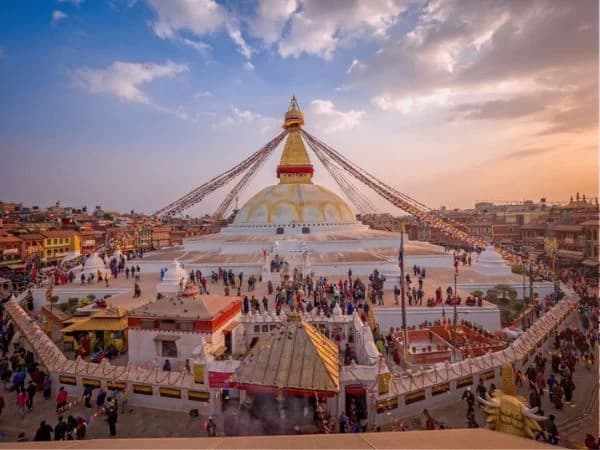
You will begin by visiting the sacred Pashupatinath Temple, which is also a UNESCO World Heritage Site. This is a temple dedicated to Hindu deity Lord Shiva. Spend some time here and explore the temple premises.  

What might catch you off guard is that there is a cremation site right behind the temple within the temple premises where bodies are cremated throughout the day. In the evening, a peaceful aarti happens right opposite this cremation site. Fascinating, isn’t it?  

From Pashupatinath, you will move to explore other Shaktipeeths located in Kathmandu Valley, like the Guhyeshwari Temple located close from the Pashupatinath Temple.  

Then, you will go to Budhanilkantha Temple where lies a large, reclining statue of Lord Vishnu in a pond. These visits will ensure your journey to Tibet begins with sacred blessings.  

If the day wraps up soon, you can continue exploring other attractions of Kathmandu Valley. Or you can return to your hotel and explore the nearby area to get all the supplies for your upcoming journey in place.  

This day marks the official beginning of your journey. In our private vehicle, you will start your drive through a scenic route to reach the foothills of Rasuwa Gadhi, which is our destination for the day.  

On the way, you will see a dramatic range of landscapes which will transition from winding hills and the banks of the mighty Trishuli River into a higher altitude terrain as we near the destination.  

You will cross stunning landscapes and small villages like Syabrubesi and Timure, and terraced fields which will give you a slight taste of the rural Nepali hospitality.  

After a long drive of around 8 to 9 hours, we will reach Rasuwa Gadhi, the bordering town, which will be the resting spot for the day. Rest well before we cross the border the next day.  

On this day, we start by finishing immigration and permit formalities to enter Tibet. Once the formalities are complete, you will cross the Nepal Tibet friendship bridge to officially enter Tibet.  

We begin the drive to Kerung where you experience the first and beautiful high-altitude landscapes of Tibet. After a drive of a few hours, you will reach Kerung which is your stay for the night.  

At Kerung, you can acclimatize well to reduce the chances of altitude sickness later during the journey. You can also explore the local area to get a taste of the Tibetan culture and hospitality.  

Today, we will begin the ascend from Kerung to Saga. The journey ascends gradually across the Tibetan Plateau while the landscape shifts from lush greenery into the dramatic and vast Tibetan plains. 

You will go through Kerung High Pass while enjoying breathtaking views of the Himalayas, including Langtang Peak, Gaurishankar Peak, Shishapangma Peak, and more. 

Other notable points during the drive include Peiku Tso Lake and the Brahmaputra River, which makes the journey even more scenic. A sight of local Tibetans grazing their herds of yaks and sheep makes the journey peaceful.  

Throughout the drive, the sky feels closer and the land stretches endlessly. Snow-capped peaks and prayer flags dominate the landscape. After a few hours, you will reach Saga, which is the resting spot for the day.  

Watching the mountains in the distance and driving through the road we pass through the small town of Zhongba before reaching Paryang. Offering the first view of Mt Kailash and the holy lake only after several hours of drive. As you approach this serene and sacred lake, the historic Chiu Monastery becomes visible on the northwest shore of the lake. From this vantage point, you can have a glimpse of the majestic Mount Kailash. Manasarovar, the highest freshwater lake with a turquoise complexion - surrounded by mt Kailash, Mt. Gurula-Mandata, and Lake Rakchyas is simply heavenly. O/n at Guesthouse.

Today, we will go back to Lake Mansarovar in the morning and perform some sacred holy rituals here to offer prayers. Pilgrims can take a sacred dip, perform puja, havan, or collect holy water from the lake.  

This is spiritually significant as it is believed in many religions that a single sight of Lake Mansarovar and a holy dip in the lake washes away lifetimes of negative karma. 

After seeking blessings and getting a spiritual cleansing from the lake for our further journey, we will head towards Darchen which is a small Tibetan settlement serving as the starting point for the Kailash Parikrama (Kora).  

At Darchen, you can simply explore the nearby area to further acclimatize, or you can go shopping in Darchen to purchase any last-minute supplies for the trek. You can also simply rest.  

On this important day, the Kailash Parikrama officially begins. We will drive to Yama Dwar, the official starting point for the Kora. And from here, we switch to the trails instead of driving.  

The trek follows a gentle trail alongside the western face of Mt. Kailash, and you will be able to get stunningly clear views of the peak. The view is further elevated by the rocky cliffs, waterfalls, and the high-altitude landscape accompanying us. 

After trekking for a few hours, you will reach the Dherapuk monastery, where Mount Kailash appears towering and almost within reach. Enjoy the view and the peaceful ambience of the monastery for a while.  

If you have trekked before and have good physical fitness, you may attempt Charan Sparsh which is another extremely challenging and steep hike to the base of Mt. Kailash.  

Charan Sparsh means touching the feet, and it will take you to the north face of Mt. Kailash. However, the journey is quite challenging and might not be suited for people struggling with acclimatization.  

Today is the most challenging as well as the most sacred part of the Kailash Mansarovar Yatra which begins before sunrise. We begin early to move towards the Dolma La Pass, which is the highest point of the journey.  

It is also the spiritual pinnacle of the journey as the Dolma La Pass is believed to represent death and rebirth. Pilgrims believe that this is where they symbolically leave behind their past burdens.  

The landscape is surrounded by colorful prayer flags, offerings, and spiritual chants fill the air. After spending some time here to feel the spiritual connection, we start descending towards Zuthulpuk.  

On the way, we make a stop at Gauri Kund, which is another sacred lake that is associated with the Hindu Goddess Parvati, the wife of Lord Shiva. A long and steep descent takes us to Zuthulpuk monastery, which is associated with the great yogi Milarepa.  

On this day, we complete the final stretch of the Kailash Parikrama (Kora) which is gentle and reflective. We will head back to Darchen from where we drive back to Saga, marking the successful end of Kailash Parikrama.  

In Saga, you will get a well-deserved rest for the night as you absorb all the overwhelming sense of gratitude and accomplishment. 

From Saga, we will start our journey early as we head back towards Kerung over a drive of around 7 hours. As we descend back from the high altitude area, we retrace the route through the scenic Tibetan landscape. We rest in Kerung for the day.   

From Kerung, today we bid goodbye to the Tibetan land and make our way back to the Rasuwagadhi border where we clear the immigration procedures and head towards Kathmandu. You can rest for the night after a long journey.  

This buffer day is in place to account for any delays that we might encounter during the journey. In the evening, we come together for a farewell dinner arranged by Beyond the Limits Treks and Expeditions to celebrate the successful completion of the Kailash Mansarovar Yatra.  

On this day, the trekkers bid farewell to each other as the journey comes to an end. Transfers are arranged to the airport for onward travel. If you plan to explore Nepal further, we can assist you with our other curated package tours.  

Not Satisfied with this Kailash Mansarovar Yatra - 14 days itinerary?
Are you interested in planning custom trip? It only takes 2 minutes.

Cost Details

Includes

  • Hotel/Guest House Accommodation is as per the program.
  • Private Transportation by Van / mini coach.
  • All necessary Tibet Travel and Trekking permits.
  • English-speaking Tibetan Guide.
  • All sightseeing and entrance fees are included in the itinerary.
  • Meal plan on B/B Basis.
  • Kathmandu to Border to Kathmandu transportation

Excludes

  • Lunch and Dinner.
  • Insurance of any kind.
  • Hiring porter, Yak/ horse.
  • Rescue and Evacuation Service.
  • Any Additional cost due to Natural calamity and Unforeseen Circumstances etc.

Essential Information

IMPORTANT NOTICE TO PROCEDURE TIBET GROUP VISA !!!

As per the new rules and regulations from the Chinese embassy in Nepal, to obtain a Tibet group visa, it is required that there must be a minimum of 05 people in the group. Additionally, the visa application process in Kathmandu requires the submission of the original passport and may take 04-05 official working days to complete.
Furthermore, clients who wish to obtain a Tibet group visa will need to visit the China visa application center in person to provide biometric information.

Please also note that visa requirements and regulations can change frequently.

It is also important to note that Tibet visa requirements and regulations can be changed frequently, we suggest you make sure with the Chinese Embassy/Dream Tibet Travel or local travel company before you book the Tibet tour.

Preparing for the Luxury Kailash Mansarovar Yatra 

The Kailash Mansarovar Yatra is a spiritual yet challenging journey which requires you to go well beyond an altitude of 5,000 meters and experience challenging high altitude conditions which might take a toll on you, physically and mentally.  

Therefore, you need to be well prepared before going on the journey so that you can complete all the challenges like crossing high altitude passes and completing the Kora (Kailash Parikrama) without much difficulty.  

A. Spiritual Readiness 

While the Kailash Mansarovar Yatra is indeed an adventurous journey, a major part of the Yatra is its spiritual aspect due to which lakhs of pilgrims embark on this journey every year.  

Going to the Kailash Mansarovar Yatra before knowing about its spiritual value means missing out on a lot despite going on the journey. Therefore, you should be well versed with the symbolism of the Kailash Parikrama before you go on the journey.  

The Yatra is also as much of a mental journey as a physical one. Thus, you should be mentally prepared for a slow and mindful trip. You can do this by doing a daily 15-minute meditation or chanting practice 30 days before departure to cultivate a calm mind. 

B. Altitude Awareness 

As mentioned above, the Kailash Mansarovar Yatra takes you to high altitudes in the Tibetan plateau. This can make you a target for altitude sickness, especially if you don’t prepare well enough.  

The oxygen in the high altitude area is less, which means your cardiovascular system will be working extra throughout the journey. This can cause symptoms of AMS like fatigue, loss of appetite, loss of sleep, and other fatal conditions like HAPE and HACE.  

Thus, you should be slow and steady during the journey. Walking at a slow pace allows your body to adapt to its environment better. You also need to hydrate properly and avoid caffeine as it can dehydrate you and cause altitude sickness.  

If required, we can take an acclimatization day in between to help your body adapt. Other than that, you need to focus on a proper diet. You can also consult your doctor for medicines like Diamox for altitude sickness before the journey.  

C. Physical Preparation 

While many days of the journey you will be on a vehicle, during the Kora you will have long hours of walking in a challenging environment. And you can’t suddenly start walking 6 to 7 hours without preparing your body first.  

So, you should start working out at least 2 to 3 months in advance to get yourself to a moderate level of physical fitness required for the journey. Include basic cardio and strength training in your workout routine.  

Brisk walking, cycling, swimming, and running can help you build stamina. At the same time, climbing stairs and weightlifting can make your legs and core stronger for the challenging parts of the journey like ascending the Dolma La Pass.  

Permits, Visa, and Documentation 

For the Kailash Mansarovar Yatra, you will require the following documents:  

  • A valid passport  
  • A medical fitness certificate 
  • Chinese Group Visa 
  • A Tibet Travel Permit 
  • Passport Sized Photos 
  • Travel Insurance 
  • All pilgrims must sign an Indemnity Bond 

The documentation will be taken care of by our expert team of Beyond the Limits Treks and Expeditions, and you will be guided by them upon booking the tour.  

Meal Highlights 

While meals are an important part of any trekking adventure, on the Kailash Mansarovar Yatra, meals are a crucial part of health management, altitude adaptation, and mainly about spiritual discipline.  Therefore, our meal planning is designed to keep pilgrims energized while also keeping in mind the spiritual beliefs of our pilgrims. All meals throughout the journey are pure vegetarian, sattvic, and freshly prepared, aligning with the spiritual nature of the pilgrimage while ensuring proper nutrition. 

1. Sattvic Vegetarian Meals 

We serve only pure vegetarian meals throughout the Kailash Mansarovar Yatra. We make sure not to include any form of meat, eggs, or alcohol in the meals during the journey.  At the same time, we also make sure that the meals are light and easy to digest during the trip as we prepare them with minimal spices to prevent any digestive issue. We can also prepare meals without any onion or garlic upon request.  

2. Diverse Vegetarian Menu 

Although simple, our meal menu includes a wide variety of Indian and Nepali options to cater to your tastebuds. This includes traditional Nepali meals, Indian style curries and breads, as well as other simple vegetarian options like continental.  

  • North Indian Dishes: Plain roti, chapati, and butter roti, Steamed basmati rice and jeera rice, Dal tadka, dal fry, and plain yellow dal, Paneer curry (matar paneer, paneer butter masala), Aloo jeera, mixed vegetable curry, Curd (dahi) and plain raita, Simple vegetable pulao 
  • South Indian Dishes: Plain idli with mild coconut chutney, Masala dosa or plain dosa (limited oil), Upma or vegetable upma, Lemon rice or curd rice, Sambar (light, less spicy) 
  • West Indian Cuisine: Gujarati-style dal (lightly sweet and mild), Vegetable sabzi with minimal spices, Steamed rice with ghee, Plain khichdi (rice and lentils), Thepla or soft rotis 
  • East Indian Cuisine: Plain rice with light dal, Aloo posto–style potato dishes (without poppy seeds if unavailable), Mixed vegetable curry (Bengali-style, lightly spiced), Boiled vegetables with mustard oil (minimal use) 
  • Central Indian Options: Dal-chawal, Aloo sabzi, Seasonal vegetable curry, Soft chapatis, Plain vegetable pulao 
  • Nepali Vegetarian Cuisine: Dal-Bhat-Tarkari (lentil soup, rice, vegetable curry), Gundruk (fermented leafy greens, mild preparation), Saag (seasonal greens), Aloo tama (potato and bamboo shoot curry – mild version) 

Hygiene and Food Safety Standards 

We maintain strict food hygiene throughout the Kailash Mansarovar Yatra. Meals are prepared by expert kitchen teams in a properly cleaned environment, even in remote areas.  The water used is made sure to be clean, and the emphasis is always on freshly cooked meals instead of packed food items.  

Proper Nourishment During Kailash Mansarovar Yatra 

We make sure that the meals are well adapted to the demands of the long walking hours of the journey. You will be provided with three meals a day, except in Kathmandu.  The day will begin with a light breakfast while the lunches will be curated to be high energy items like carbs to give you energy for the long walk. Upon arrival at your guesthouses, you will be provided with hot tea or soups to keep you warm. 

To end the day, you will have a hearty wholesome meal to help you rest well and recover for the next day. In between, items like dry fruits, nuts, glucose, and energy snacks can help provide you with energy.   

Kailash Mansarovar Yatra - 14 days FAQs

Expand All

Yes, the Kailash Mansarovar Yatra requires the visitors to have a valid passport. The validity of at least 6 months should be remaining at the time of the travel and it is an important part of documentation for the Kailash Mansarovar Yatra.  

Taking you to a journey of more than 5,500 meters, the Kailash Mansarovar Yatra is indeed a challenging journey which required proper preparation from the visitors.  

Having said that, beginners can definitely embark on this journey with a little bit of extra preparation. The trek is not a technical one and doesn’t require any mountaineering skills.  

Also, the walking of long hours that you will be doing will be limited to 3 to 4 days during the Kora. Other than that, you will be in a vehicle. However, for those 3 to 4 days, it is important that you get in proper shape.  

As the trek involves high altitude, it is important that you acclimatize well during the journey. At Beyond the Limits Treks and Expeditions, we provide experienced guides, medical monitoring, and vehicle-supported travel, which enables even first-time pilgrims to complete the yatra comfortably. 

As of 2026, there is no official age limit for the Kailash Mansarovar Yatra. But most agencies have a limit of 18 to 70 years for the visitors. And this is put in place mostly considering the physical fitness required for the journey.  

However, given that the participants are medically cleared and have proper physical fitness, sometimes even people outside of the 18 to 70 years range can embark on the trek.  

For senior pilgrims, you are strictly advised to follow the guidelines below for your own safety:  

  • Undergo a medical check-up before the yatra 
  • Inform the team of existing health conditions 
  • Follow acclimatization and hydration guidelines carefully 

No, the Kailash Parikrama (Kora) is not compulsory while on the Kailash Mansarovar Yatra. Pilgrims who are unable to don’t want to perform the Kora can stay back at Darchen and wait for the group to return.  

Meanwhile, you can explore the nearby locations in Darchen to spend your time. However, keep in mind that Kora is the main part of the Kailash Mansarovar Yatra. So, if possible, try not to skip it.  

Altitude sickness is taken very seriously on the Kailash Mansarovar Yatra. While proper measures are taken to prevent altitude sickness, participants can still experience altitude sickness with symptoms like:  

  • Headache 
  • Dizziness 
  • Nausea 
  • Breathlessness 
  • Loss of appetite 
  • Loss of sleep 

In case any participant experiences symptoms like this, our team takes immediate measures like:  

  • Assesses oxygen levels 
  • Provides supplemental oxygen 
  • Allows rest and medical observation 
  • The pilgrim is advised to descend to a lower altitude 
  • Evacuation protocols are initiated if necessary 

To ensure you stay safe from altitude sickness, you are advised to take proper precautions like acclimatization, staying hydrated, adhering to a slow pace, and maintaining a balanced diet.  

Absolutely, non-Hindus are totally welcome to undertake the Kailash Mansarovar Yatra. In fact, hundreds of pilgrims from other religions like Buddhism, Bon, and Jainism undertake this journey every year.  

Pilgrims from all faiths and nationalities participate in the yatra, provided they respect local customs and traditions and follow guidelines at sacred sites. The yatra is a spiritual and cultural journey, open to anyone who approaches it with respect and sincerity. 

Need Help? Call Us+977 9851093729