

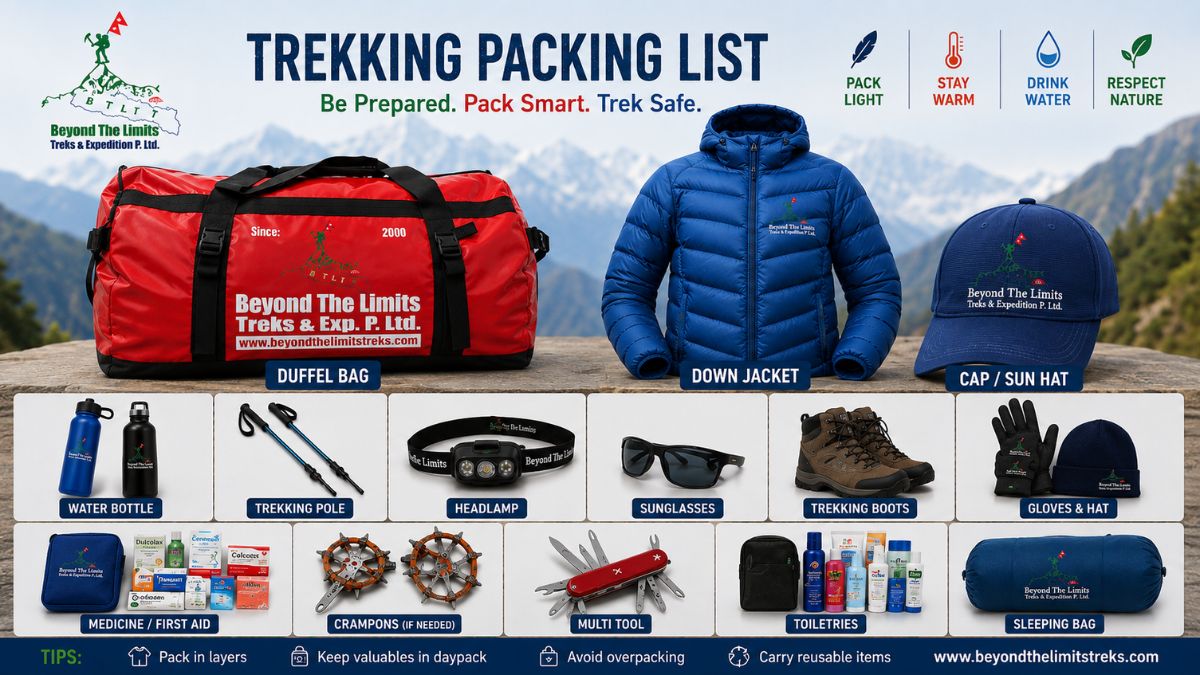
Planning a trek in Nepal is exciting, but packing properly for the Himalayas is one of the most important parts of preparing for your adventure. Whether you are trekking to Everest Base Camp, crossing the high passes of the Annapurna Circuit, exploring the remote valleys of the Manaslu Circuit, or hiking through the forests and mountains of Langtang Valley, carrying the right gear can make your trek safer, more comfortable, and far more enjoyable.
One of the biggest mistakes many trekkers make in Nepal is overpacking. The weather in the Himalayas changes quickly, temperatures vary greatly depending on altitude and season, and trails often involve long walking days. Packing smart is more important than packing heavy. A well-planned Nepal trekking packing list should focus on layering, lightweight essentials, weather protection, and comfort during long days on the trail.
This complete Nepal trekking packing list and equipment checklist has been prepared based on our years of trekking experience in the Himalayas. It covers everything from clothing and footwear to trekking gear, electronics, hygiene items, first aid supplies, and seasonal trekking recommendations. Whether you are preparing for a short tea house trek or a long high-altitude expedition, this guide will help you understand exactly what to bring for trekking in Nepal.
Essential Packing Philosophy for Trekking in Nepal
Packing for trekking in Nepal is very different from packing for a normal holiday. In the Himalayas, comfort comes from having the right layers and essential gear rather than carrying too many clothes or unnecessary items. Most trekkers quickly realize that every extra kilogram becomes noticeable during long uphill climbs and high-altitude walking days.
The best approach is to pack light while still preparing properly for mountain weather. A good trekking packing list should focus on versatility, layering, warmth, and weather protection. Instead of carrying bulky heavy clothing, trekkers should carry lightweight layers that can be added or removed depending on the temperature and conditions.
The weather in Nepal’s trekking regions can change rapidly. A sunny morning can quickly turn into snow, rain, strong winds, or freezing temperatures at higher elevations. Even during the popular trekking seasons of spring and autumn, nighttime temperatures in high-altitude areas such as Gorakshep, Thorong Phedi, Dharmasala, or Manang can drop well below freezing.
Most tea house treks in Nepal also have limited heating facilities. Dining halls may have a stove during the evenings, but bedrooms are usually unheated. This is why warm layers, proper sleeping gear, and good insulation are essential.
Trekkers should also remember porter weight limits. In Nepal, one porter usually carries luggage for two trekkers with a combined weight limit of around 20 to 25 kilograms total. This means each trekker should ideally keep their duffel bag below 10 to 12 kilograms whenever possible.
At Beyond the Limits Treks & Expedition, we always recommend focusing on lightweight essential gear rather than carrying unnecessary clothing or equipment. A lighter bag makes trekking easier, especially on high-altitude routes where energy conservation becomes important.
Clothing Layers for Trekking in Nepal
Proper layering is the foundation of comfortable trekking in the Himalayas. Instead of relying on one heavy jacket, trekkers should use a three-layer clothing system that allows flexibility in changing weather conditions.
Base Layers
Base layers are worn directly against the skin and help regulate body temperature while keeping sweat away from the body. Moisture management becomes extremely important during trekking because wet clothing in cold mountain weather can quickly lead to discomfort and heat loss.
Trekkers should carry:
- 2 to 3 moisture-wicking trekking t-shirts
- 1 to 2 thermal base layer tops
- 1 to 2 thermal base layer bottoms
- Lightweight quick-dry fabrics
Merino wool and synthetic materials work best for trekking in Nepal. Cotton clothing is generally not recommended because it absorbs moisture and dries slowly.
Thermal base layers become especially important for high-altitude treks such as Everest Base Camp, Manaslu Circuit, Nar Phu Valley, and Annapurna Circuit during colder months.
Mid Layers
Mid layers provide insulation and help retain body heat during colder conditions. Fleece jackets and lightweight insulated jackets are ideal because they provide warmth without excessive weight.
Recommended mid layers include:
- Lightweight fleece jacket
- Warm insulated trekking jacket
- Softshell jacket for windy conditions
- Lightweight trekking pants
A good fleece jacket is often one of the most frequently used clothing items during trekking in Nepal because it works well both during walking and inside tea houses.
Outer Waterproof Layers
Weather protection is critical in the Himalayas. Even during the dry trekking seasons, sudden rain, snowfall, or strong winds are possible at higher elevations.
Every trekker should carry:
- Waterproof rain jacket
- Waterproof trekking pants
- Windproof outer shell
- Backpack rain cover
Good waterproof layers are particularly important during monsoon trekking and shoulder seasons. Cheap rain gear often fails in prolonged rain or snow conditions, so investing in quality waterproof equipment is worthwhile.
Down Jackets for High Altitude Trekking
A warm down jacket is one of the most important items for trekking in Nepal. As altitude increases, temperatures drop significantly, especially during mornings, evenings, and overnight stays.
For treks above 4,000 meters, a high-quality down jacket is strongly recommended. This includes treks such as:
- Everest Base Camp Trek
- Everest Three Pass Trek
- Annapurna Circuit Trek
- Manaslu Circuit Trek
- Kanchenjunga Base Camp Trek
- Nar Phu Valley Trek
- Gokyo Lakes Trek and etc etc
A lightweight compressible down jacket provides excellent warmth while remaining easy to pack.
At Beyond the Limits Treks & Expedition, we provide down jackets for many trekking packages, which helps trekkers reduce packing stress and luggage weight.
Trekking Pants and Lower Body Clothing
Comfortable trekking pants are essential for long walking days. Trekking routes in Nepal often involve steep climbs, rocky trails, suspension bridges, forests, glacial terrain, and changing weather conditions.
Recommended lower body clothing includes:
- 2 trekking pants
- 1 thermal bottom layer
- 1 comfortable tea house or sleeping pant
- Waterproof shell pants
- Lightweight shorts for lower elevations
Convertible trekking pants can also be useful during warmer conditions in lower-altitude regions.
Avoid jeans while trekking. They are heavy, uncomfortable when wet, and unsuitable for mountain environments.
Gloves, Hats, and Small Warm Accessories
Many trekkers underestimate how cold high-altitude mornings and evenings can become in Nepal. Proper small accessories significantly improve comfort.
Recommended items:
- Warm fleece gloves
- Waterproof outer gloves for winter treks
- Wool or fleece beanie
- Sun hat or cap
- Buff or neck gaiter
- Sunglasses with UV protection
Strong sun exposure at altitude can cause severe sunburn and snow blindness. High-quality sunglasses are essential, especially in snowy conditions.
Trekking Footwear and Socks
Your trekking boots may become the most important piece of equipment during your Nepal trek. Poor footwear can lead to blisters, discomfort, ankle injuries, and difficulty on rough terrain.
Trekking Boots
Good trekking boots should provide:
- Strong ankle support
- Waterproof protection
- Comfortable fit
- Good grip for rocky trails
- Durability for mountain terrain
One of the most important tips is to break in your trekking boots before arriving in Nepal. Never use brand-new boots for a Himalayan trek.
For popular tea house treks such as Everest Base Camp and Annapurna Circuit, mid-weight waterproof trekking boots are usually ideal.
Camp Shoes
After long trekking days, many trekkers appreciate having lightweight camp shoes or sandals to wear inside tea houses.
These are useful for:
- Tea house evenings
- Toilet visits at night
- Relaxing after trekking
- Lower-altitude walking sections
- Lightweight sandals or slip-on shoes are sufficient.
Trekking Socks
Quality trekking socks help prevent blisters and improve comfort.
Recommended:
- 3 to 4 pairs of trekking socks
- 1 to 2 warm wool socks for sleeping
- Moisture-wicking materials
- Avoid thin cotton socks because they retain moisture and increase blister risk.
Bags, Backpacks, and Duffel Bags
Choosing the right bags for trekking in Nepal is extremely important because you will usually carry a combination of a porter duffel bag and a personal daypack.
Duffel Bag
Most trekkers use a duffel bag carried by a porter. A soft waterproof duffel bag works best for Himalayan trekking routes.
Your duffel bag should contain:
- Main clothing
- Sleeping gear
- Extra layers
- Non-essential daytime items
Try to keep total duffel bag weight under 10 to 12 kilograms.
At Beyond the Limits Treks & Expedition, we provide a trekking duffel bag for many trekking programs.
Daypack
Your daypack should carry all essential items needed during the walking day.
Recommended daypack size:
- 25L to 35L
Your daypack should include:
- Water bottles
- Snacks
- Camera
- Extra layers
- Rain jacket
- Gloves and hat
- Passport and valuables
- Basic first aid items
A comfortable daypack with padded shoulder straps and waist support is highly recommended.
Dry Bags and Waterproof Protection
Weather conditions in Nepal can change quickly. Using dry bags or waterproof packing cubes helps protect clothing and electronics from rain or snow.
Many experienced trekkers organize their bags using:
- Dry sacks
- Compression bags
- Waterproof liners
- Zip-lock storage bags
This makes packing more organized and protects important equipment.
Sleeping Gear for Nepal Treks
Tea houses in Nepal provide basic accommodation, but bedrooms are usually not heated. As altitude increases, nighttime temperatures can become extremely cold.
Sleeping Bag
A high-quality sleeping bag is strongly recommended for most Himalayan treks.
Recommended temperature rating:
- -10°C to -20°C for high-altitude trekking
Sleeping bags become especially important during:
- Winter trekking
- Everest region treks
- Manaslu Circuit Trek
- Annapurna Circuit high pass crossings
- High altitude treks above 4000meters
Many trekkers underestimate how cold tea houses can become above 4,000 meters.
At Beyond the Limits Treks & Expedition, sleeping bags are included for many trekking packages.
Trekking Equipment and Accessories
Besides clothing and sleeping gear, several small trekking accessories can greatly improve your trekking experience in Nepal.
Recommended trekking accessories include:
- Trekking poles
- Headlamp
- Water bottles
- Hydration bladder
- Water purification tablets
- Thermos flask
- Quick-dry towel
- Snacks and energy bars
- Lip balm
- Sunscreen
Trekking Poles
Trekking poles are highly recommended for Nepal treks because they reduce pressure on knees during steep descents and improve balance on uneven terrain.
They are especially helpful on:
- Stone staircases
- Snowy sections
- Rocky descents
- Glacier trails
Many trekkers who initially avoid poles later wish they had carried them.
Water Purification
Buying bottled water throughout a trek creates unnecessary plastic waste and becomes expensive at higher elevations.
Most trekkers use:
- Water purification tablets
- Water filters
- UV purification systems
Staying hydrated is extremely important at altitude, and safe drinking water should always be a priority during trekking in Nepal.
Electronics and Charging Equipment
Even though trekking in Nepal is about disconnecting from busy life and enjoying nature, a few essential electronic items are still important for safety, communication, and capturing memories. However, electricity access in the Himalayas is limited, especially at higher altitudes, so it is important to pack smart and not rely heavily on charging opportunities every day.
Power Bank
A high-capacity power bank is one of the most essential items for trekking in Nepal. Charging facilities in tea houses are often available only in dining areas and may come with additional cost. At higher elevations, charging may even be limited or unreliable due to solar power systems.
Recommended:
- 10,000 mAh to 20,000 mAh power bank
- Lightweight and fast-charging supported
- Fully charged before starting the trek
A power bank is especially important for charging phones, cameras, GPS devices, and headlamps.
Mobile Phone and Connectivity
Mobile networks are available in many trekking regions of Nepal, but coverage is not consistent.
- Everest region: NTC and Ncell are available in many sections, but weak in high altitude
- Annapurna region: relatively better coverage in lower and mid sections
- Remote areas like Manaslu or Nar Phu: limited where we recommend NTC more than NCell
It is always recommended to inform family and friends that connectivity will be limited during the trek. Beyond the Limits Treks recommends you take the NTC SIM card, which is government-owned and works better in most of the trekking regions.
Camera or GoPro
The Himalayas offer some of the most stunning landscapes in the world, and many trekkers prefer carrying a dedicated camera or GoPro.
Tips:
- Carry extra batteries (cold weather drains battery quickly)
- Use protective cases
- Keep devices close to body during cold nights
Headlamp
A headlamp is an essential safety item for trekking in Nepal. It is useful for:
- Early morning starts
- Night bathroom visits in tea houses
- Power cuts in lodges
- Emergency situations
Always carry extra batteries or a rechargeable headlamp.
Toiletries and Personal Hygiene Items
Hygiene facilities in trekking regions are basic. Most tea houses provide shared bathrooms, and hot showers may be available at an extra cost in lower elevations, but become limited at higher altitudes.
Carrying your own hygiene essentials is important for comfort and cleanliness.
Recommended toiletries include:
- Toothbrush and toothpaste
- Biodegradable soap or body wash
- Shampoo (travel size)
- Toilet paper (very important)
- Wet wipes (for days without showers)
- Hand sanitizer
- Small quick-dry towel
- Lip balm (very important due to dry air)
- Sunscreen (SPF 30 or higher)
Toilet Paper and Wet Wipes
One of the most commonly overlooked items is toilet paper. In most trekking regions of Nepal, toilet paper is not provided in toilets, so trekkers must carry their own supply.
Wet wipes are also very useful for cleaning hands, face, and body when showers are not available.
- Personal Comfort Items
- Small comfort items can significantly improve your trekking experience:
- Earplugs (tea houses can be noisy)
- Eye mask (early sunrise light)
- Moisturizer for dry skin
- Small mirror
- Sanitary items (for female trekkers)
First Aid Kit and Medications
A basic first aid kit is essential for trekking in Nepal. While guides and trekking agencies carry group medical kits, every trekker should also carry personal medication and basic health supplies.
Basic First Aid Items
Recommended items include:
- Blister plasters (very important)
- Bandages and gauze
- Antiseptic cream or wipes
- Painkillers (paracetamol or ibuprofen)
- Anti-diarrheal medication
- Rehydration salts
- Antihistamines (for allergies)
Blisters are one of the most common trekking issues, especially during long walking days or when boots are not properly broken in. Check our recommended medicine while travelling in Nepal.
Altitude Considerations
For high-altitude treks such as Everest Base Camp, Annapurna Circuit, and Manaslu Circuit, altitude sickness prevention is important. Many trekkers carry medication such as Diamox after consulting their doctor before the trek.
However, the most effective prevention methods are:
- Proper acclimatization days
- Slow ascent
- Hydration
- Listening to your body
Personal Medication
If you take any regular medication, always carry enough supply for the entire trek plus extra days in case of delays.
Important Documents and Money
Proper documentation and financial preparation are essential before starting any trek in Nepal.
Documents
Carry:
- Passport (valid for at least 6 months)
- Photocopies of passport
- Visa copy
- Trekking permits (provided by your agency)
- Travel insurance copy (must cover high altitude trekking)
It is recommended to keep digital copies stored on your phone or email as backup.
Cash
ATMs are only available in Kathmandu and Pokhara. There are no reliable ATMs along trekking routes.
You should carry enough cash for:
- Drinks (tea, coffee, bottled water)
- Snacks
- Charging devices
- Hot showers
- Tips for guides and porters
- Emergency expenses
It is best to carry Nepalese rupees in small denominations.
Packing List by Trekking Season in Nepal
Different seasons in Nepal require slightly different packing approaches. Weather conditions vary significantly between spring, autumn, winter, and monsoon.
Spring (March to May)
Spring is one of the best trekking seasons in Nepal. The weather is generally stable, but temperatures vary with altitude.
You should carry:
- Moderate warm layers
- Light down jacket
- Sun protection (very important due to strong UV)
- Light gloves and hat
Rhododendron forests bloom during this season, especially in the Annapurna and Langtang regions.
Autumn (September to November)
Autumn is the most popular trekking season in Nepal. Weather is clear, dry, and stable.
You should carry:
- Standard trekking layers
- Warm jacket for evenings
- Good quality sleeping bag
This is the best visibility season for mountain views across Everest, Annapurna, and Manaslu regions.
Winter (December to February)
Winter trekking is colder but offers quieter trails and clear mountain views.
You must carry:
- Heavy down jacket
- Warmer sleeping bag (-15°C or lower)
- Thermal layers
- Waterproof gear for snow conditions
High passes like Thorong La or Larke La can be very challenging in winter.
Monsoon (June to August)
Monsoon season brings rain, humidity, and leeches in lower regions, but also lush green landscapes.
You should carry:
- High-quality rain jacket and pants
- Waterproof backpack protection
- Anti-leech socks or salt (for some regions)
- Extra dry bags for electronics
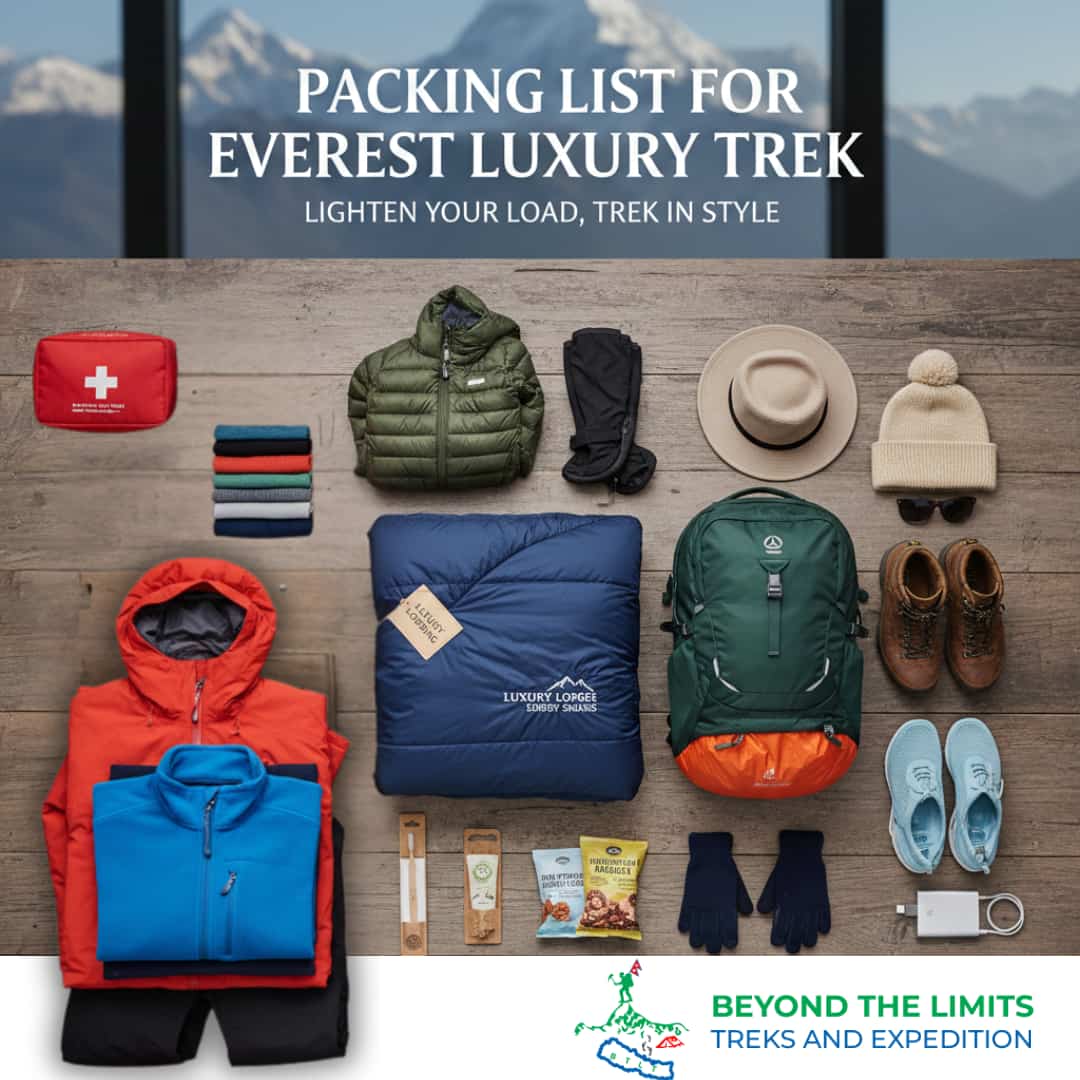
Everest Base Camp Trek Packing List
For the Everest Base Camp trek, packing becomes more focused on cold-weather protection due to high altitude and glacier environments.
Key additional items:
- High-quality down jacket
- Thermal gloves and socks
- UV-protection sunglasses (snow glare is strong)
- Warm sleeping bag (-15°C recommended)
- Lip balm and sunscreen (extreme UV exposure)
This trek reaches over 5,000 meters, so cold weather preparation is essential even in peak trekking seasons.
Annapurna Circuit Trek Packing List
The Annapurna Circuit trek includes diverse climates, from subtropical forests to high alpine deserts.
Key considerations:
- Layering system is crucial due to changing climates
- Waterproof gear for unpredictable weather
- Warm jacket for Thorong La Pass (5,416m)
- Lightweight clothing for lower sections
Because this trek covers a wide altitude range, versatility is more important than heavy packing.
Manaslu Circuit Trek Packing List
The Manaslu Circuit trek is remote and less developed, requiring more self-sufficiency.
Important items:
- Strong waterproof gear
- Reliable trekking boots
- Extra batteries and power bank
- Warmer sleeping bag (tea houses are basic)
This region has fewer facilities, so being fully prepared is important.
Langtang Valley Trek Packing List
The Langtang Valley trek is relatively shorter but still requires proper mountain gear.
Key items:
- Standard trekking layers
- Light down jacket
- Rain protection (especially in monsoon shoulder seasons)
- Comfortable daypack
This trek is slightly easier but still involves altitude and cold conditions.
Can You Buy or Rent Trekking Gear in Kathmandu?
Kathmandu, especially the Thamel area, is one of the best places in the world to buy or rent trekking gear. Almost every trekker passing through Nepal stops here to finalize equipment before heading into the mountains. You will find everything from budget local gear to international branded products.
However, not all gear quality is the same, and understanding what to buy versus what to rent is very important for a comfortable trekking experience.
What You Can Rent in Kathmandu
Renting is a very popular option for trekkers who do not want to invest in expensive gear for a one-time trek. Many items are available on daily rental basis.
Common rental gear includes:
- Down jackets
- Sleeping bags (-10°C to -20°C rating)
- Trekking poles
- Duffel bags (in some shops)
- Crampons or microspikes (for winter treks)
Renting is especially useful for items you only need in cold high-altitude sections, such as Everest Base Camp or Annapurna Circuit.
However, always check the condition before renting. Cleanliness, zipper quality, and insulation performance should be tested properly.
What You Should Buy (Not Rent)
Some items should always be personally owned for hygiene, comfort, and safety reasons.
You should buy:
- Trekking boots (never rent boots)
- Base layers and thermal clothing
- Socks and underwear
- Backpack (daypack)
- Personal hygiene items
- Sunglasses
- Headlamp
Boots in particular must be broken in before the trek. Wearing rented or new boots on the trail is one of the most common causes of blisters and discomfort.
Quality of Gear in Thamel
Thamel offers three main categories of gear:
- Budget local gear (cheap and works but low durability)
- Mid-range branded gear (good value for most trekkers, works very well and looks good as well)
- High-end international brands (expensive and very, very reliable)
For serious trekking routes like Everest Base Camp, Manaslu Circuit, or Annapurna Circuit, mid-range or branded gear is recommended for safety and comfort.
What Equipment Does Beyond the Limits Treks Provide?
When you trek with Beyond the Limits Treks & Expedition, we aim to make your preparation easier by providing essential trekking equipment so you don’t have to carry everything from home.
Depending on your trekking package, we commonly provide:
- High-quality down jacket (return after trek)
- Trekking duffel bag
- Sleeping bag suitable for high-altitude conditions (return after trek)
- Experienced licensed guide
- Porter service (for luggage carrying)
- First aid support during trek
This helps reduce your packing load significantly, especially for international trekkers who want to travel light.
We always recommend that trekkers still bring their personal clothing layers, boots, and essential hygiene items, but heavy equipment like sleeping bags and jackets can often be arranged locally. This approach makes trekking in Nepal more convenient while ensuring safety and comfort in high-altitude environments.
Safety Tips for Packing in Nepal
Packing is not just about comfort it directly affects safety in the Himalayas. Weather changes, altitude challenges, and long trekking days mean your gear should always be reliable.
Here are some important safety-focused packing tips:
- Pack in Layers, Not Bulk
- Keep Rain Protection Always Accessible
- Protect Electronics from Cold
- Never Underestimate Sun Exposure
- Keep Essentials in Your Daypack
Your porter bag may not always be accessible during the day.
Common Packing Mistakes Trekkers Make
Many trekkers underestimate the Himalayas and make avoidable packing mistakes. Here are some of the most common ones:
- Overpacking Clothes
- Not Breaking in Boots
- Ignoring Cold Weather at Altitude
- Not Carrying Enough Warm Layers
- Poor Bag Organization
Final Packing Checklist Summary
Before starting your trek in Nepal, make sure you have:
Clothing
- Base layers (thermal tops and bottoms)
- Fleece jacket
- Down jacket
- Waterproof jacket and pants
- Trekking pants
- Warm hat, gloves, and neck gaiter
Footwear
- Broken-in trekking boots
- Camp shoes or sandals
- Wool trekking socks
Gear
- Backpack (25–35L)
- Duffel bag
- Sleeping bag (if not provided)
- Trekking poles
- Headlamp
Essentials
- Water bottle or hydration system
- Power bank
- Sunscreen and lip balm
- Toiletries and toilet paper
- First aid kit
Documents & Money
- Passport and permits
- Travel insurance
- Cash in Nepalese rupees
Why Proper Packing Matters for Trekking in Nepal
Trekking in Nepal is a life-changing experience, but comfort and safety depend heavily on preparation. The right packing strategy allows you to enjoy the mountains without unnecessary stress, fatigue, or discomfort.
Well-prepared trekkers enjoy:
- Better energy on long walking days
- Improved altitude adaptation
- Safer weather protection
- More enjoyable mountain experience
- Less physical strain
Poor packing, on the other hand, can turn a beautiful trek into a difficult and exhausting journey.
Plan Your Trek with Experts
If you are planning a trek in Nepal and need guidance on gear, routes, or preparation, our team is always ready to help you design a safe and well-organized trekking experience.
At Beyond the Limits Treks & Expedition, we specialize in organizing treks across the Everest, Annapurna, Manaslu, and Langtang regions with experienced guides, proper logistics, and full support from arrival to departure.