Understanding Altitude Sickness:
1) What is Altitude Sickness?
Let us begin with what altitude sickness really is. Medically known as Acute Mountain Sickness (AMS), altitude sickness occurs when your body fails to adapt properly to reduced oxygen levels due to a drop in atmospheric pressure at high altitude.
This starts mostly as you cross an elevation of 2,500 meters (8,200 feet), and this elevation is easily crossed in almost all the treks of Nepal. This is why it is a common phenomenon while trekking in Nepal. While it is a common misconception that altitude sickness is caused by less oxygen, the real culprit is atmospheric pressure as the air always has 21% oxygen, no matter how high you go.
2) The Physiology of High Altitude:
As you go higher, the Partial Pressure of Oxygen (PO2) is decreased. Think of pressure as the "force" that pushes oxygen through the membranes of your lungs and into your bloodstream. This means each breath delivers less oxygen to the body. Without that pressure, your body has to work exponentially harder to fuel your muscles and brain. This also triggers the mitochondrial switch. Your body has a master oxygen sensor called the Hypoxia-Inducible Factor 1-alpha. When it detects low pressure, it triggers a series of events within your body:
- Erythropoiesis: Your kidneys signal for more red blood cells (the "delivery trucks" of oxygen).
- Capillary Expansion: Your body tries to grow more "roads" to deliver blood to tissues.
- Increased Ventilation: Your brain tells you to breathe deeper and faster, even while resting.
3) Decoding The Big Three: AMS, HACE, and HAPE :
Altitude Sickness can be categorized in three different types depending on the severity of the symptoms. Think of altitude sickness like a spectrum that ranges from AMS and goes towards HACE and HAPE.
Acute Mountain Sickness: Acute Mountain Sickness is the most common and the mildest form of altitude sickness. In AMS, the symptoms are mild and manageable. However, ignoring symptoms in this stage can lead to HACE and HAPE. The best thing to do during this stage is to stop ascending and get rest.
High Altitude Pulmonary Edema: HAPE is an advanced form of altitude sickness, and its characteristic mechanism is fluid accumulating in the lungs due to increased pressure in pulmonary blood vessels. This is a medical emergency and requires immediate attention, and the main symptom seen is blue lips. If you fail to descend immediately and take the symptoms lightly, it can cause death faster than other forms of altitude sickness.
High Altitude Cerebral Edema: High Altitude Cerebral Edema (HACE) is the most severe and a fatal form of altitude sickness. In this, altitude sickness and lack of oxygen cause your brain to swell. This is a critical medical emergency with symptoms like ataxia and hallucinations. You need immediate medical care or else this condition can cause immediate death.

Symptoms of Altitude Sickness:
The symptoms of altitude sickness can be divided into three categories based on their severity:
Early and Mild Symptoms
These are the symptoms that are mostly dismissed as trekking fatigue. But they are often warning signs of the beginning of altitude sickness:
- Persistent headache
- Fatigue and weakness
- Dizziness or lightheadedness
- Loss of appetite
- Disturbed sleep
Moderate Symptoms
- Headache unrelieved by medication
- Nausea or vomiting
- Difficulty walking straight
- Shortness of breath while resting
Severe Symptoms
- Confusion or altered mental state
- Severe breathlessness
- Cough producing pink or frothy sputum
- Loss of coordination
- Collapse or unconsciousness
Who is at Higher Risk of Altitude Sickness in 2026?
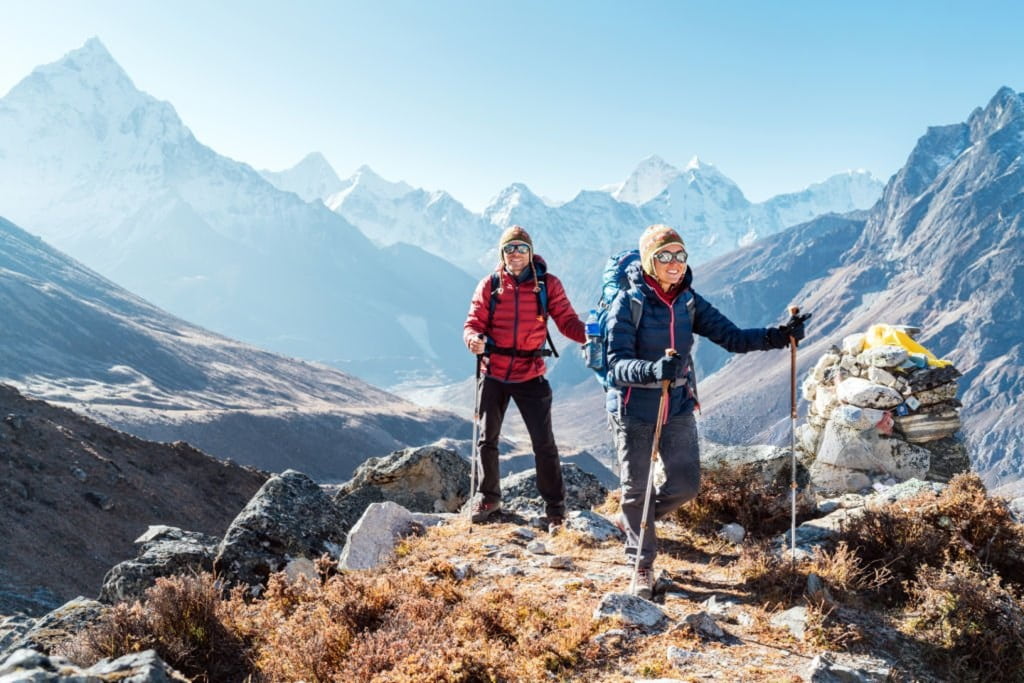
Another common myth surrounding altitude sickness is that being physically fit protects you from it. In reality, a sportsperson or someone with lots of trekking experience and a normal person have the same probability of getting altitude sickness. Altitude sickness is less dependent on your lifestyle outside of the trekking duration and more dependent on your activities during the trek. Some common factors that it depends on include:
- Rate of ascent
- Sleeping altitude
- Individual physiology and genetics
- Previous altitude exposure
Having said that, there are certain groups of people for whom the risk is higher. And this is mainly because they are not familiar with altitude sickness and don’t know about prevention, or they already have an underlying condition. The risk is increased for:
- First-time high-altitude trekkers
- Trekkers following rushed itineraries
- Solo trekkers without guide support
- Older trekkers and seniors
- Those with pre-existing heart or lung conditions
- Trekkers over-relying on fitness trackers while ignoring physical symptoms
Ways to Prevent Altitude Sickness:
Now that we have covered what altitude sickness and its symptoms look like, let’s get to the part that is most important, preventing altitude sickness. More than treatment, preventing altitude sickness altogether can be the foundation of safe trekking in 2026.
1) Gradual Ascent: The most effective method to prevent altitude sickness is by ascending slowly. Remember, the trail is not a racetrack. You are here to enjoy the beauty of nature, and you don’t have to do that by speeding through the trail. You need to set a limit for yourself, cover an altitude gain of around 300 to 500 meters per day, and then stop. Even if you feel like you can go higher, don’t do it as it just increases your risk of getting altitude sickness.
2) Smart Itinerary: A well-planned itinerary makes all the difference as this is the schedule that you will be following throughout the trek. At Beyond the Limits Treks and Expeditions, we craft our itineraries by keeping this in mind. Our itinerary follows the 300-meter rule. After you have crossed 3,000 meters, our itinerary follows in a way that your sleeping altitude does not increase by more than 300-500 meters per night.. Also, we have dedicated acclimatization days in our itinerary for your body to adapt well to the altitude. On these acclimatization days, you are encouraged to go on acclimatization hikes nearby.
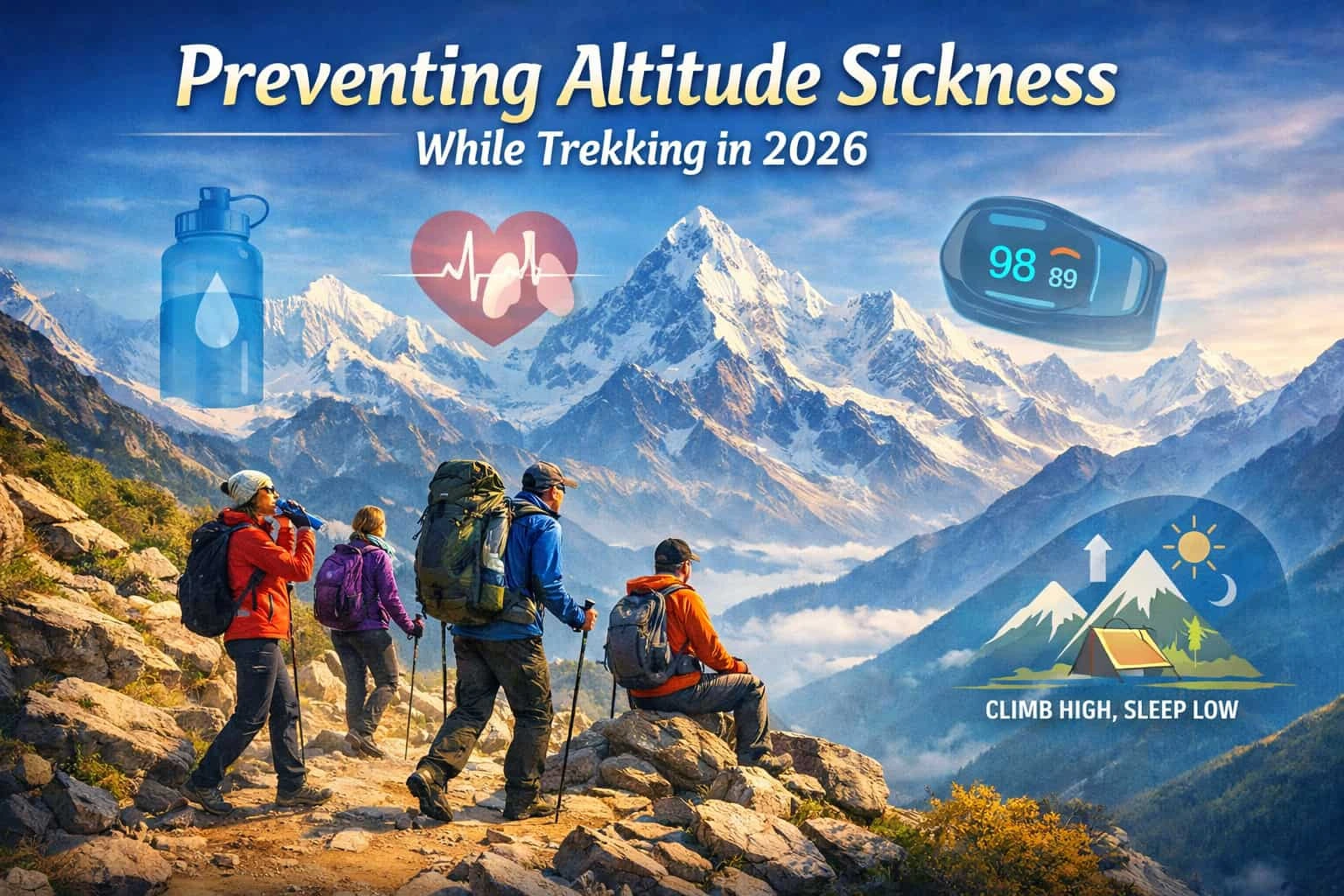
These hikes take you to a slightly higher elevation and then you descend to the earlier altitude to sleep. This follows the ‘Climb High, Sleep Low’ principle and helps your body to adapt better.
3) Hydration and Nutrition: Dehydration is proven to worsen the symptoms of altitude sickness as it further adds to the stress on your body. Thus, a major part of preventing altitude sickness is staying hydrated throughout the day. Make sure to drink at least 4 liters of water every day on the trek. You can also add in a bunch of electrolytes and rehydrating salts or fruits to the mix, without cutting down on water. Stay away from caffeine and alcohol as much as possible while trekking as these can cause dehydration. Coming to food, our golden advice for you would be to stick to a high carbohydrate diet. And there is science behind this too, as carbohydrates require 8-10% less oxygen to metabolize than fats or proteins.
And the food items you get while trekking in Nepal are perfect for this. Local staples like Dal Bhat, potatoes, porridge, and even soups can be a good diet for you. Try to avoid heavy and fatty food items at higher elevations as your body requires more energy to metabolize these.
Also, try to get proper sleep which is very important as the more well rested your body is, the easier it is to prevent altitude sickness. Maintain consistent sleep routines while on the trek.
4) Wearables: With the advancement of technology, you have lots of digital options that can help you track your vitals while trekking so that you know when you need to stop or even descend. You can use your smartwatches like Apple Watch, Garmin, or Whoop to monitor your blood oxygen saturation (SpO2) levels, your heart rate variables, and even your sleep patterns.
A pulse oximeter can also be used if interpreted correctly. But keep in mind that the readings can fluctuate and let the data guide your decision rather than create panic.
5) Medical Prevention: While natural acclimatization is the best way to prevent altitude sickness, prescribed medication can also work to keep the symptoms at bay. However, make sure that you get a proper prescription rather than just getting names of medicines off the internet as not everything might be suited to everyone. Acetazolamide or Diamox is a key medication which can be used to prevent altitude sickness. It is a respiratory stimulant that helps you breathe better by allowing your body to adapt faster.
Besides that, medicines like Ibuprofen and Dexamethasone can be used to treat certain symptoms of altitude sickness. Again, use these medicines carefully and not to mask your symptoms as it can put your life at risk.
More Related Blogs:
What to Do if You Develop Altitude Sickness?
1) The Immediate Response Plan:
Even after all the prevention, you might still get altitude sickness. And if you start to notice the symptoms, don’t take risks. Immediately inform your guide and stop ascending. Take proper rest while monitoring your symptoms.
2) When To Descend?
If the symptoms still persist or worsen, that is your cue to descend to a lower altitude immediately. Descending even 300 to 500 meters can make a huge difference. Never ascend with worsening symptoms as it can be fatal. You can continue the trek once the symptoms are gone. And if it still persists, you shouldn’t have second thoughts about returning back as you can complete the trek once you are healthy.
3) Oxygen, Gamow Bags, and Evacuation
To manage the symptoms, you can breathe high concentrations of supplemental oxygen which can help manage the symptoms. Your guide will usually carry supplemental oxygen for the same purpose. Portable hyperbaric bags or Gamow Bags can also be used which uses increased partial pressure of oxygen for therapy of hypobaric injury. This can delay the worsening of symptoms until it’s possible to evacuate a person to a lower altitude.
In worst case scenario, helicopter evacuation is common in trekking routes of Nepal. But this can be weather dependent and costly too. So, make sure to get comprehensive trekking insurance with helicopter evacuation covered.
4) Role of Guides
While prevention tips and wearables are a good way to prepare against altitude sickness, the role of guides in detecting, managing, and handling symptoms of altitude sickness cannot be undermined. At Beyond the Limits Treks and Expeditions, our guides are licensed with first aid training focused especially on managing altitude sickness. Our guides are trained to monitor your oxygen levels and heart rate daily. And in this age of Artificial Intelligence, our guides use Human Intelligence, i.e. they watch your appetite, your mood, and your walking rhythm. To your surprise, this actually works.
Our Sherpa team has years of experience, and they can understand the mountain’s mood as well as identify your symptoms even before you or your smartwatch. When they say it’s time to rest, it’s based on generations of high-altitude DNA. We also have proper safety infrastructure in place. Our guides carry medical-grade oximeters and have 24/7 satellite communication for emergency coordination and rescues.
Conclusion
Altitude Sickness is a serious concern, especially in high altitude trekking. But it is not something to be afraid of. It is a physiological response to one of Earth’s most extreme environments. And with proper planning, awareness, and respect for the mountains, it is largely preventable. Move ahead with knowledge, patience, preparation, and humility, and the Himalayas will reward you with an experience of a lifetime.
Your safety determines your success, and at Beyond the Limits Treks and Expeditions, we understand this. Therefore, we prepare our treks accordingly. So, join us for a trekking adventure in 2026 as the trails of Nepal are waiting with thin air but thick experiences.