Book Now

Tsum Valley Trek - 16 Days

Customize Trip
208 reviews in TripAdvisor
86 reviews in Google Reviews
Recommended by 99% of Travelers

The Tsum Valley Trek is designed for travelers who want to experience a quieter and more culturally focused side of the Nepal Himalayas. Over 16 days, the route leads from the lower Budhi Gandaki Valley into remote settlements shaped by Tibetan Buddhist traditions, passing stone houses, mani walls, chortens, monasteries and working mountain farms.

Rather than following a trail built around a famous base camp or high-pass crossing, this trek is about understanding a living Himalayan valley. You will walk through Chumling, Chhokang Paro, Nile and Chhule, visit Milarepa Cave, stay near historic monasteries and reach Mu Gompa at 3,700 metres.

The accommodation is simple, the road journey is long and the walking requires consistent fitness. In return, you experience peaceful trails, meaningful cultural encounters and a part of Nepal that remains far less commercialized than Everest, Annapurna and the main Manaslu Circuit.

Tsum Valley Trek Highlights

  • Experience one of Nepal's quieter restricted trekking regions
  • Walk through traditional settlements including Jagat, Lokpa, Chumling, Chhokang Paro, Nile and Chhule.
  • Stay in authentic family-run Himalayan teahouses
  • Visit Mu Gompa, Rachen Gompa and Milarepa Cave
  • Walk through centuries-old Buddhist villages
  • Discover the sacred hidden valley of Tsum
  • Peaceful trails with fewer trekkers
  • Visit Rachen Gompa and Gumba Lungdang as part of the return journey.
  • Panoramic views of Ganesh Himal, Sringi Himal and Baudha Himal
  • Explore ancient mani walls and chortens
  • Choose an optional high exploration day from Mu Gompa when weather, trail conditions, permits and personal fitness allow.
Duration
16 Days
Trip Grade
Moderate-Strenuous
Country
Nepal
Maximum Altitude
3700m (Mu Gompa)
Group Size
2-16
Starts
Machha Khola
Ends
Kathmandu
Activities
Trekking
Best Time
Spring and Autumn

Complete Tsum Valley Trek Overview

The Tsum Valley Trek is a sacred, remote, and unexplored region located in the northern part of the Gorkha District of Nepal, in the Manaslu Conservation Area. The trek is known for its unique culture, unexplored areas, Buddhist monasteries, and beautiful Himalayan ranges, and was opened for tourists in 2008 as a restricted trekking area of Nepal. The main attraction of Tsum Valley for tourists is that it was a culturally distinct geographical area named ‘Tsum Tso Chuksum’, which means 13 provinces ruled a single territory. Due to not being touched by modern society and devices, the ancient art, unique culture, and religion of this valley are still intact with the people. The trails in this trek are filled with artistic architecture and Mani walls (a wall made of stones inscribed with a Lamaist prayer), which implies you are in the territory of Tibetan culture. You can get a good experience of Tibetan culture from this trek. As most local people are of Tibetan heritage, the local people's dialect is Tibetan. This trek gives you an insight into traditional villages and cultural buildings to their full capacity.

Your 16-day trip begins in Kathmandu, where our team meets you at the airport, checks your trekking equipment and completes the necessary trip formalities. The following morning, you travel west from Kathmandu toward Machha Khola. The drive is long and includes winding hill roads, changing road surfaces and possible delays, bu t it also marks the gradual transition from Nepal’s capital to the rural valleys of Gorkha.

The trek initially follows the lower Budhi Gandaki corridor through settlements such as Khorlabesi, Tatopani, Doban and Jagat. This opening section includes suspension bridges, rocky paths, riverside walking and repeated short ascents and descents. At Jagat, the restricted-area documentation is checked before the route continues through Philim and separates from the main Manaslu Circuit trail toward Lokpa. One of the highlights of this trek is the exploration of remote settlements, experiencing the life of people who are untouched by modern society or perhaps we could say traveling to the past and enjoying the real life before technology. Not only would we get an insight into religious practices, tradition, and architecture the scenery is no less to missing out on.

The Tsum Valley Trek does not involve technical climbing, but it should not be described as an easy trek. You will walk for several hours on consecutive days over uneven trails, stone steps, suspension bridges and repeated uphill and downhill sections. The optional high exploration day adds a much more demanding altitude component. Basic accommodation, cold nights, limited facilities and long road transfers also contribute to the overall challenge.

This trek is most rewarding for travelers who approach the valley with patience and respect. It is not a staged cultural attraction, and local people are not there simply for visitors’ entertainment. Photography should be requested politely, religious sites should be entered according to local guidance, and local customs should be observed.

Beyond the Limits Treks and Expedition arranges the required documentation, licensed guide, accommodation, meals, transportation and operational support. Private departures can be adapted to suit your pace, hotel preference, transport choice and interest in combining Tsum Valley with the Manaslu Circuit.

Tsum Valley Trekking


Is the Tsum Valley Trek Right for You?

The Tsum Valley Trek may suit you if you:

  • Prefer peaceful trails to heavily visited trekking routes.
  • Are interested in Tibetan Buddhist culture, monasteries and village life.
  • Can walk for approximately four to seven hours on consecutive days.
  • Accept twin-sharing rooms, shared toilets and limited facilities.
  • Are comfortable with a long and sometimes rough road transfer.
  • Value cultural understanding more than reaching a famous summit or base camp.
  • Want to travel with a licensed guide in a restricted region.
  • Have approximately two weeks available in Nepal.
  • Are willing to prepare physically before the trek.
  • Understand that weather and trail conditions may require flexibility.
  • Want a private or small-group experience.
  • Are respectful when visiting homes, monasteries and sacred sites.

A fit first-time Himalayan trekker may complete the standard route with good preparation, a sensible pace and realistic expectations. Previous multi-day trekking experience is helpful, especially for the optional high exploration day.


Who May Prefer Another Trek?

This route may not be the best choice if you:

  • Require luxury rooms and private bathrooms every night.
  • Need dependable Wi-Fi, and charging throughout the trek.
  • Want a short trek with easy road access.
  • Mainly want to see Mount Everest or Annapurna.
  • Want to cross a major high pass as the central objective.
  • Dislike long overland journeys.
  • Are unable to walk for several days in succession.
  • Prefer a route with extensive bakeries, cafés and international menus.
  • Have insufficient time for gradual travel and possible delays.

Travelers wanting a demanding high-pass circuit may prefer the Manaslu Circuit Trek. Those with more time can combine both regions on the Tsum Valley and Manaslu Circuit Trek.


Tsum Valley Trek Compared with Other Nepal Treks

Trek
Best Suited To
Main Difference
Tsum Valley Trek
Culture-focused travelers seeking quieter trails
Monasteries, villages and Tibetan Buddhist heritage are the main focus
Trekkers seeking a demanding circuit and high-pass crossing
Includes the Larkya La crossing and greater landscape variation
Travelers with more time who want culture and a high pass
Combines the strongest features of both routes
Trekkers seeking restricted-area culture in a drier landscape
More dramatic arid terrain and links with the Annapurna region
Travelers with less time and easier access from Kathmandu
Shorter approach and more developed trekking infrastructure
Travelers wanting an internationally recognized objective
Busier trail, stronger commercial infrastructure and Everest-focused scenery
Travelers wanting varied landscapes and a classic circuit
More diverse facilities and the Thorong La crossing

Why Tsum Valley Trek with Beyond the Limits Treks and Expedition?

  • Local Expertise and direct support as a local Nepal-based company
  • Carefully designed Flexible Itinerary
  • Hassle-free whole trip arrangements
  • 100% Departure guaranteed after booking the trek
  • Customize the trek based on your needs
  • Flexible Private Departures
  • Transparent pricing with no hidden cost
  • First Aid Kit for Emergencies
  • 24/7 Support before and during the tri[
  • Decades of experience with local guides and staff
  • Satellite Calls in large groups (more than 10) for treks.
  • Clear pricing before departure
  • Many platform of communication(Email, Whatsapp, Viber, Facebook, Instagram, WeChat)
  • Safety Preparation and Operational Support
  • An oximeter to check your pulse and oxygen level during the trek in high altitudes
  • Easy booking and reservation System
  • Simple payment method

Tsum Valley Trek Difficulty Level 

The Tsum Valley Trek is considered a moderate to moderately challenging trek, making it suitable for trekkers with a reasonable level of fitness and a sense of adventure. While the route does not involve crossing high mountain passes like the Manaslu Circuit or Annapurna Circuit, it takes you through remote Himalayan terrain with several days of steady uphill and downhill walking.

During the trek, you can expect to walk 5 to 7 hours each day on well-established mountain trails that pass through forests, traditional villages, suspension bridges, terraced farmland, and narrow valleys. Some sections are rocky and uneven, but they are not technically difficult, so no climbing experience or special mountaineering skills are required.

The highest point of the trek is Mu Gompa (3,700 m), while the optional hike to Ganesh Himal Base Camp (approximately 5,104 m) is the highest elevation reached on this itinerary. As with any trek in the Himalayas, the increase in altitude requires a gradual pace, proper acclimatization, adequate hydration, and guidance from experienced trekking professionals.

Previous trekking experience is helpful but not essential. If you are physically active and can comfortably walk for several hours a day, you can successfully complete the Tsum Valley Trek with proper preparation. Regular walking, hiking, stair climbing, or light cardio exercise before your trip will help improve your endurance and make the journey more enjoyable.

At Beyond the Limits Treks & Expedition, your safety is our highest priority. Our experienced guides carefully monitor your pace, health, and acclimatization throughout the trek. They carry a first aid kit and pulse oximeter to regularly check your oxygen saturation and ensure you enjoy a safe, comfortable, and rewarding trekking experience in one of Nepal's most culturally preserved Himalayan valleys.


Tsum Valley Trek Cost

The Tsum Valley Trek cost varies depending on your preferred level of service, group size, accommodation in Kathmandu, and any additional customization you choose. At Beyond the Limits Treks & Expedition, we offer flexible packages designed to suit different budgets while maintaining high standards of safety, comfort, and personalized service.

Our 16-day Tsum Valley Trek starts from USD 950 per person and includes all essential trekking permits, an experienced licensed guide, accommodation, meals during the trek, ground transportation, comprehensive logistical support and other which you can explore in cost include section. Whether you are travelling solo, with family, or in a group, we can tailor the itinerary and services to match your travel style. The final price may vary according to:

  • Number of travelers
  • Private or fixed-group departure
  • Public bus, shared jeep or private jeep
  • Kathmandu hotel category
  • Single-room request in Kathmandu
  • Porter inclusion
  • Additional acclimatization or exploration days
  • Manaslu Circuit or Ganesh Himal Base Camp extension
  • Seasonal permit fees
  • Extra airport transfers or hotel nights
  • Private dietary or logistical requirements

We believe in transparent pricing with no hidden costs. Before confirming your booking, you'll receive a detailed breakdown of everything included and excluded, allowing you to plan your trip with confidence. Our goal is to provide excellent value by combining professional local expertise, reliable service, and an authentic trekking experience in one of Nepal's most culturally significant Himalayan regions.

Group Size

Price Per Person

1 traveler USD 1350
2-3 travelers USD 1099
4-6 traveler USD 999
7-12 traveler USD 950
13–16 travelers Request a customized group quotation

A lower per-person price for larger groups is possible because guide, transport, administration and operational expenses are shared. The quality of accommodation, meals, permits, and guide support remains consistent unless a different package level is clearly stated.

Tsum Valley Trek - 16 Days Itinerary

Machha Khola to Kathmandu

Expand all

A representative from Beyond the Limits Treks will meet you at Tribhuvan International Airport and transfer you to your hotel. After check-in, you will meet our operations team for an initial trip briefing.

We will review your itinerary, transport choice, equipment, insurance information, dietary requirements, and current trail conditions. The team will also collect or verify the passport details and photographs required for permit processing. Your original passport should only be held when required for official processing and returned as soon as the procedure is complete.

The remainder of the day is free for rest, gear preparation, or a short walk around Kathmandu.

Starting altitude: Kathmandu, approximately 1,350 m
Ending altitude: Machha Khola, approximately 890 m

After breakfast, you leave Kathmandu and travel toward Gorkha and the Budhi Gandaki Valley. The journey begins on paved highway sections before continuing onto narrower hill roads with mixed surfaces.

Depending on your package, you may travel by public bus, shared jeep or private jeep. A private vehicle generally offers greater flexibility and comfort but does not eliminate rough sections or possible delays.

The route passes towns, river valleys, farmland and roadside settlements before reaching Machha Khola. Road construction, landslides, traffic and seasonal conditions can affect the arrival time, so this should be treated as a full travel day.

Starting altitude: Approximately 890 m
Ending altitude: Approximately 1,350 m

The first trekking day follows the Budhi Gandaki corridor through a warm lower valley. The trail passes Khorlabesi and Tatopani before continuing over suspension bridges and through narrow riverside sections.

You will encounter stone steps, rocky ground and repeated short climbs and descents rather than one continuous ascent. After passing settlements including Doban, the trail continues toward Jagat.

Jagat is an important checkpoint settlement and the entrance to the restricted trekking area. The day provides a realistic introduction to the terrain you will experience throughout the lower route.

Starting altitude: Approximately 1,350 m
Ending altitude: Approximately 2,240 m

After your permits are checked in Jagat, the route continues through the Budhi Gandaki Valley toward Salleri, Sirdibas and Philim. Terraced fields and hillside settlements appear along the way, while sections of the trail rise above the river.

Beyond Philim, you continue toward Ekle Bhatti and reach the junction where the trail toward Tsum Valley separates from the main Manaslu Circuit route. The path then climbs through forested terrain toward Lokpa.

Lokpa is a small settlement positioned near the entrance to the Tsum Valley trail. The increase in elevation makes this a more demanding day than the walking time alone may suggest.

Starting altitude: Approximately 2,240 m
Ending altitude: Approximately 2,386 m

The trail descends from Lokpa before crossing river sections and climbing through forest toward the lower Tsum Valley. Although the published distance is relatively short, the path includes uneven terrain and several changes in elevation.

As you approach Chumling, cultivated fields, traditional houses and Buddhist structures begin to define the landscape. Depending on arrival time and local access, you may explore the village area and nearby religious sites with your guide.

This shorter day allows your body to adjust gradually before the itinerary moves above 3,000 metres.

Starting altitude: Approximately 2,386 m
Ending altitude: Approximately 3,031 m

Leaving Chumling, the route passes agricultural land and crosses sections of the Shiar Khola valley. Views toward Ganesh Himal may appear when the weather is clear.

The trail continues through or near Gho before climbing more steadily toward Chhokang Paro. Chhokang and Paro form closely connected settlements in the upper valley, with stone houses, fields, mani walls and religious buildings.

The day includes a meaningful altitude gain, so a steady pace is more important than walking quickly. Once you arrive, take time to rest, hydrate and explore only as advised by your guide.

Starting altitude: Approximately 3,031 m
Ending altitude: Nile, approximately 3,361 m

Today you move deeper into Upper Tsum Valley. The route passes traditional settlements and religious sites, with possible visits around Lamagaon and Milarepa Cave according to the guide’s plan and local opening conditions.

Milarepa is one of the best-known figures in Tibetan Buddhist history, and the cave associated with him is a significant place for visitors to the valley. Dress and behave respectfully, follow instructions at sacred sites and ask before taking photographs.

The route continues through or near villages such as Lar, Phurbe, Pangdun and Chhule before reaching Nile. Exact village visits may vary according to the day’s route, lodge arrangements and time.

Starting altitude: Approximately 3,361 m
Ending altitude: Mu Gompa, approximately 3,700 m

The walk to Mu Gompa leads into the uppermost section of the standard itinerary. The terrain becomes more open, vegetation decreases and the atmosphere feels more isolated.

Mu Gompa is the highest overnight destination of the trek at approximately 3,700 metres. Accommodation and facilities here are basic, and room availability may depend on local conditions.

After arrival, rest and allow your body to adjust. Your guide will monitor how the group is responding to the altitude and discuss the options for the following day. The evening can be cold even during the main trekking seasons.

Starting and ending altitude: Mu Gompa, approximately 3,700 m
Possible highest daytime altitude: Up to approximately 5,104 m toward Thapla/Thopla Bhanjyang

This day is reserved for exploration and acclimatization around Mu Gompa. The full itinerary currently proposes a possible ascent toward Thapla or Thopla Bhanjyang, listed at approximately 5,104 metres.

This outing must be treated as optional. It involves a significant elevation gain and may not be suitable for every traveler. Snow, wind, visibility, trail conditions, border restrictions, permit conditions and the group’s acclimatization may require a shorter route or complete cancellation.

The guide has the final operational authority to turn the group around. Reaching the highest point should never take priority over health or safe return. Travelers choosing a shorter day can explore the monastery surroundings and lower viewpoints.

Starting altitude: Approximately 3,700 m
Ending altitude: Approximately 3,241 m

You leave Mu Gompa and descend through Upper Tsum Valley, passing Chhule and other settlements visited on the outward journey.

The lower altitude generally makes the walking feel easier, but rocky ground and long descents still require care. Trekking poles can reduce strain on the knees.

Rachen Gompa is an important religious institution in the valley. Access, overnight arrangements and visitor interaction depend on local rules, so your guide will explain where visitors may enter and how to behave respectfully.

Starting altitude: Approximately 3,241 m
Ending altitude: Approximately 3,200 m

The route descends toward Domje before turning toward Gumba Lungdang. Forest sections, valley views and quieter side trails give this day a different character from the main Upper Tsum route.

Gumba Lungdang is associated with a Buddhist nunnery and offers an opportunity to learn about religious life in the valley. Ceremonies should not be guaranteed for every departure because schedules are determined by the community, not by trekking itineraries.

An excursion toward Ganesh Himal Base Camp may be possible as an additional day, but it is not included in this 16-day itinerary. Travelers interested in the extension should request a longer customized program.

Starting altitude: Approximately 3,200 m
Ending altitude: Approximately 2,240 m

Today involves a substantial descent from Gumba Lungdang toward the main Tsum Valley trail. You reconnect with familiar sections and continue toward Lokpa.

Although much of the day loses altitude, descents can be tiring on the knees and should not be underestimated. The trail may be slippery after rain, frost or snow. Returning to Lokpa marks your departure from the central Tsum Valley section. You spend the night near the junction with the main Budhi Gandaki route.

Starting altitude: Approximately 2,240 m
Ending altitude: Approximately 1,350 m

The trail descends from Lokpa and rejoins the route through Ekle Bhatti and Philim. You continue past hillside settlements and cultivated terraces toward Sirdibas and Jagat.

Familiar scenery appears different on the return journey, and the warmer lower elevation becomes noticeable. Your restricted-area documents may again be checked as you leave the controlled section.

You stay overnight in Jagat, where lodge facilities are generally more developed than in the upper valley.

Starting altitude: Approximately 1,350 m
Ending altitude: Approximately 890 m

The final trekking day retraces the lower Budhi Gandaki route through Doban, Tatopani and Khorlabesi.

Despite the overall descent, the trail continues to include suspension bridges, stone steps and short uphill sections. Take care on loose or wet ground and maintain a steady pace. On reaching Machha Khola, you can rest, organize your luggage and prepare for the road journey to Kathmandu.

Starting altitude: Approximately 890 m
Ending altitude: Kathmandu, approximately 1,400 m

After breakfast, you begin the long drive back to Kathmandu. The travel time depends on road surfaces, construction, traffic, weather and the type of vehicle included in your package.

After arriving in Kathmandu, you transfer to your hotel. In the evening, Beyond the Limits Treks may arrange a farewell dinner if this service is included in your confirmed package.

The package ends after breakfast. If you are flying home, we will arrange your transfer to Tribhuvan International Airport according to your flight schedule when airport drop-off is included.

Travelers remaining in Nepal can continue independently or add extra hotel nights, Kathmandu sightseeing, Chitwan, Pokhara or another trekking program.

Not Satisfied with this Tsum Valley Trek - 16 Days itinerary?
Are you interested in planning custom trip? It only takes 2 minutes.

Altitude Chart

Tsum valley Trek Altitude Graph

Cost Details

Includes

Transportation

  • Airport pickup and departure transfer in Kathmandu
  • Kathmandu to Machha Khola transportation by public bus or the transport type stated in the quotation
  • Machha Khola to Kathmandu transportation by public bus or the transport type stated in the quotation
  • Necessary local transfers included in the confirmed itinerary

Accommodation

  • Three nights in a 3-star standard hotel in Kathmandu on a twin-sharing, bed-and-breakfast basis
  • 12 nights in teahouses, lodges or monastery-style accommodation during the trek twin sharing basis
  • Single room in Kathmandu available at an additional cost

Meals

  • Breakfast at the Kathmandu hotel
  • Breakfast, lunch and dinner during the trekking section
  • Seasonal fruit after dinner 
  • Farewell dinner in Kathmandu, if included in the final package

Trekking Staff

  • Government-Licensed, English-speaking trekking guide
  • Guide’s salary, meals, accommodation, transport, and insurance
  • Assistant guide for groups above the 6 confirmed pax
  • Emergency coordination support from the Kathmandu operations team

Permits and Administration

  • Restricted-area permit for Tsum Valley
  • Manaslu Conservation Area Permit
  • Government taxes and company service charges

Complimentary Trekking Support

  • Basic first-aid kit carried by the guide
  • Pulse oximeter for supplementary monitoring
  • Trekking route map
  • Sleeping bag and down jacket on request, return after the trek
  • Beyond the Limits Treks duffel bag for luggage carried by a porter, where applicable
  • Emergency evacuation coordination
  • Trip completion certificate

Excludes

  • Nepal International Flights
  • Nepal Visa Fees
  • Extra nights in Kathmandu and City sightseeing if you like to do it (please let us know)
  • Porter to carry your bags (Extra USD 300 per porter), 1 porter is shared between two clients
  • Meals in Kathmandu
  • All drinks (tea, coffee, Coke, beer, mineral water, whiskey) more than 3 times a day
  • Personal nature expenses
  • Emergency evacuation cost (please ensure that the policy covers medical and evacuation )
  • If any circumstances require your early arrival or early departure.
  • Tips for guides and porters (expected by guides and porters)
  • The Extra cost of any case, early return from the tour. Anything beyond the included section above or an unforeseen event out of the control or beyond the limits may incur additional charges. Where possible, we will negotiate with the client for alternative arrangements.
Note: Cost may vary depending on the number of the person in the group, accommodation type, and transportation type.

Essential Information

Accommodation during the Tsum Valley Trek

Accommodation during the Tsum Valley Trek is simple, clean, and authentic. You'll stay in comfortable 3-star accommodation in Kathmandu before and after the trek, while mountain nights are spent in locally operated teahouses. Most rooms are twin-sharing with basic beds, blankets, and shared bathrooms. Hot showers, Wi-Fi, and charging facilities are available in many villages for a small extra fee, although services become more limited in the higher and more remote sections of the valley. The simplicity of these family-run teahouses is part of what makes the Tsum Valley Trek such an authentic Himalayan experience.


Best Time for the Tsum Valley Trek

The best time for the Tsum Valley Trek is during spring (March to May) and autumn (September to November), when the weather is stable, skies are generally clear, and the mountain views are at their finest. These seasons also offer the most comfortable temperatures for trekking and excellent trail conditions.

Spring brings blooming rhododendron forests, green hillsides, and pleasant daytime temperatures, making it an excellent time to enjoy both the natural beauty and the rich cultural heritage of Tsum Valley. Autumn is equally popular, with crisp mountain air, outstanding visibility, and vibrant local festivals celebrated in the traditional villages.

The trek can also be completed in winter (December to February). While temperatures are colder, especially during the mornings and nights, the trails are quieter, offering a peaceful trekking experience for those well prepared for cold weather.

The monsoon season (June to August) is generally less recommended due to frequent rainfall, muddy trails, and occasional landslides along the access road. However, Tsum Valley lies in a partial rain shadow compared to many other trekking regions, so experienced trekkers can still enjoy the journey with proper planning and guidance.


Food During the Tsum Valley Trek

The Tsum Valley Trek offers a variety of freshly prepared meals at local teahouses along the trail. Although the menu is simpler than on Nepal's more popular trekking routes, you'll still enjoy nutritious and satisfying meals to keep you energized throughout the journey.

Popular options include Dal Bhat (rice, lentil soup, vegetables, and curry), fried rice, noodles, pasta, soups, Tibetan bread, chapati, potatoes, eggs, pancakes, porridge, and seasonal vegetables. Tea, coffee, hot lemon, ginger tea, and other hot drinks are also widely available. The meals are fresh, filling, and prepared with warm Himalayan hospitality. At Beyond the Limits Treks & Expedition, we recommend choosing freshly cooked local dishes, especially the traditional Dal Bhat, which is the most popular and reliable meal for trekking in Nepal.


Tsum Valley Trek Permit Requirements

Tsum Valley is a restricted trekking area, so travelers cannot treat it like an unrestricted independent hiking route. You have to go with registered trekking company in Nepal and have to be accompanied by a licensed guide.

For this standalone itinerary returning from Tsum Valley to Machha Khola, the expected documentation is:

  • Tsum Valley Restricted Area Permit
  • Manaslu Conservation Area Permit
  • Licensed trekking guide arranged through a registered Nepal trekking agency

Permit fees and minimum-party rules can change. Beyond the Limits Treks will confirm the applicable requirements and price before booking.


Transportation and Road Conditions

The road journey between Kathmandu and Machha Khola is one of the least comfortable parts of the trip.

Travel time varies because of:

  • Road construction
  • Unpaved sections
  • Traffic
  • Landslides
  • Rain
  • Seasonal river damage
  • Vehicle type
  • Unplanned road closures

Public Bus

The public bus is the most economical option but offers less space, less flexibility and more stops.

Shared Jeep

A shared jeep may be faster or more practical on rough sections, but seating can be tight.

Private Jeep

A private jeep offers greater flexibility, easier luggage management and stops when required. It is recommended for travelers prioritizing comfort, but rough surfaces will still be felt.

Always keep one contingency day in Nepal after the trek before an international flight.

Contact to inquire for Tsum Valley Trek in Nepal

Tsum Valley Trek - 16 Days Equipments

For the full Nepal trekking Packing List, check our page, Complete Nepal Trekking Packing List, for more detailed guidance.

Clothing

  • Moisture-wicking base layers
  • Trekking shirts
  • Trekking trousers
  • Warm thermal layers
  • Fleece or insulated mid-layer
  • Down or synthetic insulated jacket
  • Waterproof jacket
  • Waterproof trousers
  • Comfortable clothing for teahouses
  • Underwear

Footwear

  • Broken-in waterproof trekking boots
  • Lightweight camp shoes or sandals
  • Trekking socks
  • Liner socks if preferred
  • Gaiters for snow or wet conditions when advised

Sleeping Gear

  • Four-season or suitably rated sleeping bag
  • Sleeping-bag liner
  • Earplugs


Backpacks & Bags

  • Duffel bag for porter-carried luggage
  • 25–35 litre daypack
  • Daypack rain cover
  • Dry bags or waterproof packing sacks
  • Small waist pouch or secure travel wallet

Hydration & Nutrition

  • Chocolates
  • Peanuts/ Walnuts etc

Toiletries & Personal Care

  • Towel
  • Toilet paper
  • Tooth Paste
  • Toothbrush
  • Soap/Shampoo
  • Nail clippers
  • Tiny mirror
  • Sunscreen cream
  • Chapstick / vaseline

Electronics & Accessories

  • Trekking poles
  • Headlamp with spare batteries
  • UV-protective sunglasses
  • Sunscreen
  • Lip balm with sun protection
  • Reusable water bottles
  • Water-purification treatment
  • Power bank
  • Universal charging adapter

Documents & Money

  • Passport and copies
  • Nepal visa documents
  • Insurance certificate and emergency contact details
  • Permit copies provided by the company
  • Payment cards
  • Nepali cash in small denominations
  • Waterproof document pouch

Tsum Valley Trek - 16 Days FAQs

Expand All

Tsum Valley lies in northern Gorkha District in Nepal’s Manaslu region, close to the Tibetan border. The trekking route is reached through the Budhi Gandaki Valley and separates from the main Manaslu Circuit trail near Lokpa.

This package takes 16 days from arrival in Kathmandu to final departure. It includes two long road-transfer days, approximately twelve nights on the trekking route and three hotel nights in Kathmandu.

The trek is moderate to strenuous. Most days require four to seven hours of walking on uneven mountain trails with repeated climbing and descending. The optional high exploration day is considerably more demanding.

A fit beginner can complete the standard itinerary with training, a sensible pace and realistic expectations. Previous multi-day hiking experience is strongly recommended for anyone planning to attempt the optional high day.

Yes. Since 2026, the Nepalese government has implemented new rules that allow you to trek in restricted regions independently, but you have to go through a trekking agency and a registered guide. 

Restricted permits, licensed-guide requirements, remote logistics and long ground transportation increase the operational cost. Food and accommodation also become more expensive where supplies must be transported over difficult terrain.

Vegetarian meals are widely available. Vegan and other dietary needs may be accommodated with advance notice, but choices will be limited and strict kitchen separation cannot always be guaranteed.

Paid Wi-Fi may be available in almost all settlements, but it is slow and unreliable. Expect to be offline sometimes in parts of the upper valley.

The guide and Kathmandu operations team will adjust transport, accommodation or walking plans where necessary. Extra services or hotel nights caused by events beyond the package may create additional costs, which will be explained whenever possible.

Yes. The combined route continues around Manaslu and crosses Larkya La. It requires more days, additional permits, stronger fitness and a different exit through Dharapani and Besisahar.

What Our Clients Says?

You May Also Like

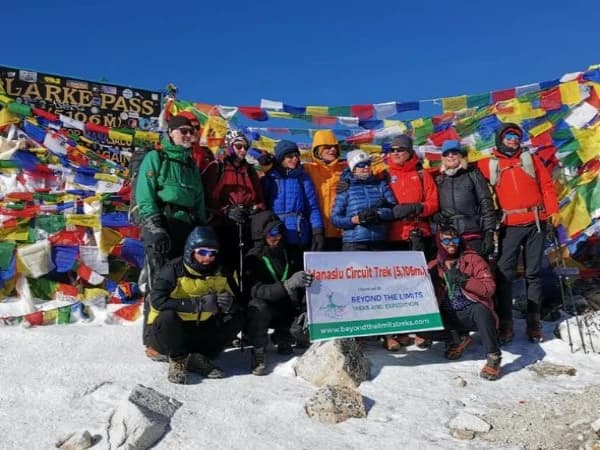
Group photo in Larke Pass during Manaslu CIrcuit Trek
Beautiful Views and Untouched Culture
15 Days
Price from
US$930US$1250
16 reviews
Trip Details
Langtang Valley Trek
Tibetan, Sherpa and Tamang culture
9 Days
Price from
US$499US$780
Nar Phu Valley Trek in Nepal
One of Nepal's Most Remote & Rewarding Treks
13 Days
Price from
US$950US$1300
2 reviews
Trip Details
Need Help? Call Us+977 9851093729