The Everest Base Camp Trek is a 12–14-day adventure through the Khumbu Valley. It begins with a short but thrilling flight from Kathmandu to Lukla, from where you embark on the trekking trail. The trail winds through dense rhododendron Pine, Oak forests, glacial rivers, and Sherpa villages.
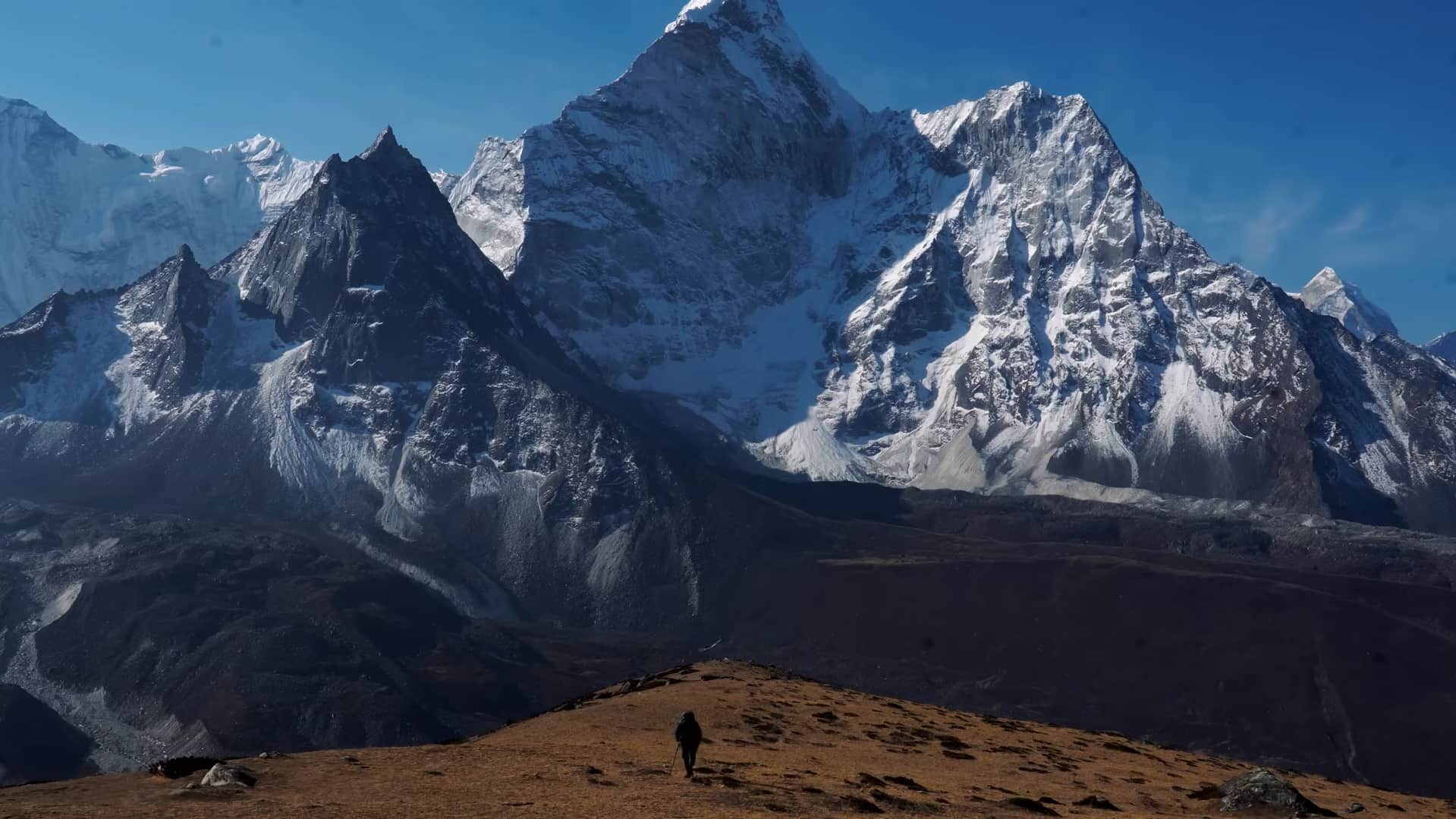
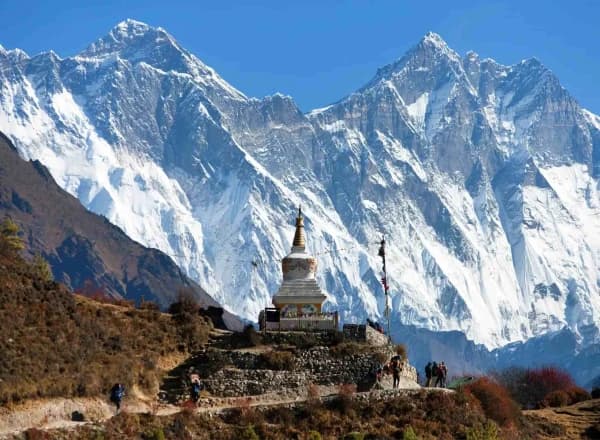
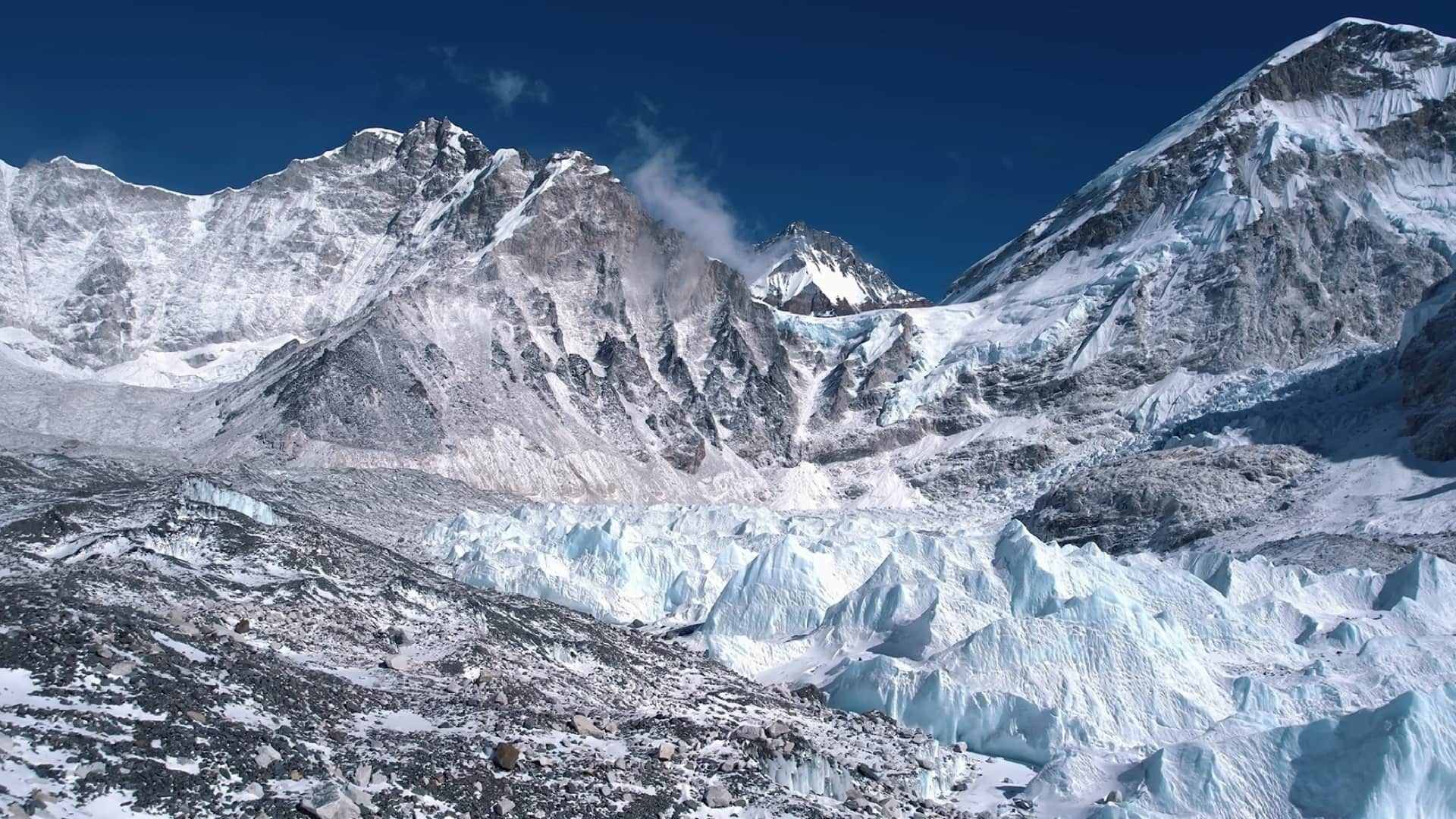
After crossing villages like Lukla, Phakding, Namche Bazaar, Tengboche, Dingboche, Lobuche, Gorakshep, it reaches Base Camp at 5,364 metres (17,598 feet). From there, trekkers go to Kala Patthar (5,545m) to witness the stunning panorama of Mount Everest, Lhotse, Nuptse, Pumori, thamserku and Ama Dablam in a single frame.
At the heart of this adventure lies Mt. Everest, the highest mountain in the world at 8,848 meters. And the trek to Everest Base Camp allows trekkers from around the world to witness the grandeur of the Himalayas without technical climbing.
The fame of the EBC trek globally is because it is an entire journey of witnessing the raw beauty of the Himalayas while enjoying excellent infrastructures like warm teahouses, reliable mobile networks, and experienced local guides. It has struck a balance between accessible and challenging.
The EBC trek is suitable for anyone with proper preparation and acclimatization, good physical fitness, determination, and a desire to experience the Himalayan adventure. This is a dream adventure for both seasoned trekkers and beginners.
Everest Base Camp Trek Quick Facts:
Below is a quick glimpse of quick facts about the Everest Base Camp trek before you delve deeper into the details:
| Trek Duration |
12–14 days (customizable) |
| Maximum Altitude |
Kala Patthar: 5,545m, Everest Base Camp: 5,364m |
| Total Distance |
Approximately 130 km (round trip) |
| Starting Point |
Lukla (via flight from Kathmandu) |
| Ending Point |
Kathmandu (helicopter return available) |
| Difficulty Level |
Moderate to Challenging |
| Accommodations |
Teahouses / Lodges (twin sharing or private room available on Demand) |
| Best Seasons |
Spring (March to May) & Autumn (September to December ) |
| Permits Required |
Sagarmatha National Park Entry Permit + Khumbu Pasang Lhamu Rural Municipality Permit |
| Minimum Age |
No fixed minimum, children 12+ typically recommended |
| Group Size |
Flexible (solo with guide, small group, private Tour) |
| Trek Style |
Teahouse trek (no camping required) |
Where is Everest Base Camp Located?
The Everest Base Camp is located in the Khumbu region within the boundaries of the UNESCO World Heritage Site of Sagarmatha National Park. It lies in northeastern Nepal. The region is famous for its dramatic landscapes and a wide variety of rare wildlife.
The gateway to the Everest Base Camp is via Lukla, and getting here is an adventure in itself. You will take a flight from Kathmandu to Lukla Airport, which is the most Excited airport in the world. Following this flight, you will trek over a few days to reach the EBC.
Everest Base Camp Trek Route Overview:

The classic EBC Trek follows a well-established trail through the Khumbu Valley, ascending gradually through a series of iconicSherpa villages and landscapes before reaching the Everest Base Camp. Here is a brief overview of the major highlights of the trek:
Kathmandu to Lukla Flight
Your EBC journey begins with a short yet thrilling flight to the Lukla airport, which is a thin airstrip located between the Himalayas and is regarded as the most Excited airport in the world. This flight, full of adrenaline rush and picturesque views, sets the perfect stage for your upcoming Himalayan adventure.
Major Villages Along the Trek
▶ Namche Bazaar: The Sherpa capital of the Khumbu region, Namche Bazaar is a major stop on the EBC trek as it is also your first acclimatization stop. Here, you can find vibrant cafes, gear shops, bakeries, souvenir shops, and stunning mountain views. This is also home to the highest pub in the world, the Irish Pub, where you can spend a chill evening.
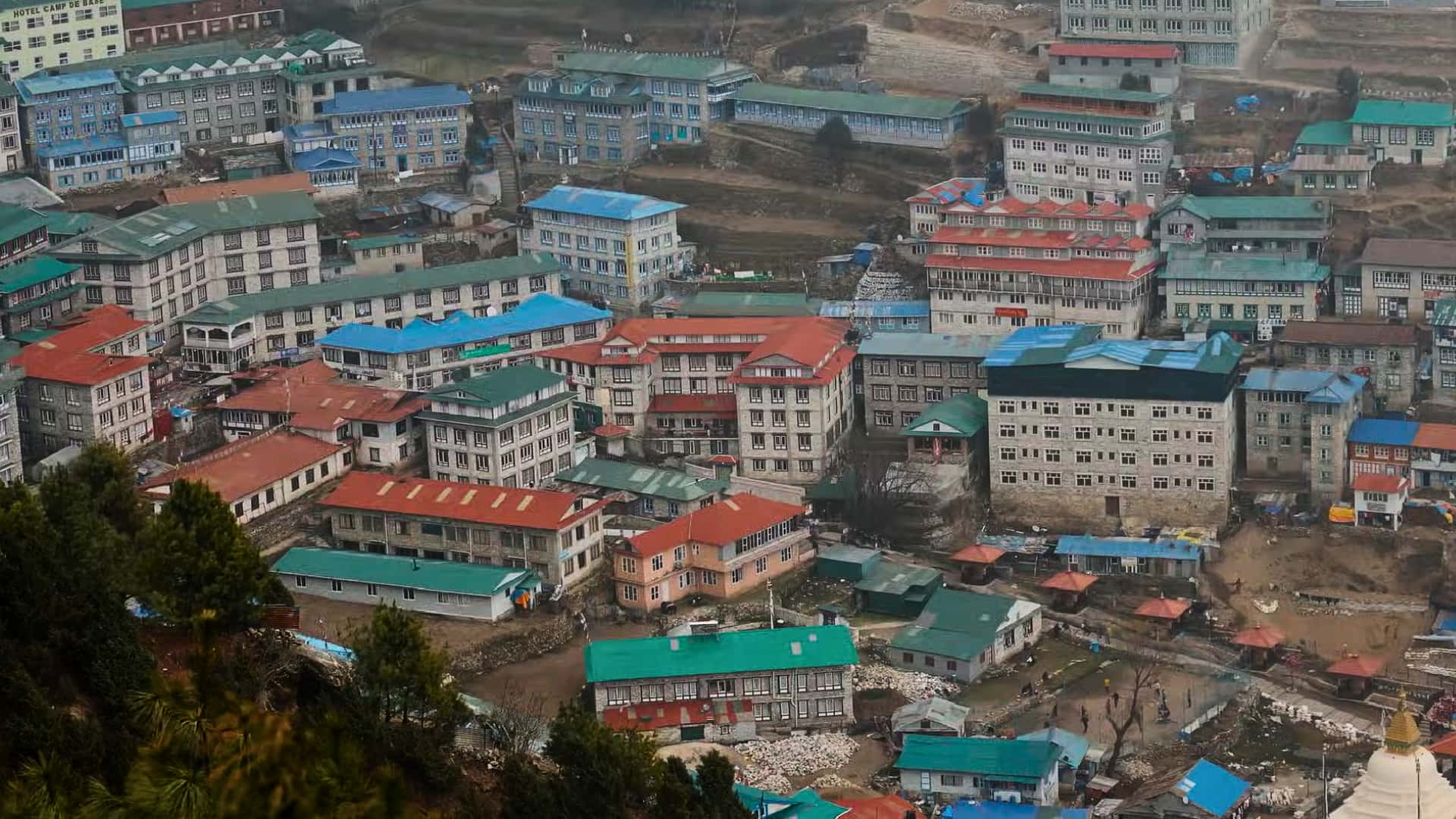
▶ Tengboche: Home to the famous Tengboche monastery, which is the spiritual hub of the Everest region, Tengboche is one of the most spiritually charged villages on the trek. You can spend an evening witnessing the evening puja (prayer) at the monastery against the stunning background of the Himalayas.
The Mani Rimdu festival is a vibrant Tibetan Buddhist celebration held annually in the Everest region of Nepal. This festivals held at Tengboche Monastery to celebrate the victory of Buddhism over animistic traditions
▶ Dingboche: Dingboche is an alpine Sherpa village that makes for your second acclimatization stop on the EBC trek. Many trekkers use it to hike up to the Nangkartsang viewpoint for stunning views of Island Peak and the Amphu Lapcha Pass.
▶ Lobuche: Lobuche is a small settlement located near the Khumbu glacier. While the accommodation here is rather basic, the landscape is raw and unforgettable.
▶ Gorakshep: Located at 5,164 meters, Gorakshep is the last settlement on the EBC trail before you reach Everest Base Camp. This is your final base of operations from where you make the trip to EBC in the afternoon. The accommodation here is also quite basic, with shared bathrooms and no connectivity.
Everest Base Camp (5,364 meters):
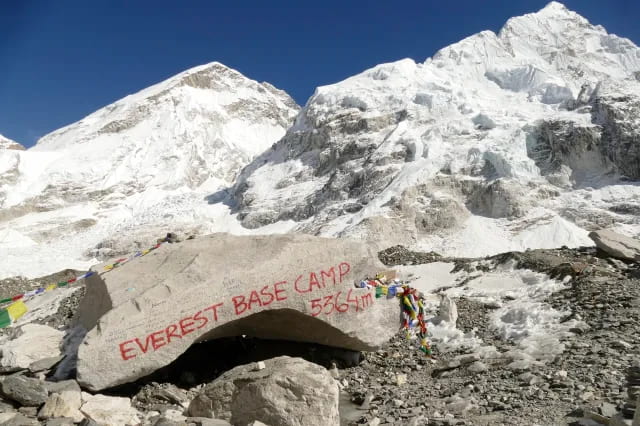
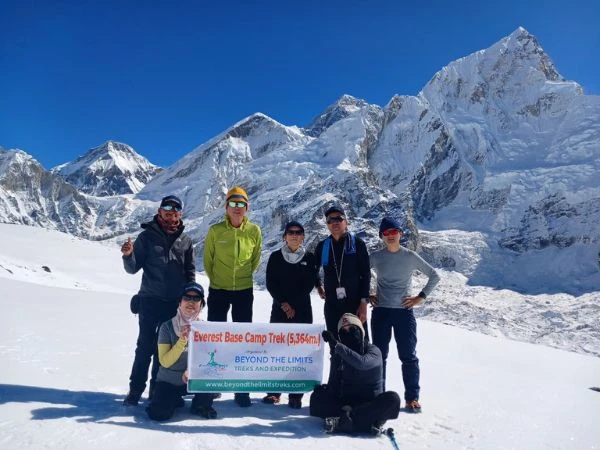
Reaching the Everest Base Camp at 5,364 meters is the ultimate highlight of your EBC journey as it takes you to the foot of the highest peak in the world. From here, you can see the extraordinary Khumbu Icefall, tents set up by the mountaineers, the prayer flags, and a wide range of the Himalayas.
However, you won’t be able to see Mt. Everest from here as the view is obscured by the west ridge. But reaching the base camp itself is a moment of unfiltered joy and emotions as it represents the result of your many days long journey.
Kala Patthar Viewpoint (5,555 m):
Kala Patthar is the actual pinnacle of your EBC trek, as this stands at an altitude higher than the EBC itself. Also, it gives a perfectly clear and closest view of Mt. Everest without technical climbing. Therefore, many trekkers rise before dawn to catch the perfect sunrise from Kala Patthar where you will see orange hues cast over Mt. Everest, etching it in your memories forever.
Everest Base Camp Trek Itinerary Outline:
A standard 14-day Everest Base Camp trek follows this itinerary:
- Day 01: Arrival in Kathmandu
- Day 02: Flight to Lukla – Trek to Phakding
- Day 03: Phakding to Namche Bazaar
- Day 04: Acclimatization Day at Namche Bazaar
- Day 05: Namche Bazaar to Tengboche
- Day 06: Tengboche to Dingboche
- Day 07: Acclimatization Day at Dingboche
- Day 08: Dingboche to Lobuche
- Day 09: Lobuche to Gorak Shep – Everest Base Camp – Return to Gorakshep
- Day 10: Early Morning Hike to Kala Patthar – Trek to Pheriche\
- Day 11: Pheriche to Namche Bazaar
- Day 12: Namche Bazaar to Lukla
- Day 13: Flight to Kathmandu
- Day 14: Final Departure
Get Complete information on 14 Days Everest Base Camp Trek Itinerary
NOTE: This itinerary is customizable as per request. You can add things like luxury accommodation, helicopter return from Gorakshep, and more addons for additional cost.
Nepal’s Most Iconic Trekking Adventure
Best Time to Trek Everest Base Camp:

The season during which you trek can usually make or break your adventure. The best time to trek the Everest Base Camp is during the peak trekking seasons of Nepal, i.e., Spring (March to May) and Autumn (September to November).
In Spring, the entire landscape of Khumbu is dotted with colorful hues as different flora booms across the region. Also, the temperature is perfect, and the skies are clear, which gives perfect views. This is also the season when you can enjoy many festivals in Nepal.
Autumn brings moderate temperatures, clear skies, and the mountains are often covered in snow which makes your Himalayan adventure even more perfect. You will also see lots of flora and fauna on the trek, and the climate is usually very stable.
Winters (December to February) can also be a good trekking experience at the Everest Base Camp as you can see the region turn into a winter wonderland. However, come prepared as the temperatures can be quite extreme during this season.
It is highly recommended to avoid trekking to EBC during the monsoon (June to August) as the trails can be quite slippery during this season, which can lead to injuries. Not to mention, you will come across many leeches, and the sky will be cloudy, which doesn’t make for a good Himalayan view.
Also Read: Everest Base Camp in Autumn: Why September to December is the Best Season?
Trek Difficulty & Required Fitness
The Everest Base Camp trek is a moderately challenging adventure. While this is not a quick weekend hike, it is also not a technical mountaineering challenge. The trails are well developed with not many rocky and rough sections.
The main challenge of the EBC trek is that you will be walking for an average of 5 to 6 hours every day for around 12 days at significantly high altitudes. This walk is over varied terrain including suspension bridges, some rocky sections, and steep ascents and descents. For this, you have to prepare at least 3 to 6 months in advance.
Get into a workout routine focusing on your cardiovascular fitness, leg strength, and mental endurance. Exercises like running, cycling, swimming, stair climbing, lunges, squats, and step-up exercises to prepare your core, legs, and your cardiovascular system. You can also hike with a loaded daypack to simulate trail conditions.
If possible, complete a shorter high-altitude hike before your EBC trek to understand how your body responds to elevation. Prior trekking experience is not mandatory for the EBC trek, and even beginners with proper preparation can complete the trek.
Altitude & Acclimatization
The Everest Base Camp trek takes you to an altitude of well beyond 5,000 meters. And at this altitude, altitude sickness is a major challenge which can get life threatening if not taken seriously. Therefore, it is important to understand altitude sickness and prepare for it.
To prevent acute mountain sickness, your EBC itinerary includes two acclimatization days at Namche and Dingboche. These are active acclimatization days that involve hikes to higher elevations before descending to sleep at a lower altitude. This strategy is highly effective in aiding the body's adaptation.
Other ways to prevent altitude sickness while trekking to EBC include:
- Drink 3 to 4 liters of water per day throughout the trek.
- Ascend slowly and resist the urge to push ahead.
- Avoid alcohol and sleeping pills during the trek.
- Inform your guide immediately if you experience severe headaches, vomiting, or confusion.
- Consult your doctor before the trek about use of Diamox, which is commonly recommended for high-altitude trekking.
NOTE: If you get altitude sickness and it is an emergency, helicopter evacuation services are available from remote villages along the trail.
Permits Required for Everest Base Camp:
For trekking to the Everest Base Camp, you need to have all the essential permits which are checked at various checkpoints throughout the trek. The permits applicable are:
- Sagarmatha National Park Entry Permit
- Khumbu Pasang Lhamu Rural Municipality Permit
- TIMS (might not be required if you have Khumbu Pasang Lhamu Permit)
Interesting Blogs Related to Everest Trek:
Accommodation on the Everest Base Camp Trek
Accommodation on the Everest Base Camp trek is divided into different categories based on your package, requirement, and budget. The standard accommodation is in the teahouses which are lodges run by the local families which are affordable and comfortable.
You can get a twin sharing room or a private room at a teahouse with options for shared bathroom or attached bathroom for most of the trail excluding Lobuche and Gorakshep where only shared bathrooms are available. A comfortable bed with heating blankets, and warm home cooked meals are features of a teahouse.
If you opt for a luxury Everest Base Camp trek, your accommodation is upgraded to premium lodges in the region like Yeti Mountain Homes with all the premium amenities. In lower elevations, trekkers will find everything from standard teahouses to high-end boutique lodges with modern interiors, Wi-Fi, and attached bathrooms with hot water.
As you ascend higher, the quality of accommodation gradually decreases because of the remoteness of the region as logistics and altitude make luxury genuinely difficult. By Lobuche and Gorak Shep, the focus is warmth, shelter, and sustenance.
Food & Drinking Water
On the Everest Base Camp trek, you will find a surprisingly diverse menu. Most teahouses along the EBC trail offer a standard multi-page menu featuring both Nepali and international dishes. Popular choices include:
- Dal Bhat
- Pasta, pizza, and noodles
- Soups and stews
- Porridge, Tibetan bread, omelettes, pancakes, toast, and muesli for breakfast
Vegetarian and vegan meals are widely available throughout the trek. Trekkers are encouraged to have vegetarian options as meat can sometimes cause food poisoning. The further up the trail you go, menu variety decreases, but vegetarian staples remain consistently available.
Do not drink water directly from streams or rivers on the trail. Instead, opt for boiled water. You can also carry water purification tablets or a UV Steripen. Many teahouses also provide filtered water which you can fill in your reusable bottle.
The cost of meals increases along with the altitude. Budget approximately USD 20 to 40 per day for meals and drinks at mid-to-high altitudes.
Mobile Network & Internet on Everest Base Camp Trek
As it is a busy trekking region, the Everest Base Camp trek features many connectivity options. You will find that most of the villages on the trail have network coverage of any of the local networks: Ncell or NTC. However, the best SIM card for Everest region would be Nepal Telecom (NTC) as it has the most extensive tower network in the Khumbu Valley.
Many teahouses also offer Wi-Fi services at an additional cost. But the speed is not as fast as many trekkers are connected to the same network. Everest Link Card is a great option for connectivity in the Everest region. In higher altitudes like Gorakshep and EBC, the connectivity will be lost through all the mediums.
Charging Facilities & Power Sockets in Teahouses
Most teahouses offer charging facilities for an additional cost. However, the availability and the price for it varies based on altitude. In lower altitudes, you can easily get charging facilities for a low cost, but at higher altitudes, the facility becomes scarce, and you have to pay up to 5 to 7 USD per device.
Teahouses often feature Type C, Type D, and Type M power sockets, so bring your accessories accordingly. Also, it is highly recommended to carry universal adapters, power banks, and solar-charged devices so that you don’t have to charge your devices more often.
Packing List Overview:
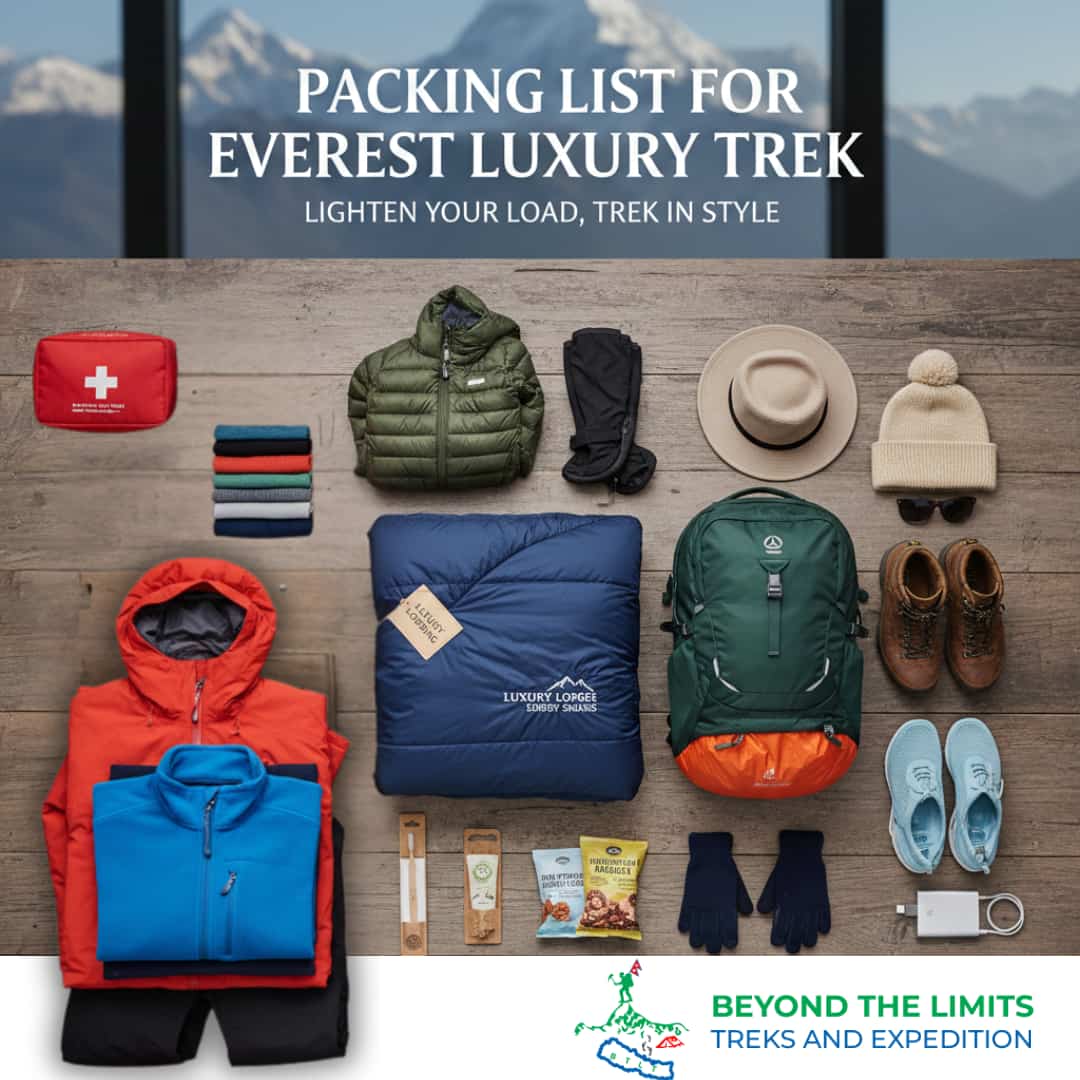
For a detailed packing list for the EBC Trek, you can take a look at our Everest Base Camp trek package. The essentials that you must carry for an Everest Base Camp trek are as listed below:
- Down jacket
- Thermal layers
- Trekking boots
- Trekking poles
- Gloves and warm hat
- Sunglasses
- Sunscreen
- Water bottle
- Sleeping bag
- Layered clothing options
- Personal first aid kit
Travel Insurance Requirement
Given the high risk of acute sickness and the possibility of helicopter evacuation during emergencies, it is highly recommended that you get comprehensive travel insurance for your EBC trek. This will save you a lot of financial trouble in case of an emergency.
Make sure that your insurance covers these:
- High-altitude trekking (above 5,000 m)
- Emergency helicopter evacuation
- Medical treatment
- Trip cancellation or delays
- Lost baggage
Cost of Everest Base Camp Trek:
The cost of the Everest Base Camp trek varies based on the level of service, your requirements, trekking style, season, group size, duration, and whether you opt for extras like helicopter return. Here is a general cost breakdown:
| Budget (teahouse, shared transport) |
USD 1,200 – 1,800 per person |
| Mid-Range (standard agency package) |
USD 1,800 – 2,800 per person |
| Luxury / Private (premium lodges, private guide) |
USD 3,500 – 5,000+ per person |
Also Read: Get detailed Everest Base Camp Trek Cost Breakdown
Everest Base Camp Trek Variations:
The classic Everest Base Camp trek also comes with many variations for trekkers who are looking for more adventure, a longer journey, a different perspective of the region, or just something quiet.
Gokyo Lakes via Cho La Pass
This route combines your EBC adventure with Gokyo Lakes through the challenging Cho La Pass. You will witness the gorgeous Gokyo Valley with the sacred Gokyo Lakes and Gokyo Ri along with Kala Patthar, Ngozumpa Glacier and the thrill of Cho La Pass (5,420m).
Cho La Pass Crossing
This includes the standard Everest Base Camp trek with an added adventure of crossing the Cho La Pass at 5,420 meters.
Helicopter Return Option
This is the most popular customization on the EBC trek where the trekkers climb up all the way to Kala Patthar but opt for a helicopter to return from Gorakshep instead of going all the way down on foot.
Luxury Everest Base Camp Trek
This is a premium trek for those wanting to experience the EBC without compromising their comfort. During the Luxury EBC trek, you will be staying in luxury lodges throughout the trek.
Everest Three Passes Trek
Everest 3 Passes is an adventure designed for experienced trekkers who want to take the adventure up a notch. You will be crossing the Kongma La (5,535m), Cho La (5,420m), and Renjo La (5,360m) passes which are some of the highest passes in the Everest region.
Culture & People of the Everest Region
Known as the Guardians of the Himalayas, the Everest region is home to the Sherpa people who are known for their impeccable mountaineering skills and warm hospitality. On the EBC trek, your guide and porters will likely be Sherpa, and interacting with them is one of the true highlights of the journey.
The culture in the Everest region is highly shaped by Tibetan Buddhism which means monasteries, chortens, prayer flags, mani walls, and prayer wheels will line the trail. The Tengboche Monastery is the spiritual hub of this region, and it hosts vibrant Buddhist festivals throughout the year.
Life in Khumbu is shaped by the mountain seasons. Outside of trekking season, the Sherpa community tend to yak, farm barley and potatoes in the high fields, and maintain life centered on family and monastery life. The annual Losar festival, which is the Tibetan New Year, is the most significant cultural event of the year, marked by elaborate ceremonies.
Frequently Asked Questions of EBC Guide:
Is Everest Base Camp safe?
✓ Yes, the Everest Base Camp trek is considered one of the safest high-altitude treks in the world given you have proper guidance, preparation, and acclimatized well. The trek has a well-established infrastructure, experienced guides, clear emergency protocols, and reliable helicopter evacuation options.
How cold does it get?
✓ The temperatures on the EBC trek significantly vary depending on the season when you are trekking and the altitude. In spring (March to May) and autumn (September to November), daytime temperatures on the upper trail range from +5°C to -5°C. At night, temperatures at Gorak Shep and Base Camp can drop to -10°C, particularly in October/November.
During winter, nighttime temperatures can be extreme, dropping below -20°C. Therefore, a quality sleeping bag rated to -15°C or lower, combined with teahouse heating blankets, will keep you comfortable on cold nights. The temperature at higher altitudes is significantly colder than at lower altitudes.
Is Wi-Fi available?
✓ Yes. Wi-Fi is available in almost all teahouses along the EBC route for an additional cost of $3 to $5 USD. At higher altitudes, this cost might be higher. The speed of the Wi-Fi varies, too. At lower elevation, you will get better connectivity which gets patchy as you go higher on the trek.
The speed of Wi-Fi is not as high as all the trekkers are connected to the same network. If you want better connectivity, mobile data via Nepal Telecom (NTC) is also available along most of the trail. And Everest Link Card can be a great option too.
Can beginners do this trek?
✓ Yes, beginners with proper preparation can and have successfully completed the EBC trek multiple times. Prior trekking experience, although helpful, is not mandatory for the trek. The key requirements are cardiovascular fitness, physical preparation, a willingness to acclimatize properly, and an experienced guide. If you can walk 5 to 7 hours a day and are determined, you can do the trek.
Is altitude sickness common?
✓ Given the high-altitude nature of the EBC trek, altitude sickness can occur. Most trekkers experience mild symptoms of altitude sickness like mild headaches, loss of appetite, and slight fatigue. Around 50% of trekkers are affected by serious acute mountain sickness.
Life-threatening conditions like HAPE and HACE are rare but possible. Therefore, you should take proper precautions to prevent altitude sickness like acclimatization, staying hydrated, and medication if necessary.
How much cash should I carry?
✓ Carry sufficient cash in Nepali Rupees for your trek. Your daily expense will be around 30 to 50 USD. So, you should carry around $300 to $500 USD in terms of Nepali rupees for the trek.
Are there ATMs on the trail?
✓ You can find ATM in Kathmandu at many places. While on the trail, you will find ATM in Namche Bazaar, but their working status cannot be guaranteed. There are no ATMs above Namche. So, it is recommended to carry enough cash from Kathmandu itself.
Can I shower during the trek?
✓ Hot showers are available in most teahouses up to Dingboche for an extra cost of around $5 to $10 USD. However, the availability reduces as you go higher on the trek. Above Dingboche, hot shower availability becomes limited and expensive.
It is recommended to not take many hot showers during the trek as it increases the chances of altitude sickness. Many trekkers use wet wipes and a quick freshen-up at altitude rather than full showers.
Do I need a sleeping bag?
✓ While many teahouses now provide heated blankets, it is still recommended to carry a sleeping bag rated to at least -10°C to -15°C. At Lobuche and Gorak Shep especially, temperatures inside rooms can be very cold overnight. Sleeping bags can be rented in Kathmandu if you don't want to carry one from home.
Can I trek solo?
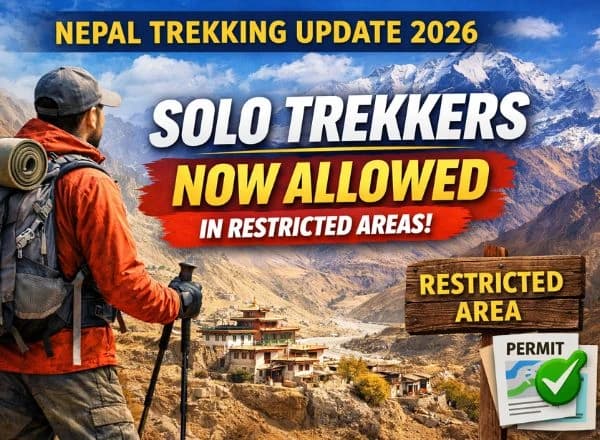
✓ Since 2023, Nepal government has prohibited solo and unguided trekking in most of the trekking regions. So, even if you want to hit the trail alone without a group, you are still required to hire a licensed local guide. This rule is put in place for your own safety. Beyond the Limits Treks provides licensed, experienced English-speaking guides for all treks.
Get More Everest Region FAQ

Why Choose a Local Trekking Company?
The trekking company you are trekking with can make all the difference in your trekking experience. Choosing a licensed, local, and reputable trekking company like Beyond the Limits Treks and Expeditions will enhance your trekking experience by:
- Professional companies prioritize safety through experienced guides and proper acclimatization planning.
- The local trekking companies know the area and have deep knowledge of the trail, the weather patterns, the teahouses, and the emergency protocols.
- We have experienced and licensed guides who have years of experience of trekking in the same region.
- We keep our group sizes smaller, which provides you with a more personalized trekking experience.
- We offer fully customizable itineraries to accommodate your timeline, fitness level, and specific interests.
- From airport pickup to trek completion, you receive full logistical support throughout your journey.
- Booking with a local company means your money stays in Nepal which is used for responsible and ethical tourism by paying fair wages to local guides and porters and contributing to the communities you pass through.