Nepal is home to some of the world’s most unforgettable trekking routes, including the remoteManaslu Circuitand the legendary Everest Base Camp Trek. While both journeys offer dramatic Himalayan scenery and rich mountain culture, each delivers a very different trekking experience.
Are you still wondering Which one is difficult to trek ? Don’t worry we will let you know through this blog which one is harder and which trek you have to do in 2026/27. Well, both treks are one of the popular trekking regions not in Nepal but around the world it is one of the most popular trekking destinations.
How Difficult Is the Manaslu Circuit Trek?
The Manaslu Circuit Trek is considered a challenging and strenuous trek, mainly because of its long walking days, steep and uneven trails, remote mountain terrain, and the crossing of the 5,106,160-meter Larkya La Pass. It is not a technical mountaineering expedition, but trekkers need good fitness, proper acclimatization, and mental determination.
In simple terms, the Manaslu Circuit is a trek where your legs, lungs, and patience occasionally hold a serious team meeting. The views are spectacular but the mountains do not offer an elevator.
Main Difficulty Factors
High altitude
Altitude is the biggest challenge on the Manaslu Circuit. The route begins in a relatively low river valley and gradually climbs toward high mountain settlements, including Samagaun, Samdo, Dharamsala, and Larkya La Pass. Larkya La reaches approximately 5,106–5,160 meters, where the air is significantly thinner than at sea level.
Trekkers may experience headaches, tiredness, shortness of breath, poor sleep, or loss of appetite. Walking slowly, drinking enough water, taking acclimatization days, and descending immediately if serious symptoms develop are essential safety practices.
Long walking days
Most itineraries involve approximately six to eight hours of walking per day, although the exact duration depends on the route, weather, walking speed, and acclimatization schedule. Some sections include steep ascents, rocky paths, suspension bridges, narrow trails, and long descents.
The most demanding day is usually the crossing from Dharamsala or Larkya Phedi over Larkya La Pass to Bimthang. This section combines an early start, cold conditions, high altitude, snow or ice in some seasons, and a long descent. By the end of the day, even your trekking poles may look like they need a holiday.
Remote and rugged terrain
Compared with popular routes such as Everest Base Camp, the Manaslu Circuit generally has fewer facilities and less developed infrastructure in several sections. Accommodation and food options can be more basic, and access to emergency services may be limited.
This remoteness adds to the adventure but also means trekkers must prepare carefully. A reliable guide, suitable equipment, travel insurance, warm clothing, and a flexible itinerary are especially important.
How many hours do you walk each day on the Manaslu Circuit Trek?
On the Manaslu Circuit Trek, you typically walk 5–7 hours per trekking day, covering roughly 10–15 km, depending on altitude, terrain, and your itinerary. Most schedules include shorter acclimatization days, while the Larkya La Pass crossing is considerably longer.
|
Trek section
|
Approximate walking time
|
|
Machha Khola to Jagat
|
6–7 hours
|
|
Jagat to Deng
|
6–7 hours
|
|
Deng to Namrung
|
5–6 hours
|
|
Namrung to Shyala Village
|
4–7 hours
|
|
Shyala to Sama Gaun + Pungyen Gompa
|
3–4 hours (+3hours)
|
|
Sama Gaun to Samdo
|
4–5 hours
|
|
(Samdo to Dharamshala)
|
3 hours
|
|
Dharamsala to Bhimtang via Larke Pass(7 hours)
|
7-8 hours
|
|
Bhimtang to Gowa Village (5-6hours)
|
5-6hours
|
The Larkya La Pass day is the toughest and longest, usually requiring 8–10 hours of walking because of the early start, high altitude, steep sections, and descent to Bimthang.Your actual time may be longer if you walk slowly, take frequent breaks, carry a heavy backpack, or encounter snow and poor trail conditions. Plan for a comfortable pace rather than judging the trek only by distance.
How hard is the Manaslu Circuit Trek compared to other Nepal treks?
Manaslu Circuit Trek is moderately difficult to strenuous. It is harder than the Langtang Valley Trek and usually comparable to or slightly more demanding than the Everest Base Camp and Annapurna Circuit treks, mainly because of its remote terrain, fewer facilities, and challenging Larkya La Pass crossing.
Difficult comparison :
|
Trek
|
Relative difficulty
|
Main reason
|
|
Ghorepani–Poon Hill
|
Easier
|
Lower altitude and shorter duration
|
|
Langtang Valley
|
Easier than Manaslu
|
More accessible, shorter, and generally less isolated
|
|
Annapurna Circuit
|
Similar overall
|
High pass, but more roads and facilities in many sections
|
|
Everest Base Camp
|
Similar or slightly easier physically
|
Higher altitude at Kala Patthar, but more developed trail and services
|
|
Manaslu Circuit
|
Moderate to strenuous
|
Remote trail, rugged terrain, long days, and Larkya La
|
|
Upper Mustang
|
Often easier physically
|
Dry, high-altitude terrain but generally less demanding pass crossing
|
|
Three Passes Trek
|
Harder
|
Multiple high passes and greater cumulative altitude stress
|
Manaslu’s highest point is Larkya La Pass, around 5,106–5,160 meters, depending on the source and route description. The pass day commonly involves 8–10 hours of walking, with a long ascent followed by a substantial descent. Thin air, cold, snow, and the length of the day make this the trek’s most demanding section.
Why it feels challenging :
There are many reasons why trekkers may find the Manaslu Circuit Trek challenging. Several factors make this trekking region more strenuous, especially for beginners or those without proper preparation. The combination of high altitude, long walking days, steep ascents and descents, rugged and remote terrain, changing weather conditions, and limited infrastructure can make the journey physically demanding. As the trail gradually gains elevation, trekkers also need to deal with the effects of altitude, particularly when approaching Larkya La Pass at 5,106 meters. The remoteness of the region, basic accommodation in higher areas, and unpredictable mountain weather can add further challenges, making proper acclimatization, physical preparation, and pacing essential for a successful trek.
- Altitude
- Terrain
- Endurance
- Remoteness
- Weather
How difficult is crossing Larkya La Pass on the Manaslu Circuit Trek?
Crossing Larkya La Pass (5,106 m) is usually the toughest day of the Manaslu Circuit Trek but don’t worry, you are trekking not going for Mission Impossible. It is a non-technical mountain pass, so you generally don’t need ropes, climbing skills, or mountaineering experience. However, the combination of high altitude, cold weather, steep sections, rocky terrain, and a long walking day makes it physically demanding. With proper acclimatization, preparation, and a steady pace, most fit trekkers can cross the pass safely and enjoy the rewarding views from the top.
|
Aspect
|
Difficulty
|
|
Technical climbing
|
Low under normal conditions
|
|
Physical endurance
|
High
|
|
Altitude challenge
|
High
|
|
Navigation and remoteness
|
Moderate to high
|
|
Overall pass-day difficulty
|
Challenging
|
The trail itself does not normally require mountaineering equipment such as ropes or ice axes. However, conditions can change, so microspikes or crampons may be useful when there is significant ice or snow; your guide should decide based on current conditions.
How to prepare
- Include acclimatization days at Samagaun and avoid rushing the itinerary.
- Sleep at Dharamsala before the crossing and start early.
- Train with long uphill hikes and back-to-back walking days.
- Practice walking with a daypack and trekking poles.
- Carry warm layers, gloves, sunglasses, sunscreen, water, snacks, and an emergency layer.
- Walk slowly and steadily; frequent short breaks are better than exhausting yourself.
- Do not continue upward if you develop a worsening headache, confusion, severe nausea, loss of coordination, or breathing difficulty. Descending is the key response to serious altitude symptoms.
In practical terms, Larkya La is harder than a typical Langtang Valley trekking day and usually the toughest single day on the Manaslu route. It is achievable for well-prepared trekkers, but it should be treated as a serious high-altitude crossing rather than an ordinary hiking day.
Who can complete the Manaslu Trekking?
For Manaslu Trekking you do not need mountaineering or technical climbing skills, but you should have good cardiovascular fitness and be comfortable walking uphill for several consecutive days. A person who regularly hikes, climbs stairs, or completes long walks can generally prepare for Manaslu with structured training.
Key preparation, build up to:
- 5–8 hours of walking on consecutive days.
- Long uphill hikes carrying a daypack.
- Stair or hill training two to three times per week.
- Strength exercises for the legs, hips, and core.
- Gradual acclimatization rather than a rushed itinerary.
In simple terms, Manaslu is not a technical climb, but it is a serious high-altitude trek. It is a good choice for fit beginners with strong preparation and an experienced guide, but a rushed itinerary or inadequate acclimatization can make it significantly harder.
If you are looking for a well-paced itinerary with proper acclimatization, our 15-day Manaslu Circuit Trek itinerary includes dedicated acclimatization time at Samagaun, an overnight stay in Shyala, and the Larkya La Pass crossing.
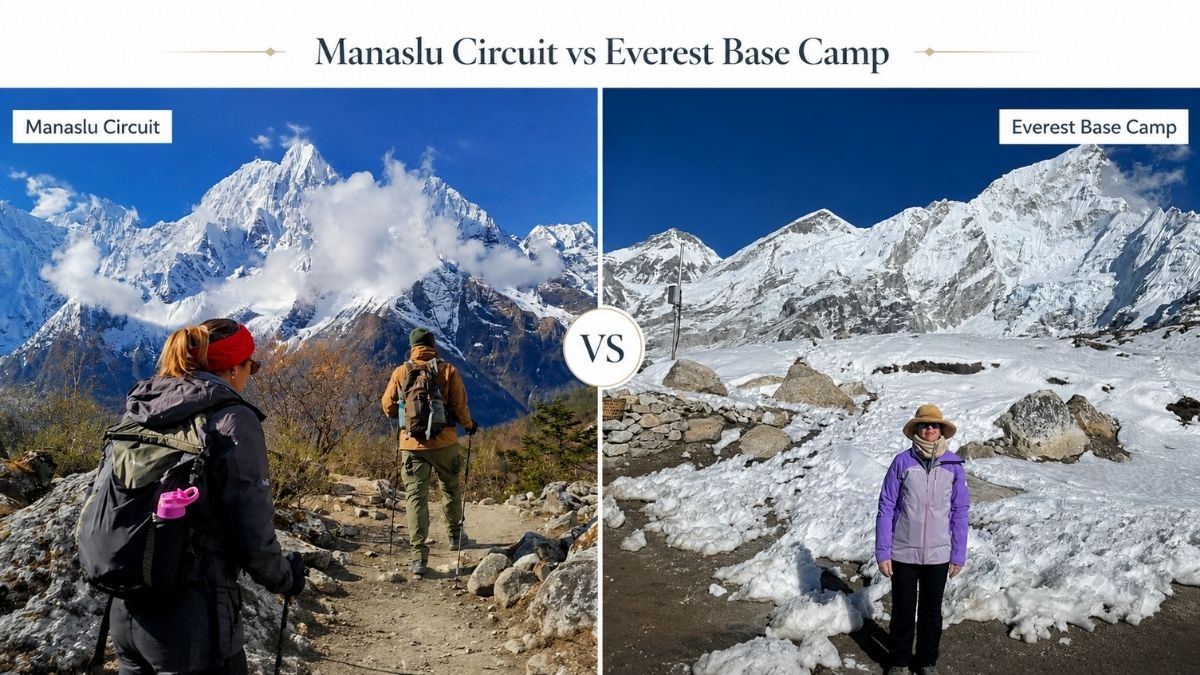
How does Manaslu Circuit Trek difficulty compare with Everest Base Camp and Annapurna Circuit?
Manaslu Circuit is generally considered the hardest of the three for most trekkers. It is basically the one that politely asks, “How badly do you really want those mountain views ? The main reasons are its greater remoteness, rougher and less-maintained trails, longer and more strenuous walking days, especially during the Larkya La Pass crossing, basic infrastructure, and limited bail-out options.
Everest Base Camp (EBC) and Annapurna Circuit are more comparable to each other and are typically rated moderate to challenging, with better facilities and support along the route. All three are non-technical high-altitude treks, meaning you don’t need technical climbing skills, but good fitness, proper preparation, acclimatization, and respect for altitude are essential.
Key Comparison Factors
|
Factor
|
Manaslu Circuit
|
Everest Base Camp
|
Annapurna Circuit
|
|
Overall difficulty
|
strenuous
|
Moderate–hard
|
Moderate–challenging
|
|
Max altitude
|
5,106–5,160 m (Larkya La)
|
5,364–5,545 m (EBC/Kala Patthar)
|
5,416 m (Thorong La)
|
|
Typical duration
|
15 days
|
14 days
|
12 days
|
|
Trail condition
|
Remote, rougher, less maintained
|
Well‑trodden, busy
|
Better maintained, more facilities
|
|
Infrastructure
|
Sparse lodges, limited bailouts
|
Dense teahouses, good access
|
Good lodges, easier exits
|
|
Main difficulty driver
|
Isolation + technical pass day
|
Sustained altitude
|
High pass + distance, but gradual
|
|
Best for
|
Experienced trekkers wanting remote challenge
|
First‑time high‑altitude trekkers
|
Fit beginners to intermediate trekkers
|
Altitude notes : EBC reaches the highest point and involves more sustained time at elevation, raising AMS risk if acclimatization is poor. Annapurna’s Thorong La is the highest of the three main passes. Manaslu’s Larkya La is slightly lower but often feels tougher due to the long, exposed pre-dawn crossing (frequently starting 3 a.m. from Dharamsala/Larkya Phedi), significant same-day descent (1,400 m), colder/windier conditions, and fewer recovery resources.
Best Season and Difficulty while doing Manaslu Circuit Trek
Season has a major impact on the difficulty of the Manaslu Circuit Trek. The trek is generally most manageable during spring and autumn, when the weather and trail conditions are more favorable. In contrast, winter can turn Larkya La Pass into a completely different game, with heavy snow, freezing temperatures, and difficult trail conditions that can make the crossing extremely challenging or temporarily impassable.
In simple terms: spring and autumn are the friendly versions of Manaslu; winter is when the mountain starts testing your patience.
|
Season
|
Typical conditions
|
Effect on difficulty
|
|
Spring: March–May
|
Stable weather, gradually warmer temperatures, clear mornings, occasional snow at high elevations
|
Moderate to challenging and generally one of the best periods
|
|
Autumn: Late September–November
|
Dry trails, clear skies, good visibility, cold nights at altitude
|
Challenging but usually the most predictable season
|
|
Winter: December–February
|
Freezing temperatures, snow and ice around Larkya La, shorter daylight, possible pass closures
|
Very challenging weather which requires flexible planning and suitable cold-weather gear
|
|
Monsoon: June–September
|
Heavy rain at lower elevations, muddy trails, landslides, clouds, and possible flight or road delays
|
Difficult and less predictable, especially early in the season
|
Frequently Asked Questions
1. How difficult is the Manaslu Circuit Trek?
The Manaslu Circuit Trek is generally considered moderate to strenuous, mainly because of its high altitude, long walking days, rugged terrain, remote sections, and Larkya La Pass crossing.
2. Is Manaslu Circuit harder than Everest Base Camp?
For most trekkers, Manaslu Circuit is considered more challenging overall than Everest Base Camp, mainly because of its remoteness, rougher trails, fewer facilities, and demanding Larkya La Pass day.
3. What is the hardest part of the Manaslu Circuit Trek?
The Larkya La Pass crossing at around 5,106–5,160 meters is usually the hardest part of the trek because of the altitude, cold, steep terrain, long walking hours, and descent to Bimthang.
4. How many hours do you walk each day on the Manaslu Circuit Trek?
Most trekking days require approximately 5–7 hours of walking, while the Larkya La Pass crossing can take around 8–10 hours depending on conditions and walking pace.
5. Do I need climbing experience for the Manaslu Circuit Trek?
No, technical climbing experience is normally not required. However, trekkers should have good fitness, endurance, preparation, and the ability to walk uphill for several consecutive days.
6. Can a beginner complete the Manaslu Circuit Trek?
Fit beginners can potentially complete Manaslu with strong preparation and an experienced guide, but it should not be treated as an easy beginner trek because of the high altitude, remote terrain, and demanding pass crossing.
7. What makes the Manaslu Circuit Trek difficult?
The main difficulty factors are altitude, steep and uneven terrain, long walking days, remote conditions, changing weather, and limited infrastructure, particularly at higher elevations.
8. What is the highest point of the Manaslu Circuit Trek?
The highest point is Larkya La Pass, approximately 5,106–5,160 meters, depending on the source and route description.
9. What is the best season for the Manaslu Circuit Trek?
Spring and autumn are generally the most manageable seasons, while winter can bring snow and possible pass closures, and monsoon can create muddy trails, landslides, and unpredictable conditions.
10. How should I prepare for the Manaslu Circuit Trek difficulty?
Prepare with long uphill hikes, consecutive walking days, stair or hill training, leg and core strengthening, gradual acclimatization, and practice carrying a daypack
Content Reviewed By
Beyond The Limits Treks & Expedition Pvt. Ltd.
A licensed trekking company in Nepal specializing in trekking and adventure travel across the Langtang, Everest, Annapurna, and Manaslu regions. The company's professional team regularly reviews trekking information, route conditions, permit requirements, and travel logistics to ensure content accuracy and reliability.
Legal document: Beyond the Limits Treks