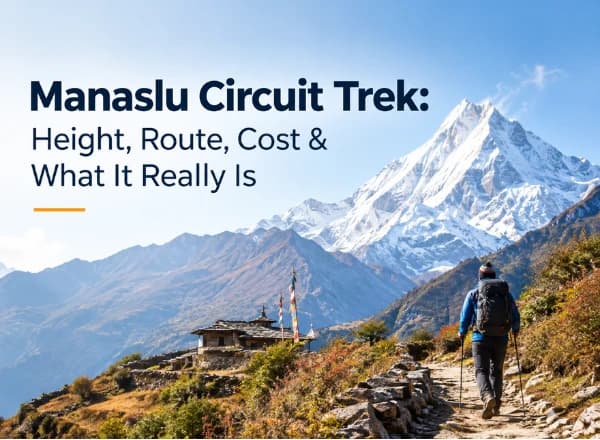
Planning to trek the Manaslu Trek then you find the right channel source to go through the Manaslu Trek Permits. Walk around one of Nepal’s most spectacular mountains, cross Larkya La, eat more dal bhat than you thought humanly possible and collect permits like you are building a very expensive Pokémon card set.
Before you start worrying about RAP, MCAP, ACAP, Tsum Valley permits, local fees and the mysterious mathematics of “one extra day,” don’t panic. This guide breaks down exactly which Manaslu trek permits you need in 2026/27, what each one costs, and how to avoid paying for the wrong number of days.
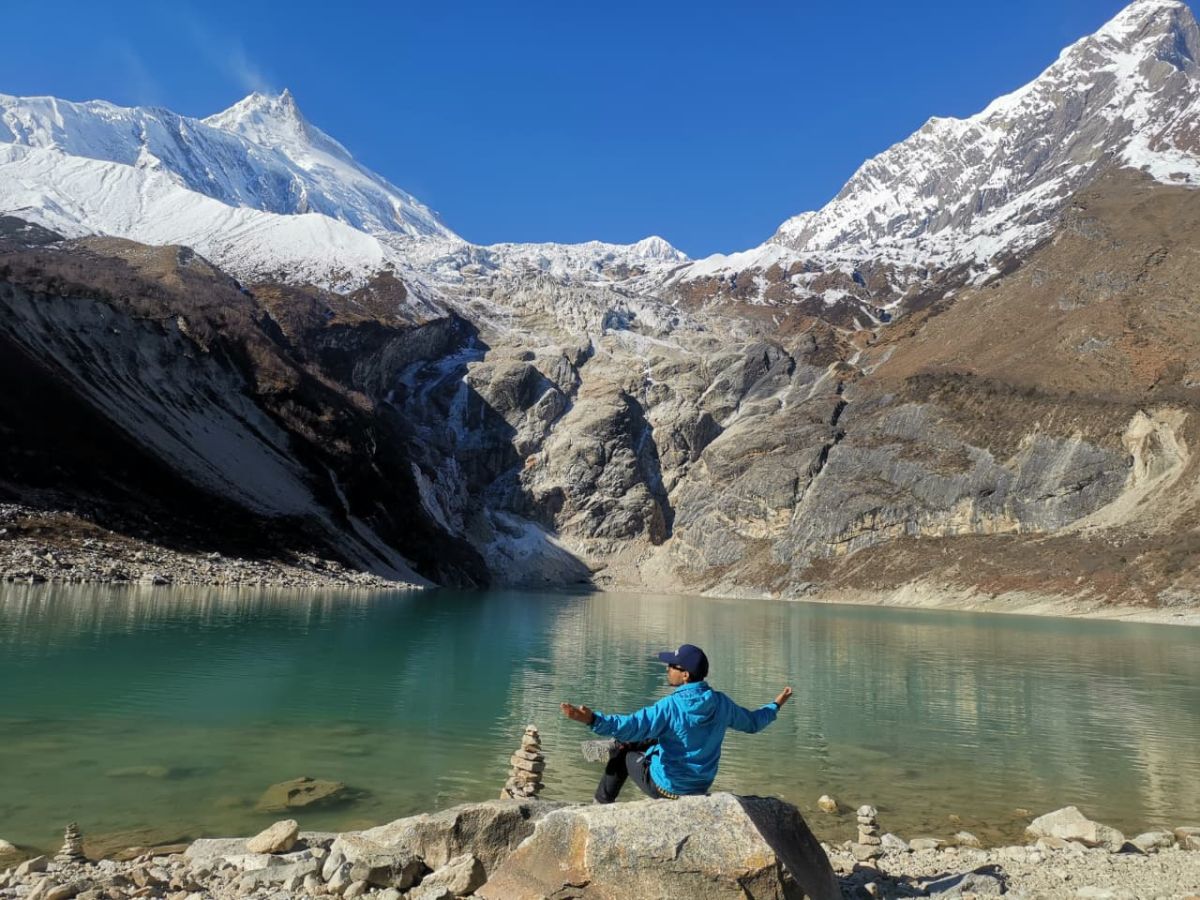
Before starting, if you’re confused about RAP, MCAP, and ACAP, don’t worry. If you’re a beginner and aren’t familiar with these abbreviations, let’s break them down first:
- RAP: Restricted Area Permit
- MCAP: Manaslu Conservation Area Permit
- ACAP: Annapurna Conservation Area Permit
Still wondering what these permits are and why they matter? Be patient and we will explain everything clearly. These permits are essential for the Manaslu Circuit Trek, and travelling without the required permits can lead to serious problems with authorities during the trek.
Don’t worry, though. Our trekking agency will handle the necessary permits and guide you through the entire process. But understanding what these permits are and why they are required will help you trek with confidence and avoid unnecessary trouble along the way.
Why Are These Permits Required?
These aren’t just ordinary trekking cards or formalities. They are mandatory permits required to legally trek through the Manaslu and Annapurna conservation and restricted areas.
Types of Permit and their purpose
1. Restricted Area Permit (RAP)
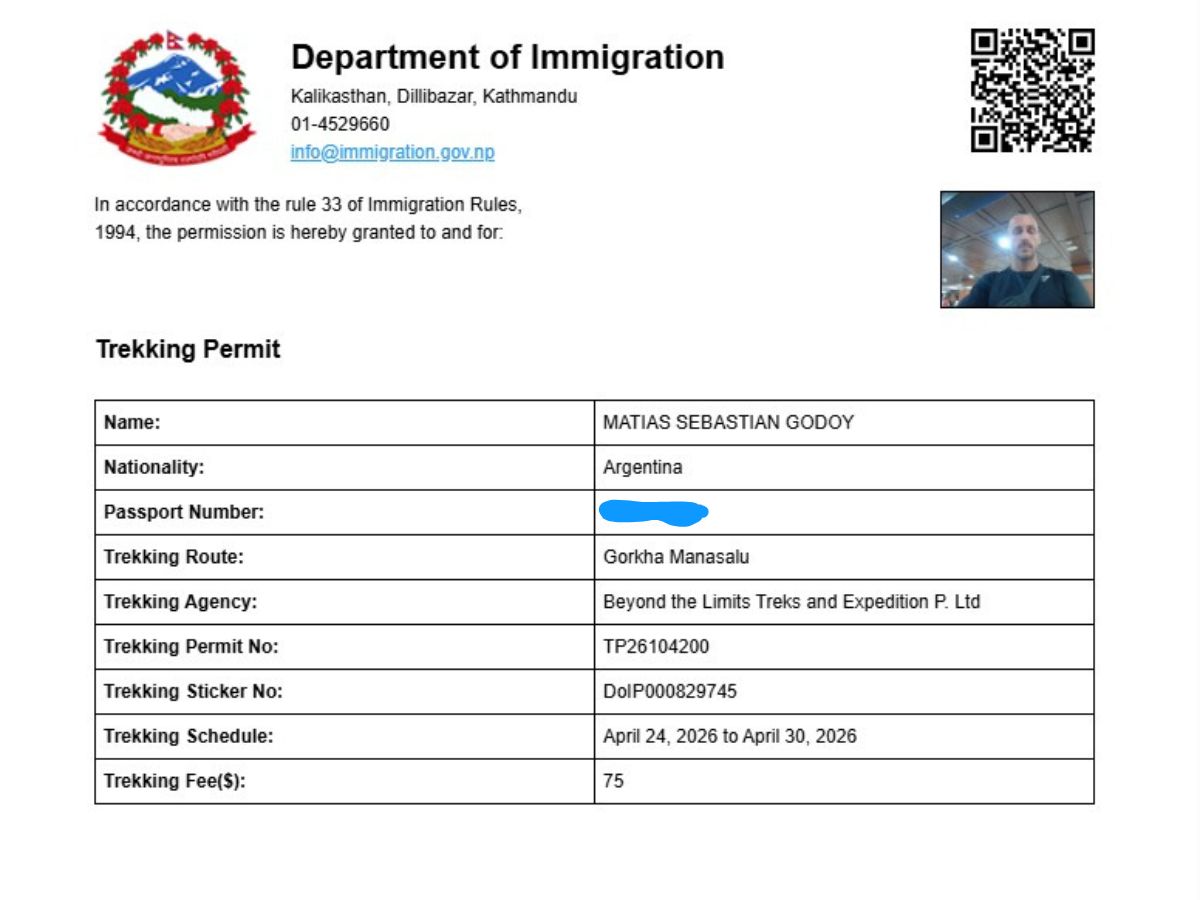
The RAP is required because parts of the Manaslu region are classified as a restricted trekking area. The permit helps the authorities regulate access, protect sensitive border and cultural areas, monitor trekkers, and maintain safety in the region. Independent trekking is also restricted in this area, so trekkers must follow the applicable permit and guide requirements.
2. Manaslu Conservation Area Permit (MCAP)
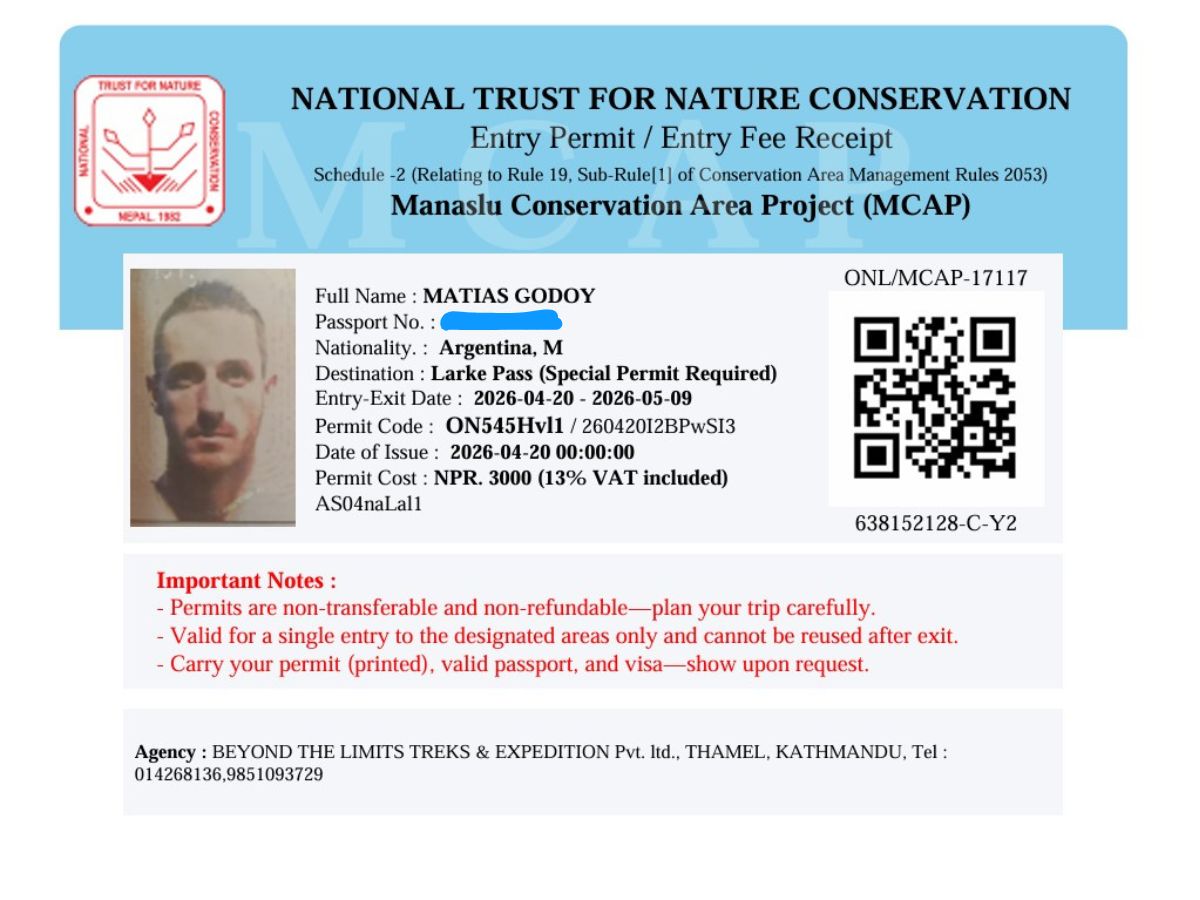
The MCAP is required to enter the Manaslu Conservation Area. It helps support the conservation and management of the region’s forests, wildlife, natural resources, and local cultural heritage. The permit fees contribute to managing and protecting this unique Himalayan environment.
3. Annapurna Conservation Area Permit (ACAP)
The ACAP becomes necessary when your Manaslu Circuit route continues through the Annapurna Conservation Area, particularly around the route toward Dharapani and the Annapurna region. It helps regulate tourism and contributes to the conservation of the area’s natural environment, wildlife, and cultural heritage.
Why Are These Permits Important?
Without the required permits, you may not be legally allowed to continue through certain sections of the trekking route. You could also face problems at checkpoints, delays, or additional complications during your trek.
That’s why getting the correct permits before starting your Manaslu Circuit Trek is extremely important.
Don’t worry if the permit process seems complicated. When you trek with our agency, we arrange the required permits and guide you through the process, so you can focus on enjoying the spectacular landscapes, villages, and Himalayan scenery rather than dealing with paperwork.
**Note: Manaslu & Tsum Valley Trek Permits
-
Manaslu Circuit Trek : MCAP + ACAP + RAP are required.
-
Tsum Valley Trek: MCAP + RAP are required : ACAP is not required.
-
MCAP & ACAP Fees:
-
Foreigners: NPR 3,000 per person (including VAT)
-
SAARC nationals: NPR 1,500 per person
-
RAP: Required for both Manaslu Circuit and Tsum Valley treks.
-
RAP fees may vary depending on the trekking season and number of days in the restricted area.
Which Permits Do You Need for Manaslu Trekking?
1. Manaslu Restricted Area Permit
The RAP covers the restricted section of the Manaslu region, including the controlled trekking area around Jagat, Deng, Namrung, Lho and Samagaun. It is issued by Nepal’s Department of Immigration and is priced according to season and the number of days spent inside the restricted area.
2. Manaslu Conservation Area Permit
The MCAP allows entry into the Manaslu Conservation Area. It is issued through the National Trust for Nature Conservation’s permit system or an authorised counter. The standard fee is NPR 3,000 for foreign nationals and NPR 1,000 for SAARC nationals.
3. Annapurna Conservation Area Permit
The ACAP is needed because the classic Manaslu Circuit crosses into the Annapurna Conservation Area after Larkya La, particularly on the route toward Dharapani and Besisahar. The standard fee is NPR 3,000 for foreign nationals and NPR 1,000 for SAARC nationals.
4. Tsum Valley Restricted Area Permit
This additional RAP is required only if you add the Tsum Valley side trip. It covers the restricted settlements from Sirdibas and Lokpa through Chumling, Chhekampar, Nile and Chule. The Tsum Valley permit is separate from the Manaslu RAP.
5. Local municipality fee
A local rural-municipality or tourism fee may also be collected for the Manaslu route. The amount and collection practice can vary by local authority and itinerary, so your agency should confirm the current charge before departure. Do not assume that this local fee replaces MCAP, ACAP or the RAP.
Manaslu Trek Permits Confusing You? Let Us Handle the Paperwork
I guess you have finally reached this section because the trekking permit process has started to feel a little confusing and stressful. You may be wondering, “How am I going to manage all these permits? I came here to enjoy the mountains, not deal with paperwork ”
And honestly, you don’t have to worry about it. Let our experienced local trekking team take care of the permits and paperwork while you focus on what you actually came for the mountains, adventure, culture, and unforgettable experience.
With Beyond the Limits Treks, we take care of the necessary trekking permits and paperwork before your journey begins, including the RAP, MCAP, ACAP, and other applicable local fees based on your itinerary.
Your job is simple: pack your bag, bring your sense of adventure, and enjoy the Himalayas.
From permit arrangements and document preparation to trekking logistics and local guidance, our team works behind the scenes to keep your journey smooth and stress-free. We help you avoid unnecessary confusion at checkpoints and make sure the required documentation is prepared according to your trekking route.
Whether you’re planning the Manaslu Circuit, Manaslu with Tsum Valley, or a customized Himalayan adventure, our local team is here to make the experience comfortable, organized, and memorable.
Leave the paperwork to us. Enjoy the mountains your way.
Planning your Manaslu Circuit Trek? Contact Beyond the Limits Treks and let our local trekking experts take care of the details while you focus on the experience.
What is the Manaslu Permit Cost? Here is the full breakdown in table form
The table below separates the official restricted-area charges from the conservation-area permits. RAP prices are quoted in US dollars but payable in the equivalent amount of Nepali rupees. Please note that the cost of a restricted area permit varies in two seasons, Spring and Autumn. You can check the table to get full information.
|
Permit
|
Foreigners
|
SAARC nationals
|
|
Manaslu Restricted Area Permit (September–November
|
USD 100 per person for the first 7 days and USD 15 per additional day
|
Official RAP tariff is generally applied by route and nationality status has to be confirmed at application
|
|
Manaslu Restricted Area Permit, December–August
|
USD 75 per person for the first 7 days; USD 10 per additional day
|
Official tariff should be confirmed before payment
|
|
MCAP
|
NPR 3,000 per person, tax included
|
NPR 1,000 per person, tax included
|
|
ACAP
|
NPR 3,000 per person, tax included
|
NPR 1,000 per person, tax included
|
|
Tsum Valley RAP, September–November
|
USD 40 per person for the first 7 days; USD 7 per additional day
|
Confirm current tariff with the agency
|
|
Tsum Valley RAP, December–August
|
USD 30 per person for the first 7 days; USD 7 per additional day
|
Confirm current tariff with the agency
|
|
Local municipality fee
|
Rs 1000 per person
|
Confirm locally
|
Manaslu Trek Permit Checkpoints: Jagat to Samagaun
Trekkers on the Manaslu Circuit should keep their Manaslu Restricted Area Permit (RAP) and Manaslu Conservation Area Permit (MCAP) accessible from Jagat through Samagaun. These are the main permit-verification locations on the standard route.
|
Checkpoint
|
Approx. elevation
|
Permit checks
|
What happens here
|
|
Jagat
|
1,340 m
|
RAP, MCAP, passport and group/guide details
|
The principal entry checkpoint for the Manaslu restricted area. Officials generally verify permit details and register the trekking group before allowing onward travel.
|
|
Philim
|
1,570 m
|
RAP and MCAP
|
A key follow-up checkpoint where officers may reconfirm permit validity before trekkers continue deeper into the Manaslu Conservation Area.
|
|
Namrung
|
2,630 m
|
RAP and MCAP
|
A mid-route control point in the upper Budhi Gandaki valley. Keep permits easy to reach, as further verification may be required.
|
|
Samagaun (Sama Gaun)
|
3,530 m
|
RAP and MCAP
|
A major upper-Manaslu checkpoint before the route continues toward Samdo, Dharamsala, and Larkya La Pass. Confirm that the validity dates on the RAP cover the rest of your itinerary.
|
Gorkha Manaslu Area Permit Fee
|
No.
|
Trekking area
|
Municipality/ward
|
September–November
|
December–August
|
|
1
|
Gorkha Manaslu Area
|
Chumnubri Rural Municipality — all areas of Ward Nos. 1, 2, 3 and 4
|
USD 100 per person per week; USD 15 per person per day beyond one week
|
USD 75 per person per week and USD 10 per person per day beyond one week
|
|
2
|
Gorkha Tsum Valley Area
|
Chumnubri Rural Municipality — all areas of Ward Nos. 3, 6 and 7
|
USD 40 per person per week; USD 7 per person per day beyond one week
|
USD 30 per person per week and USD 7 per person per day beyond one week
|
How to Apply for Manaslu Trek Permits
Applying for Manaslu trekking permits may seem complicated, especially when you need to understand different permits, restricted-area rules, dates, and documentation. If you’re trekking with an agency, you don’t have to manage this entire process yourself.
Step 1: Confirm Your Route
First, decide whether you are planning the Manaslu Circuit Trek only or adding the Tsum Valley side trip. Your route determines which permits you need and how the restricted-area permit is processed.
Step 2: Prepare Your Documents
Foreign trekkers should normally provide:
- Passport copy
- Valid Nepal visa or visa details
- Passport-size or digital photograph
- Trekking dates and day-by-day itinerary
- Emergency contact details
- Travel insurance details, particularly for high-altitude evacuation
- Trekking agency and guide information
Make sure your Nepal visa remains valid throughout your permitted trekking period.
Step 3: Let a Registered Trekking Agency Handle the RAP
The Restricted Area Permit (RAP) is processed through a registered trekking agency. The agency submits the required application, provides the necessary documents, pays the applicable government fee, and obtains the permit for your trek.
You can contact us for your trekking arrangements and route information
Step 4: Obtain MCAP & ACAP
Depending on your itinerary, you may also need the Manaslu Conservation Area Permit (MCAP) and Annapurna Conservation Area Permit (ACAP). These can be arranged through the applicable NTNC permit system or authorised counters.
Step 5: Double-Check Every Detail
Before starting your trek, make sure the permit information is correct, including:
- Your name and passport number
- Nationality
- Trekking route
- Entry and exit dates
- Number of permitted days
- Applicable trekking season
- Tsum Valley inclusion, if applicable
Don’t Want to Deal With the Permit Hassle?
This is exactly where we can help. If all this paperwork is making you think, “I just came to Nepal to enjoy the mountains, why do I have to worry about permits and government procedures?” you can leave the process to our experienced local team.
At Beyond the Limits Treks, we arrange the required permits and trekking documentation according to your itinerary, so you can spend less time worrying about paperwork and more time enjoying the Manaslu Himalayas, local villages, Himalayan culture, and the adventure of the trek.
Ready to Plan Your Manaslu Trek?
Have questions about permits, costs, itinerary, or the overall trekking process? Talk to our local trekking experts.
Have a question or special request?
Submit your enquiry through our Contact Us page.
Already have a trekking plan?
Share your itinerary with us through our Manaslu Circuit Trek page, and our team can help you understand the required arrangements.
Want to know how you can pay for your trek?
See our Payment Methods for available payment options. You plan the adventure. We will take care of the details.
Frequently Asked Questions
1. What permits do I need for the Manaslu Circuit Trek?
Manaslu Circuit Trek, you need the Restricted Area Permit (RAP), Manaslu Conservation Area Permit (MCAP), and Annapurna Conservation Area Permit (ACAP). If your itinerary includes Tsum Valley, an additional restricted-area permit is required.
2. Where can I obtain the necessary Manaslu trekking permits?
You cannot independently obtain the Manaslu Restricted Area Permit as an individual trekker. The RAP application is handled through a registered trekking agency, which submits the required documents and obtains the permit for your trek. MCAP and ACAP can be arranged through the applicable NTNC permit system or authorised counters.
In simple terms: you provide the required documents and trekking details; your agency handles the permit process.
3. Do I need a TIMS Card for the Manaslu Trek?
According to the information provided for this article, a TIMS Card is not required for the Manaslu Trek. However, the additional claim about needing TIMS if continuing toward the Annapurna Circuit from Dharapani should be verified against the current 2026/27 rules before publication.
I would not publish the second part as an absolute statement until you verify it, because TIMS requirements can change.
4. Why do I need an Annapurna Conservation Area Permit for the Manaslu Trek?
The classic Manaslu Circuit route continues into the Annapurna Conservation Area after crossing Larkya La, particularly around the route toward Dharapani and Besisahar. Therefore, trekkers need an ACAP even though only part of the overall trek takes place inside the Annapurna Conservation Area.
5. How much does the Manaslu Trek permit cost?
The total cost depends on your nationality, trekking season, number of days in the restricted area, and whether you add Tsum Valley.
The current article lists the Manaslu RAP at USD 100 for the first seven days during September–November and USD 75 for the first seven days during December–August, with additional daily charges after seven days. MCAP and ACAP are listed separately at NPR 3,000 for foreign nationals.
Important: Your article currently has conflicting SAARC figures—NPR 1,500 in one section and NPR 1,000 in another. Verify the official 2026/27 rate and use one figure consistently throughout the article.
6. How many photographs do I need for the Manaslu permit?
According to the information you want to add, trekkers should prepare two printed passport-size photographs and one scanned/digital photograph. The printed photographs are intended for the ACAP and MCAP, while the scanned photograph is used for the online Manaslu RAP application.
I'd add this to your existing "Prepare Your Documents" section as well, because that's where readers naturally look for this information. Your current document list already mentions passport and photographs.
7. How long does it take to issue the Manaslu trekking permit?
The information supplied for your article says the process normally takes at least around one and a half hours, although it can take longer if the online system is unavailable and the application has to be processed manually.
I'd phrase it as:
"Permit processing can take around 1.5 hours or longer, depending on the application process and system availability."
That sounds more professional and avoids promising an exact processing time.
8. Can a Manaslu permit be issued before I arrive in Nepal?
You can not issued permit befor you aarive in Nepal because information supplied says that permits generally require verification of passport and visa details, but advance processing may be possible in certain circumstances.
If you want to include this, I recommend:
"In some circumstances, your trekking agency may be able to arrange permit processing before your arrival in Nepal. This depends on the required passport, flight, and visa information being available and the applicable authority's processing requirements."
This is safer than saying advance issuance is always possible.
9. Can a Manaslu permit be issued for a single trekker?
Your supplied material mentions a practice sometimes described as a "ghost permit" for solo trekkers.
I would not publish instructions explaining how to arrange or use a ghost permit. Instead, keep the answer focused on the legitimate requirement:
"The Manaslu restricted area has group and guide requirements, so independent solo trekking is not permitted in the same way as unrestricted trekking routes. If you are travelling alone, speak with a registered trekking agency about the applicable group and permit arrangements before departure."
Your existing article already explains that independent trekking is restricted in the Manaslu restricted area.
10. Do I need a separate permit for Tsum Valley?
Yes. If you add Tsum Valley to your Manaslu itinerary, you need an additional restricted-area permit for Tsum Valley. It is separate from the Manaslu RAP.
Your current fee table lists the Tsum Valley RAP at:
- September–November: USD 40 for the first 7 days + USD 7 per additional day
- December–August: USD 30 for the first 7 days + USD 7 per additional day
Content Reviewed By
Beyond The Limits Treks & Expedition Pvt. Ltd.
A licensed trekking company in Nepal specializing in trekking and adventure travel across the Langtang, Everest, Annapurna, and Manaslu regions. The company's professional team regularly reviews trekking information, route conditions, permit requirements, and travel logistics to ensure content accuracy and reliability.
Legal document: Beyond the Limits Treks