What permits are required for the Kanchenjunga North Base Camp
The permits that are required for the Kanchenjunga North Base Camp are given below :
- Kanchenjunga Restricted Area Permit (KRAP)
- Kanchenjunga Conservation Area Permit (KCAP)
These permits are mandatory because the Kanchenjunga North Base Camp Trek passes through the Kanchenjunga Conservation Area and a government-designated restricted region along Nepal’s northern border with Tibet (China).
|
Permit Name
|
Description
|
Cost
|
Validity
|
|
Kanchenjunga Conservation Area Permit (KCAP)
|
Grants entry into the protected conservation area and supports ecosystem management and preservation.
|
NPR 2,000 per person
|
Duration of your trek
|
|
Restricted Area Permit (RAP)
|
Required for the restricted trekking section between Tapethok and Yamphuding,this permit costs USD 20 per person per week.
|
USD 20 per person
|
Per week
|
Is Solo trekking restricted region still Possible ?
Yes, solo trekking in the Kanchenjunga restricted region is possible in 2026, subject to current permit regulations. The previous minimum 2 person requirement for obtaining a Restricted Area Permit has been removed, allowing solo travelers to plan the Kanchenjunga North Base Camp Trek without joining another trekker. However, you must still obtain the necessary permits through a government-registered Nepali trekking agency and be accompanied by a licensed trekking guide throughout the restricted area.
When you book your trek with Beyond the Limits Treks, our team assists with the permit application process, prepares the required documentation, and arranges the applicable government fees before your journey begins. To get started, you will need to provide a valid passport, a valid Nepal visa, and the personal details required for permit processing.
Where do you stay during the Kanchenjunga North Base Camp Trek?
During the Kanchenjunga North Base Camp Trek, you stay mainly in locally owned teahouses and family-run lodges along the trekking route. These accommodations provide a simple, comfortable place to rest after a long day of hiking through the eastern Himalayas.
Most teahouses offer basic twin-sharing rooms with wooden beds, foam mattresses, pillows, and blankets. Private rooms and attached bathrooms may be available at some stops, depending on availability. As you ascend to higher elevations, accommodation becomes more basic, with colder rooms, shared facilities, and fewer services due to the region's remoteness.
Meals are generally served in communal dining halls, where you can enjoy traditional Nepali dishes and simple trekking meals while warming up by a central stove during colder months. Camping is generally unnecessary under normal conditions, as teahouses are available at major overnight stops along the route.
Overall, expect authentic mountain hospitality and basic but functional accommodation rather than luxury hotels or resorts. Preparing for limited facilities at higher elevations will help you enjoy a more comfortable trekking experience.
For more information about accommodation options during the Kanchenjunga North Base Camp Trek, contact our trekking experts by clicking the “Contact Us” button. Our team will help you understand the available facilities and plan your trek according to your needs.
What Facilities, Food, and Amenities Are Available During the Kanchenjunga North Base Camp Trek ?
Tea houses along the Kanchenjunga North Base Camp Trek provide basic accommodation, meals, and essential facilities, but services become increasingly limited as you gain altitude. While lower villages offer relatively comfortable amenities, higher settlements rely on limited electricity, simple sanitation facilities, and fewer communication services. Understanding these conditions beforehand helps you prepare for a comfortable and enjoyable trekking experience.
Here are the things which you can get in the Kanchenjunga North Base Camp Trek:
1. Bathroom and Toilet Facilities
Bathroom and toilet facilities on the Kanchenjunga North Base Camp Trek are basic, with shared toilets being the standard option at most tea houses. Lower villages may have Western-style flush toilets, while higher settlements commonly offer squat toilets or simple pit toilets. Private en-suite bathrooms are generally uncommon, particularly at higher elevations.
Running water is available in many villages, but supplies may become limited in colder conditions when pipes freeze. Tea houses generally maintain their facilities as well as local conditions allow, although standards vary between lodges.
What should you bring : Carry toilet paper, hand sanitizer, biodegradable wet wipes, and personal toiletries, as these supplies may be difficult to find or expensive in remote villages.
2. Hot Showers Availability
Hot showers are available at some tea houses, particularly in the lower sections of the route, but they are not guaranteed throughout the trek. Most lodges that offer them provide bucket showers using water heated over a wood fire or gas stove. Some may have solar-heated water systems, depending on local infrastructure and weather conditions.
As you continue towards Ghunsa, Khambachen, and Lhonak, shower facilities become less reliable. Near Pangpema, hot showers are extremely limited or unavailable, especially during colder periods.
Hot showers usually cost extra and are generally not included in trekking packages. Prices vary by lodge and location, with costs typically increasing at higher elevations because of transportation and fuel expenses.
What should you bring : Pack a quick-drying towel, personal toiletries, and biodegradable wet wipes to maintain personal hygiene when showers are unavailable.
3. Electricity at Kanchenjunga Tea Houses
Electricity is available in many villages along the trekking route, but its reliability decreases at higher elevations. Lower settlements may have access to local electricity or solar power, while remote tea houses increasingly depend on small solar systems and weather conditions.
In higher villages such as Khambachen and Lhonak, electricity may be limited to basic lighting and essential lodge operations. Device charging may be available for an additional fee, but it cannot always be guaranteed.
Cold temperatures can also reduce battery performance, making it important to conserve power throughout the trek.
What should you bring : Carry a power bank of 20,000 mAh or more, keep your phone and camera batteries charged whenever possible, and consider bringing spare camera batteries or a lightweight solar charger.
4. Wi-Fi or Mobile Network
Mobile network coverage and internet access are limited in the Kanchenjunga region. Nepal Telecom (NTC) may provide a signal in some lower villages, but reception depends on the location, terrain, and weather. Mobile data speeds can be slow, and reliable connectivity should not be expected throughout the trek.
Beyond Ghunsa, mobile coverage becomes increasingly unpredictable, with little or no reliable signal in many higher settlements. Some tea houses in lower sections may offer paid Wi-Fi, but connections are often slow and may become unavailable farther up the valley.
What should you do before departure : Purchase a local SIM card if needed, download offline maps, save important documents on your phone, and inform family or friends that you may be unreachable for several days.
5. Food You can expect at Kanchenjunga Tea Houses
Tea houses serve freshly prepared, energy-rich meals suitable for long days of trekking. The menu combines traditional Nepali dishes with Tibetan-inspired mountain food, although the selection becomes more limited in remote villages.
Breakfast options commonly include porridge, Tibetan bread, chapati, toast, pancakes, muesli, and eggs. Hot drinks such as milk tea, black tea, ginger tea, lemon tea, and coffee are also widely available.
Lunch and dinner options typically include Dal Bhat, fried rice, vegetable noodles, chow mein, pasta, potatoes, thukpa (Tibetan noodle soup), and momo. Dal Bhat, made with rice, lentil soup, vegetables, and pickles, is a popular choice because it provides a filling meal for demanding trekking days.
You may also encounter local Himalayan dishes influenced by Limbu and Tibetan food traditions. However, menus vary between tea houses, and ingredient availability depends on the remoteness of each settlement.
Can you get vegetarian or special-diet meals : yes you can get vegetarian or special-diet meals. Vegetarian meals are commonly available, and some lodges can prepare vegan or other dietary options with advance notice. Gluten-free choices may be limited, so inform your trekking agency and guide about any dietary requirements before departure.
Can You Use QR Payments, Credit Cards, or Digital Wallets?
QR payments, credit cards, debit cards, and digital wallets are convenient in Nepal's cities and larger towns, but their acceptance is limited in the remote Kanchenjunga region. Some businesses in Eastern Nepal may accept digital payments, but cash is the most reliable payment method in trekking villages and at higher elevations.
Most tea houses, small shops, and local businesses along the trail rely on cash because internet connectivity, electricity, and digital payment infrastructure are limited. Therefore, do not depend on QR payments or online banking for your daily purchases during the trek.
How Much Cash Should You Carry?
The amount of cash you need depends on your trekking package and personal spending habits. If your package covers accommodation, meals, transportation, permits, and guide services, you mainly need money for additional personal expenses.
These may include :
- Hot showers and electronic device charging
- Boiled drinking water, snacks, biscuits, and soft drinks
- Wi-Fi access where available
- Laundry services in larger villages
- Souvenirs and other personal purchases
- Tips for your guide and porter
Why Should You Carry Small Nepalese Rupee Notes?
Carry small-denomination notes of NPR 20, NPR 50, and NPR 100 for purchasing everyday items, such as biscuits, bottled water, snacks, and other essentials. Small shops and tea houses in remote villages may not have enough change for larger banknotes, so smaller denominations make transactions easier for both you and local shopkeepers.
For added security, keep your cash in a waterproof money pouch and divide it between separate secure places rather than carrying everything in one pocket. It is also sensible to keep a small emergency reserve separate from your daily spending money.
Important tip : Withdraw or exchange most of your required cash during your preparation day in Kathmandu. Although backup options may be available in Birtamode, Charali, or Phungling Bazaar, carrying sufficient Nepalese Rupees before entering the remote trekking region is the safest and most convenient approach.
Is the Kanchenjunga North Base Camp Trek suitable for beginners?
The trek can be challenging for first-time trekkers because of its long walking days, remote location, high altitude, and limited infrastructure. Trekkers should be physically prepared and follow a properly planned itinerary with sufficient acclimatization.
For a safer and more organized experience, trekking with a licensed guide and registered trekking agency
Customized Your Trip With Us
What happens if we need longer days to trek Kanchenjunga North Base Camp Trek?
If you need more time to complete the Kanchenjunga North Base Camp Trek, Beyond the Limits Treks can create a customized itinerary tailored to your pace, fitness level, acclimatization needs, and travel preferences. Whether you want additional rest days, a more relaxed walking schedule, or extra time to explore the spectacular Himalayan landscapes around Pangpema and Jannu Base Camp, our local trekking team can help adjust your journey. We will also assist with the necessary permit arrangements, guide and porter logistics, accommodation, and additional costs to ensure a safer, more comfortable, and rewarding trekking experience. Contact Beyond the Limits Treks to plan your personalized Kanchenjunga adventure.
Can I extend the Kanchenjunga North Base Camp Trek to South Base Camp?
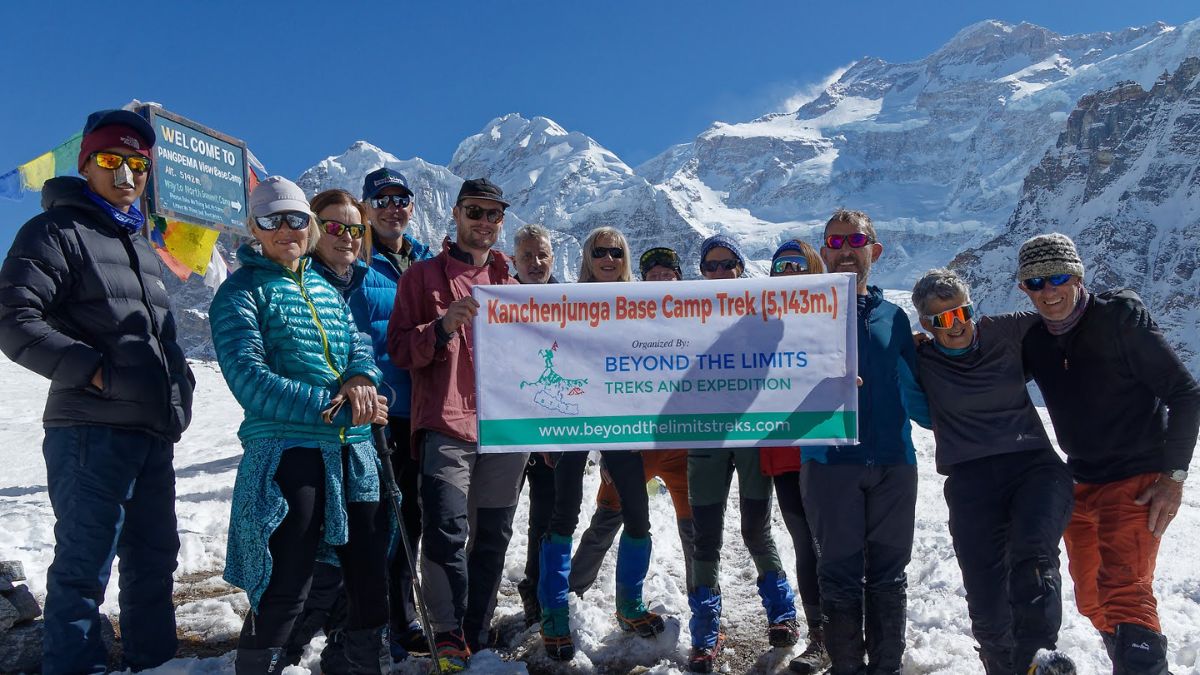
Yes. If you want to see both faces of Kanchenjunga, you can extend this trek into our Kanchenjunga Circuit Trek, which combines North Base Camp (Pangpema, about 5,143 m) and South Base Camp (Oktang, about 4,730 m) in one trip.
On the North Base Camp trek, you walk up the Ghunsa Valley to Pangpema and return the same way. With the circuit extension, you come back down to Ghunsa and then cross the Sele La high-pass traverse linking Sele La with Sinion La and Mirgin La into the Yalung Valley on the southern side. From Tseram you hike to Oktang for close views of the south face, then descend through Tortong and Yamphudin and travel back out to Bhadrapur, usually with an overnight stop on the road, for your flight to Kathmandu.
The extension adds around five to six days and a demanding high-pass crossing, so it suits trekkers with good fitness, prior multi-day trekking experience, and some time spent at altitude. Contact us and we can help you choose between the North Base Camp Trek and the full Circuit.
Note* : In the Tibetan language, "La" simply means mountain pass. Together, Sele La, Mirgin La, and Sinion La translate to barren pass, deer pass, and spirit pass, reflecting the high-altitude terrain, local wildlife, and spiritual beliefs of the region.
If you like to experience both the North and South Base Camps in one unforgettable journey with the Kanchenjunga Circuit Trek. From Pangpema’s dramatic northern views to Oktang’s stunning Yalung Glacier, this is the complete Kanchenjunga adventure.