Who Is the Langtang Valley Trek Best Suited For ?
The Langtang Valley Trek is best suited for reasonably fit beginners, regular hikers, and experienced trekkers who can comfortably walk uphill for several hours a day. The trek involves multiple consecutive days of walking on uneven terrain, but it does not require technical climbing skills. The trek is considered moderate in difficulty, with typical walking distances of around 11–16 km per day. Most of the route follows established mountain trails, with no technical climbing sections requiring crampons or previous mountaineering experience. However, the increasing altitude and long uphill and downhill sections mean a reasonable level of endurance is important.
If you have previously completed multi-day hikes or have experience trekking above 3,000 m, you may find the route more manageable. Beginners can also undertake the trek with proper preparation and gradual acclimatization. For fitness preparation, aim for 45–60 minutes of uphill walking 4–5 times a week for at least six weeks before departure, preferably while carrying a loaded daypack. Trekking poles can also provide useful support on steep ascents and descents.
How Many Kilometers Is the Langtang Valley Trek ?
The Langtang Valley Trek distance depends on your itinerary and all the side trips that you take. A standard Langtang Valley Trek itinerary usually covers between 63 to 86 km of distance for a round trip. This distance is covered between 7 to 9 days, which means it involves around 5 to 7 average hours of walking per day. Thus, the Langtang Valley Trek is suitable for beginners as well as experienced trekkers. The highest trekking point for the Langtang Valley Trek, as also included in our itinerary, is at Tserko Ri (4,984 meters/ 16,351 ft). This can be optional depending on your comfort level during the trek, but it is a recommended point to explore.
Which Month Is Best for the Langtang Valley Trek ?
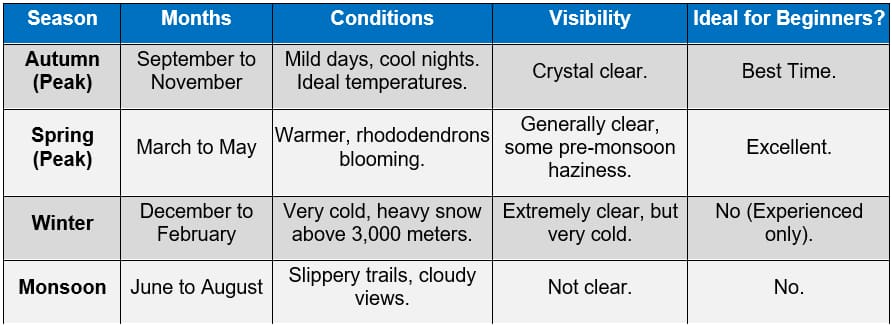
The best time for the Langtang Valley Trek, similar to other trekking routes in Nepal, is definitely the months of autumn (September to November) and spring (March to May), which are the peak seasons for trekking in Nepal. During autumn, you will see crystal clear skies along with stable weather in the region, which will make trekking easier for you. However, make your bookings well in advance as the trail gets overcrowded during this season. In the spring, you will see colorful hues of red and pink on the trail as rhododendron forests are in full bloom. You might experience slight rainfall here and there, but the weather is usually clear with great views of the mountains.
Winter is not a great time to trek here, especially for beginners, as the temperature on the trail starts going to extremes. However, for those who can handle cold, you will see the Langtang Valley covered in pristine white snow, which is a different perspective altogether.
Trekking in Langtang Valley during the monsoon is not highly recommended as there is high rainfall, which makes the trail extremely slippery and treacherous. The views are not clear either.
How Likely Are You to Complete the Langtang Valley Trek ?
For trekkers with reasonable fitness and proper preparation, the Langtang Valley Trek is generally achievable. The route follows established trails and is suitable for many first-time trekkers as well as experienced hikers. However, successful completion depends on factors such as fitness, acclimatization, weather, trail conditions, and how well you respond to altitude.
Several factors make the trek manageable:
- Non-Technical Trek: The Langtang Valley Trek does not require technical climbing skills or mountaineering experience. However, good footwear and appropriate trekking equipment are still essential.
- Manageable Daily Walking: Most itineraries divide the journey into reasonable daily sections, allowing trekkers to gradually gain altitude rather than making one extremely long ascent.
- Flexible Itineraries: Trekking itineraries can often be adjusted to include additional rest or acclimatization days if needed. A slower pace can be particularly helpful for trekkers who are less experienced.
- Teahouse Infrastructure: Teahouses and lodges are available along much of the route, providing accommodation, meals, and opportunities to rest without carrying extensive camping equipment.
- Experienced Guides: A knowledgeable local guide can help monitor your pace, identify signs of altitude-related problems, and adjust the itinerary when weather or trail conditions change.
- Proper Acclimatization: Gradual elevation gain and adequate rest are important, particularly as you approach Kyanjin Gompa, which sits at a significantly higher elevation than the starting point.
However, no trek comes with a guaranteed completion rate. Altitude sickness, severe weather, injuries, illness, or unexpected trail conditions can require trekkers to change their plans or descend. Listening to your body and informing your guide immediately if you feel unwell is essential.
Travel insurance that covers high-altitude trekking and emergency evacuation is also strongly recommended.
Overall, with sensible preparation, appropriate pacing, proper acclimatization, and flexibility, the Langtang Valley Trek is an achievable Himalayan adventure for many reasonably fit trekkers.
What Do Travelers Say About Their Langtang Trek Experiences?
The Langtang Valley Trek receives positive feedback from a wide range of travelers, including experienced trekkers, first-time hikers, and solo adventurers. Reviews often highlight the region's mountain scenery, welcoming local communities, and the support provided by experienced guides.
Common themes mentioned by travelers include:
- Friendly and Experienced Guides: Many trekkers appreciate knowledgeable local guides who help with navigation, pacing, accommodation, and unexpected challenges along the trail.
- Personalized Support: Travelers often value the small details provided by guides, from helping with minor trekking difficulties to making sure everyone is comfortable throughout the journey.
- Strong Group Camaraderie: Small group treks can create a friendly atmosphere where travelers connect with one another during long walking days, shared meals, and evenings at teahouses.
- Spectacular Mountain Scenery: Trekkers frequently mention the changing landscapes, including lush forests, suspension bridges, waterfalls, alpine terrain, and views of the Langtang Himal range.
- Cultural Experiences: The trek provides opportunities to visit traditional mountain villages, Buddhist monasteries, prayer wheels, and other cultural sites while interacting with local communities.
- A Sense of Adventure: The combination of forest trails, river crossings, rocky paths, and higher-altitude landscapes gives the journey a rewarding sense of adventure without requiring technical mountaineering skills.
- Suitable for Different Types of Travelers: With appropriate planning and pacing, the Langtang trek can accommodate solo travelers, couples, families, beginners, and experienced trekkers.
- Quieter Trail Experience: Travelers visiting outside the busiest trekking periods may encounter quieter trails and teahouses, along with peaceful mountain scenery.
- Flexible Trip Planning: Many trekkers value the ability to adjust itineraries according to their pace, available time, weather conditions, and acclimatization needs.
Overall, traveler experiences suggest that the Langtang Valley Trek is more than a mountain hiking route. It combines dramatic Himalayan scenery with local culture, community interaction, and the shared experience of trekking through one of Nepal's beautiful mountain regions.
What Are the Teahouses and Food Like on the Langtang Valley Trek ?
The Langtang Valley Trek is a teahouse trekking route, meaning you will get many comfortable teahouses and locally owned lodges across the trek where you can stay for minimal cost. These teahouses will offer twin sharing rooms or private rooms, based on the availability, comfortable beds and warm blankets, and shared or private bathrooms. Other amenities like charging, wifi, hot showers, and laundry will also be available for which you need to pay extra charges depending on the altitude. The higher you go, the more expensive things get.
Coming to food on the Langtang Valley Trek, you can expect a variety of freshly cooked meals including Nepali dal bhat, Tibetan bread, noodle soups, fried rice, momo (dumplings), porridge & pancakes, tea, coffee, hot lemon, and more.
What Equipment Do You Need for the 10-Day Langtang Valley Trek ?
Beyond the Limits Treks and Expeditions suggests trek equipment that makes clear to our clients. Please visit our Full Gear Guide
Do I Need a Guide for the Langtang Valley Trek ?
Yes. For the Langtang Valley Trek, whether you need a guide depends on the current trekking regulations, your experience, and whether you are trekking independently or through an agency. A guide can make the trek easier and safer, especially if it is your first Himalayan trek. A licensed guide can help with navigation, accommodation, local logistics, altitude awareness, and emergencies. A guide also makes it easier to handle unexpected changes in weather, trail conditions, or your itinerary.
If you are planning a 10-day Langtang Valley Trek, having a guide is particularly useful because the route reaches high altitude and includes places such as Kyanjin Gompa and optional hikes such as Tserko Ri.
Supporting Details
- For first-time trekkers: A guide provides route guidance, helps manage daily trekking distances, and assists with local communication.
- For altitude safety: A guide can recognize potential symptoms of altitude sickness and help you respond appropriately.
- For logistics: Guides can assist with teahouse accommodation, meals, transportation, permits, and itinerary changes.
- For emergencies: Having someone experienced with the route can be valuable if you become sick, injured, or affected by bad weather.
- For independent trekkers: If you have substantial Himalayan trekking experience, you may prefer to organize parts of the trek yourself, but you should always check the latest guide and permit requirements before departure because regulations can change.
If you would like to arrange a licensed guide or get help planning your Langtang Valley Trek, you can contact us for assistance.
|
Item
|
Requirement
|
Notes
|
|
Licensed trekking guide
|
Required for foreign trekkers
|
Recent Langtang-specific sources say solo trekking is not permitted in Langtang National Park and a licensed guide is compulsory.
|
|
Porter
|
Optional
|
A porter is not mandatory and you may hire one for luggage support if needed.
|
|
Solo trekking
|
Not allowed for foreigners
|
Multiple recent sources describe solo/independent trekking in Langtang as banned under current local enforcement.
|
|
Nepal-registered guide
|
Required
|
The guide should be licensed/registered in Nepal, not just someone accompanying you informally.
|
|
Permits
|
Required
|
Trekkers still need the standard park entry and trekking permits for Langtang.
|
|
Checkpoint compliance
|
Important
|
Guides are commonly checked at entry points and along the route, so carrying correct documents matters.
|
How Difficult Is the Langtang Valley Trek ?
The Langtang Valley Trek (10 Days) is best described as a moderate Himalayan trek rather than an easy walk, even though it is often recommended for fit beginners. The trail is fully non-technical and does not require ropes, crampons, or mountaineering experience, but it does involve long walking days, repeated uphill climbs, and several nights spent above 2,500 m, where altitude begins to affect energy and breathing.
What makes this trek manageable is its straightforward route and gradual acclimatization profile, but what makes it challenging is the combination of stone staircases, sustained ascent, and the return descent on tired legs and knees. In practical terms, this is a strong first multi-day trek for someone with decent fitness, but it is not a casual holiday hike.
If you're a beginner, read our detailed guide on Langtang Valley Trek Difficulty: A Complete Guide for Beginners to understand the difficulty level, fitness requirements, altitude, and preparation needed for the trek.
Langtang Valley Trek Ratings: Overall difficulty, best for, technical skills, max and mini altitude and Overall Experience
|
Metric
|
Rating / Detail
|
|
Overall Difficulty
|
Moderate, 5.5/10
|
|
Technical Skill
|
None required
|
|
Best For
|
Fit beginners and intermediate trekkers
|
|
Max Altitude, Base Route
|
3,870 m, Kyanjin Gompa
|
|
Max Altitude, Side Hikes
|
4,773 m, Kyanjin Ri or 4,984 m, Tserko Ri
|
|
Total Trekking Distance
|
About 65–75 km round trip
|
|
Average Daily Walking
|
5–7 hours
|
|
Main Challenge
|
Uphill climbs, altitude, and long descent days
|
How Many Hours Do You Trek Each Day on the Langtang Valley Trek ?
|
Day
|
Route
|
Walking / Driving Time
|
Max Altitude
|
Difficulty Focus
|
|
Day 1
|
Kathmandu → Syabrubesi
|
7–8 hrs drive
|
1,460 m
|
Long overland transfer, bumpy mountain road
|
|
Day 2
|
Syabrubesi → Lama Hotel
|
5–7 hrs walk
|
2,470 m
|
Steep forest ascent, first real trekking day
|
|
Day 3
|
Lama Hotel → Langtang Village
|
6–7 hrs walk
|
3,430 m
|
Continuous climb, altitude starts to matter
|
|
Day 4
|
Langtang Village → Kyanjin Gompa
|
3–4 hrs walk
|
3,870 m
|
Shorter day, gradual alpine gain
|
|
Day 5
|
Acclimatization hike
|
5–7 hrs side hike
|
4,773–4,984 m
|
Hardest day, steep climb at high altitude
|
|
Day 6
|
Kyanjin Gompa → Lama Hotel
|
6–7 hrs walk
|
3,870 m → 2,470 m
|
Long descent, heavy knee impact
|
|
Day 7
|
Lama Hotel → Syabrubesi
|
4–5 hrs walk
|
2,470 m → 1,460 m
|
Easier downhill return
|
|
Day 8
|
Syabrubesi → Kathmandu
|
7–8 hrs drive
|
1,400 m
|
Return transfer, road fatigue
|
|
Day 9
|
Buffer day in Kathmandu
|
0 hrs
|
1,400 m
|
Contingency for delays or recovery
|
|
Day 10
|
Departure
|
0 hrs
|
1,400 m
|
End of trip
|
What safety precautions should trekkers take on the Langtang trail, including dealing with animals, landslides, and seasonal hazards ?
Trekking in the Langtang Valley is generally safe when you prepare properly and stay alert to changing Himalayan conditions. Here are some practical safety tips to keep in mind:
- Give Way to Livestock: Yaks, mules, and other pack animals are common along the trail. When a caravan approaches, step aside toward the mountain side rather than the exposed edge of the trail. Give the animals plenty of space to pass safely.
- Stay Alert in Landslide Areas: Some sections, particularly between Syabrubesi and Lama Hotel, can have loose terrain and rockfall risks, especially during the monsoon or after heavy rainfall. Follow your guide's instructions and avoid stopping in exposed areas.
- Be Prepared for Snow and Ice: Higher sections around Kyanjin Gompa can experience snow and icy trails during winter and early spring. Carry appropriate footwear with good traction, and consider microspikes if conditions require them.
- Use Trekking Poles: Trekking poles provide additional stability on rocky, uneven, and steep sections. They can be particularly useful during long descents when your knees and joints are under greater strain.
- Follow the Main Trail: Stay on established trekking routes and avoid taking unfamiliar shortcuts. If you're unsure about the direction, ask your guide or local residents rather than relying solely on assumptions.
- Monitor Weather Conditions: Mountain weather can change quickly. Check the forecast when possible and be prepared for rain, snow, strong winds, or sudden temperature drops, particularly at higher elevations.
- Pace Yourself at Higher Altitudes: Don't rush the trek. Maintain a comfortable pace, stay hydrated, and pay attention to symptoms of altitude sickness. If you develop concerning symptoms, inform your guide immediately and descend if advised.
- Carry Essential Supplies: Keep basic first-aid supplies, water, snacks, warm layers, a headlamp, and important personal medications easily accessible throughout the trek.
With sensible preparation and awareness of animals, terrain, weather, and altitude, you can significantly reduce common trekking risks and enjoy a safer Langtang Valley adventure.
Who Should Not Do the Langtang Valley Trek ?
The Langtang Valley Trek shouldn't do by those people who had a serious knee, ankle, or joint problems, because the long descents and stone steps can be punishing on the lower body. It is also a poor choice for travelers who expect luxury lodging, since tea houses are basic and comfort is limited compared with resort-style travel.
People who strongly dislike long mountain drives should think carefully before booking, because the Kathmandu–Syabrubesi road is winding and tiring. Likewise, anyone with very low fitness or no preparation should avoid treating this as a casual trek, because 5–7 hours of walking on consecutive days becomes demanding very quickly.
What Is the Best Time to Trek Langtang Valley Based on the Weather ?
The best time for the Langtang Valley Trek is March to May and September to November, when the skies are clearest, trail conditions are most stable, and mountain views are strongest. The monsoon months bring heavy rain, slippery trails, landslide risk, and poor visibility, while winter is cold but still workable for trekkers who can handle freezing nights and possible snow.
Want to know more about seasonal conditions and the ideal months for trekking? Read our detailed guide on the Best Time to Trek Langtang Valley Trek before planning your journey.
What Is the Weather Like in Langtang Valley Each Month ?
|
Month
|
Avg Day Temp
|
Avg Night Temp
|
Rain / Snow
|
Trekking Condition
|
|
January
|
0 to 5°C
|
-12 to -5°C
|
Low, some snow
|
Good, but very cold
|
|
February
|
2 to 8°C
|
-10 to -3°C
|
Low, snow possible
|
Good, but cold
|
|
March
|
5 to 12°C
|
-6 to 0°C
|
Low to moderate
|
Best
|
|
April
|
8 to 15°C
|
-3 to 3°C
|
Moderate
|
Best
|
|
May
|
10 to 17°C
|
0 to 6°C
|
Moderate, rising late month
|
Best
|
|
June
|
12 to 18°C
|
4 to 9°C
|
High
|
Avoid
|
|
July
|
13 to 19°C
|
6 to 11°C
|
Very high
|
Avoid
|
|
August
|
13 to 19°C
|
6 to 11°C
|
High
|
Avoid
|
|
September
|
10 to 16°C
|
2 to 8°C
|
Moderate, reducing
|
Best
|
|
October
|
8 to 14°C
|
-2 to 4°C
|
Low
|
Best
|
|
November
|
4 to 11°C
|
-7 to -1°C
|
Very low
|
Best
|
|
December
|
0 to 7°C
|
-11 to -4°C
|
Low
|
Good, but cold
|
Is the Langtang Valley Trek Suitable for Kids and Seniors ?
Yes, Langtang Valley Trek is suitable for kids and seniors, cause this trek is Nepal’s popular family-friendly multi-day Himalayan treks. Langtag Valley Trek avoids flight-dependent routes, stays on a straightforward trail system, and offers frequent teahouse stops. Even so, it is still a real mountain trek, so “family-friendly” here means manageable with good pacing, not easy in the casual sense.
|
Group
|
Suitability
|
Research-Based Caveat
|
|
Children 6–7
|
Possible, but only for very active kids
|
They usually need slower pacing, frequent rest stops, and some form of carrying support when tired, because 5–6 hours of walking can be draining.
|
|
Children 8–11
|
Best age range
|
This is the sweet spot for many families because children in this range often enjoy the forests, suspension bridges, wildlife, and village stops, provided the itinerary is not rushed.
|
|
Teens 12–15
|
Well suited
|
Fit teens can usually handle the full trek well, including the standard route to Kyanjin Gompa, as long as they are accustomed to long hikes.
|
|
Seniors 60–75+
|
Suitable if medically fit
|
Age matters less than heart health, joint condition, balance, and stamina, seniors with good fitness and medical clearance can complete the trek safely.
|
Are There Age Restrictions for the Langtang Trek?
There is generally no fixed age restriction for the Langtang Valley Trek. However, age should be considered alongside overall health, fitness, trekking experience, and the ability to walk for several hours each day on uneven and uphill terrain.
The trek from Syabrubesi to Kyanjin Gompa involves a significant increase in elevation over several days, so every trekker should be prepared for sustained walking and changing altitude.
Important considerations include:
- Children: Children can participate if they are physically capable of handling the trekking conditions. Families should choose a comfortable pace and include plenty of rest breaks. A child carrier may be useful for very young children.
- Older Trekkers: Seniors can undertake the trek with appropriate preparation, provided they are comfortable with prolonged walking and elevation gain. Trekking poles can provide additional stability on uneven terrain.
- Fitness Level: You don't need to be an experienced mountaineer, but you should be prepared to walk for several hours a day, often on rocky, uneven, and uphill trails.
- Acclimatization: Allowing enough time to adjust to increasing altitude is important for trekkers of all ages. Avoid rushing the itinerary simply to complete the trek faster.
- Family Treks: Families should consider a slower itinerary with additional rest periods and shorter walking days when necessary.
- Health Considerations: Anyone with existing health concerns, particularly young children or older adults with medical conditions, should seek appropriate medical advice before undertaking a high-altitude trek.
Ultimately, age alone does not determine whether someone can complete the Langtang Valley Trek. Proper preparation, physical fitness, sensible pacing, and adequate acclimatization are much more important factors. With the right itinerary and preparation, the trek can be an enjoyable Himalayan experience for a wide range of age groups.
Are ATMs, Wi-Fi, and Mobile Networks Available on the Langtang Valley Trek ?
ATMs, Wi-Fi, and mobile networks are limited along the Langtang Valley Trek. There are no reliable ATMs on the trail, so carry enough Nepali cash from Kathmandu. Wi-Fi and mobile coverage are available in many teahouses and lower sections but become less reliable at higher elevations. Carry a local SIM, power bank, and small cash denominations for charging, Wi-Fi, food, and other expenses.
|
Topic
|
What to Expect
|
Practical Tip
|
|
ATM
|
No reliable ATM access on the trail after leaving Kathmandu/Pokhara.
|
Carry enough Nepali cash before starting the trek.
|
|
Wi‑Fi
|
Available in many teahouses, but speed and reliability drop as altitude increases.
|
Use it for basic messaging, not heavy uploads or calls.
|
|
Mobile network
|
Coverage is available in many parts of the Langtang route and usually works better in lower sections than higher ones.
|
Buy a local SIM in Kathmandu and keep emergency contacts saved offline.
|
|
Electricity/charging
|
Charging is usually available in teahouses, but it may be slow, limited, or charged extra.
|
Carry a power bank and charge devices whenever you get the chance.
|
|
Cash usage
|
Cash is essential for snacks, charging fees, Wi‑Fi, and small purchases.
|
Keep small denominations for easier payments in villages.
|
Which Is Better: Langtang Valley Trek vs Everest Base Camp vs Annapurna Base Camp ?
Langtang Valley is generally the shortest and more budget-friendly option, while Everest Base Camp is the longest, highest, and most demanding of the three. Annapurna Base Camp sits between them in duration, cost, and altitude, making it a good middle-ground choice.
A 10 day Langtang Valley Trek reaches a maximum sleeping altitude of 3,870 m at Kyanjin Gompa, with Tserko Ri reaching about 4,984 m. In comparison, Everest Base Camp typically takes 12–16 days, reaches a sleeping altitude of 5,164 m at Gorak Shep, and has a higher AMS risk. Annapurna Base Camp usually takes 8–12 days and reaches 4,130 m, offering a balance between altitude, duration, and difficulty.
Langtang is also comparatively less crowded and costs around $699 per person, while EBC generally costs $1,199 per person and ABC around $845 per person. Langtang involves a drive from Kathmandu to Syabrubesi and features Tamang and Tibetan-influenced villages; EBC involves Lukla or a longer road journey and focuses on Sherpa culture; ABC is accessed via Pokhara and offers Gurung and Magar cultural experiences. Each trek also has different permit requirements, so trekkers should check the latest regulations before departure.
|
Feature
|
Langtang Valley Trek
|
Everest Base Camp (EBC)
|
Annapurna Base Camp (ABC)
|
|
Duration
|
7–10 days
|
12–16 days
|
8–12 days
|
|
Total Cost Range
|
$500–$900
|
$1,200–$2,500
|
$700–$1,300
|
|
Trail Logistics
|
Drive from Kathmandu to Syabrubesi
|
Flight to Lukla or long drive
|
Drive via Pokhara
|
|
Max Sleeping Altitude
|
3,870 m (Kyanjin Gompa)
|
5,164 m (Gorak Shep)
|
4,130 m (ABC)
|
|
Highest Viewpoint
|
4,984 m (Tserko Ri)
|
5,545 m (Kala Patthar)
|
4,130 m (ABC Sanctuary)
|
|
Trail Crowds
|
Low to Moderate
|
Heavy / High
|
High
|
|
AMS Risk
|
Moderate
|
High
|
Moderate
|
|
Cultural Focus
|
Tamang and Tibetan-influenced villages
|
Sherpa culture and monasteries
|
Gurung and Magar villages
|
|
Permits Required
|
Langtang National Park permit
|
Sagarmatha National Park and Khumbu permits
|
ACAP permit
|
What sustainable trekking practices help protect the environment in Langtang National Park ?
Langtang National Park is home to diverse forests, wildlife, rivers, and fragile Himalayan ecosystems. Responsible trekking practices can help reduce environmental impact and protect the region for future visitors and local communities.
Here are some simple ways to trek more sustainably:
- Carry a Reusable Water Bottle: Avoid single-use plastic bottles whenever possible. Bring a durable reusable bottle and use water purification tablets, a filter, or another appropriate treatment method to make drinking water safer.
- Stay at Local Teahouses: Choose locally owned teahouses and lodges along the trekking route. This supports local families and helps keep tourism income within communities in the Langtang region.
- Pack Out Your Waste: Follow the Leave No Trace principle by carrying your non-biodegradable waste with you. Items such as snack wrappers, batteries, tissues, and other waste should never be left along the trail.
- Reduce Packaged Foods: Limit unnecessary packaged snacks and products that create additional waste. Whenever practical, choose freshly prepared meals and locally available food at teahouses.
- Avoid Damaging the Natural Environment: Stay on established trails and avoid picking flowers, disturbing vegetation, or damaging rocks, trees, and other natural features.
- Respect Wildlife: Langtang National Park supports a variety of wildlife, including species such as the red panda and Himalayan black bear. Observe animals from a safe distance and never feed or deliberately disturb wildlife.
- Respect Local Culture: Treat monasteries, prayer flags, mani walls, religious sites, and local customs with respect. Ask permission before photographing people or entering private or religious spaces.
- Use Water Responsibly: Fresh water is valuable in mountain communities. Avoid unnecessary water consumption and follow the guidance provided by your teahouse or guide.
By following these simple practices, trekkers can help protect the natural environment and cultural heritage of Langtang National Park while ensuring that future generations can enjoy the same Himalayan landscapes.
What sustainable trekking practices help protect the environment in Langtang National Park ?
Responsible travel is an important part of experiencing the Langtang Valley. Respecting local communities, religious traditions, and the natural environment helps preserve the region for future trekkers.
Here are some simple guidelines to follow:
- Dress Respectfully: Wear modest clothing when visiting villages, monasteries, and religious sites. Covering your shoulders and knees is generally appreciated and shows respect for local customs.
- Ask Before Taking Photos: Always ask permission before photographing local people, monks, homes, or religious ceremonies. Be particularly respectful when taking photographs inside monasteries and other sacred spaces.
- Respect Buddhist Traditions: When passing mani walls, chortens, prayer wheels, and other Buddhist structures, follow local customs. Traditionally, these structures are passed with them on your right-hand side, moving clockwise.
- Keep the Trail Clean: Follow the Leave No Trace principle. Carry your rubbish with you and dispose of it properly at appropriate collection points or at your accommodation. Never leave waste along the trekking trail.
- Respect Local Communities: Be polite and considerate when interacting with residents. A simple “Namaste” is a friendly way to greet people, while taking an interest in local traditions can make cultural interactions more meaningful.
- Support Local Businesses: Whenever possible, stay at locally operated teahouses, eat at local establishments, and purchase goods from small shops and community businesses. This helps ensure that tourism benefits local families.
- Respect Religious Sites: Avoid touching religious objects, prayer flags, statues, or offerings unless invited to do so. Follow any instructions provided by monks, guides, or local residents.
- Protect the Natural Environment: Stay on designated trails, avoid disturbing wildlife, and do not pick plants or damage natural features.
By combining environmental responsibility with cultural respect, trekkers can enjoy a more meaningful Langtang Valley experience while helping protect the region's communities, traditions, and natural beauty for future generations.
What festivals and traditions are celebrated by the local Tamang people in the Langtang region ?
The Tamang people are an important part of the cultural identity of the Langtang region. Their traditions, music, clothing, festivals, and Buddhist practices can be experienced throughout villages along the trekking routes.
Some of the most notable aspects of Tamang culture include:
- Rich Cultural Heritage: Tamang communities have preserved distinctive traditions, language, clothing, music, and customs that have developed over generations in the Himalayan region.
- Traditional Music and Dance: Music and dance play an important role in Tamang social and cultural life. Traditional instruments such as the Damphu are commonly associated with Tamang musical traditions, while songs often express stories, humor, relationships, and everyday experiences.
- Sonam Lhosar:Sonam Lhosar is the Tamang New Year and one of the community's most important festivals. It is generally celebrated according to the lunar calendar, with the date varying each year. Celebrations can include traditional clothing, family gatherings, communal meals, music, dancing, and cultural performances.
- Traditional Clothing: During festivals and special occasions, Tamang people may wear traditional clothing featuring distinctive designs, colors, and embroidery, adding to the cultural atmosphere of villages and celebrations.
- Buddhist Influences: Buddhism has a strong influence on Tamang cultural and spiritual life. Trekkers can see this heritage through mani walls, prayer flags, chortens, monasteries, and prayer wheels throughout the Langtang region.
- Community Celebrations: Festivals provide opportunities for families and communities to come together, share food, perform traditional dances, and celebrate their cultural identity.
- Living Himalayan Culture: The traditions of the Tamang people are not simply historical attractions. They remain part of everyday life in many communities, giving trekkers an opportunity to experience the living culture of the Langtang region.
Exploring the Langtang Valley therefore offers more than spectacular Himalayan scenery. It also provides an opportunity to learn about Tamang traditions, Buddhist heritage, local festivals, music, and community life, making the trek a richer cultural experience.
What Level of Sunscreen and Lip Balm Protection Is Needed for Trekking at Altitude ?
Sun protection is especially important when trekking at higher elevations because UV exposure increases with altitude. Snow, rocks, and other surfaces can also reflect sunlight, increasing exposure even on cloudy days.
Keep these sun-protection essentials in your trekking kit :
- Use SPF 50+ Sunscreen: Apply a broad-spectrum SPF 50 or higher sunscreen to your face, neck, ears, hands, and other exposed areas.
- Choose a High-SPF Lip Balm: Use a lip balm with SPF 30 or higher to protect your lips from UV exposure, wind, and dry mountain air.
- Reapply Regularly: Sunscreen can wear off through sweating, wiping, or prolonged exposure. Reapply regularly throughout the day, particularly during long hours on the trail.
- Protect Your Face and Neck: Areas such as the nose, cheeks, ears, and back of the neck are particularly vulnerable to sunburn. Don't overlook them when applying sunscreen.
- Use Physical Protection: A wide-brimmed hat or cap, sunglasses with proper UV protection, and lightweight clothing that covers exposed skin provide additional protection.
- Don't Rely on Cloud Cover: UV radiation can still be significant when the sky is cloudy, so continue using sunscreen even when the sun doesn't feel particularly strong.
Proper sun protection helps prevent sunburn, chapped lips, and long-term UV damage, allowing you to stay more comfortable throughout your Langtang Valley Trek.
Is tipping compulsory for trekking crews ?
Tipping is not mandatory on the Langtang Valley Trek, but it is a common way for trekkers to show appreciation to their guides, porters, and other trekking staff. The amount you choose to give can depend on the trek's duration, difficulty, group size, and the quality of service you received.
Here are some useful guidelines:
- Consider the Trek Duration: Longer and more demanding treks may warrant a larger tip, particularly when guides and porters have provided consistent support throughout the journey.
- Tip According to Service: Consider the effort, professionalism, knowledge, and care provided by your trekking crew when deciding how much to give.
- Tip at the End of the Trek: Tips are generally given when the trek concludes, often during a farewell gathering or before the trekking team departs.
- Group Tipping Is Common: If you're traveling as part of a group, trekkers often contribute to a shared tip that is distributed among the trekking staff.
- No Fixed Amount: There is no official or universally required tipping rate. Some travelers use a percentage of the overall trek cost as a general budgeting guideline, while others choose a fixed amount based on the crew's performance and their own budget.
- Tip Directly and Respectfully: If possible, give tips directly to the intended recipient or through your trekking organizer so that the money reaches the appropriate team members.
Ultimately, tipping is a personal gesture of appreciation rather than an obligation. A thoughtful tip can be a meaningful way to recognize the hard work of the people who help make your Langtang Valley Trek safe and enjoyable.
How Much Does a 10-Day Langtang Valley Trek Cost ?
Trek Package $699
Porter$0
Hotel$0
Private Jeep$0
Insurance$0
Total Per Person $699
This is an estimated budget. Final pricing may vary depending on the trekking season,group size, itinerary customization, and additional services requested.
Content Reviewed By
Beyond The Limits Treks & Expedition Pvt. Ltd.
A licensed trekking company in Nepal specializing in trekking and adventure travel across the Langtang, Everest, Annapurna, and Manaslu regions. The company's professional team regularly reviews trekking information, route conditions, permit requirements, and travel logistics to ensure content accuracy and reliability.
Legal document: Beyond the limits treks