Thinking about trekking in Langtang to go for a week of relaxing trek close to Kathmandu, you should go for the Langtang valley Trek . The Langtang region has different weather conditions in the varying seasons of Autumn, Spring, Monsoon, and Winter. But, the best time for this trek is the Autumn and Spring season.
These seasons offer stable weather and comfortable temperatures. The days are usually warm and sunny, making it easier to walk on dry trails. However, mornings and nights can still be cold because you are in the mountains, but the temperatures are generally manageable.
The lush forests of oaks and rhododendrons, along with the diverse vegetation, come into life during these seasons. Plus, the crisp views of the Himalayan chain of Himalayas under the blue sky are the alluring scene the trek in these seasons offers.
Langtang Valley experiences four different seasons: Spring, Autumn, Summer, and Winter. With these seasons, nature, temperature and the climatic conditions also change. Spring and autumn are the best seasons for this trek because of the comfortable temperatures, stable weather, and beautiful mountain views. The off-season can be more challenging due to changing weather and trail conditions. However, with proper physical and mental preparation and the right trekking gear, you can complete this trek at any time of the year.
If you are planning to visit Langtang Valley Trek, Helambu Trek and Gosaikunda Lake Trek then you can check out : 15 Days Langtang Valley Gosainkunda Helambu Trek

Each season offers a different experience and unique views in Langtang. Here’s what you need to know before planning your trek.
Autumn Langtang Valley Trek
Do you know Autumn is one of the best times to trek in Langtang? From September to mid-December, the weather is warm and remains stable. During this season, you can enjoy clear blue skies, fresh mountain air, and stunning views of the Himalayas throughout the trek.
You may feel cold in the morning and the night but during the day the temperature ranges from 10°C-15°C (50°F-59°F). With comfortable temperatures and stable weather, you can enjoy the trek and create unforgettable memories along the way.
And also, rainfall is usually low during this time, so you can enjoy clear views of the valleys and the Himalayas. The skies are also less likely to be covered by thick fog, giving you better mountain views throughout the trek.
Since autumn is the peak trekking season, you will meet many fellow trekkers along the trail. You can share the journey, enjoy the lively atmosphere, and make new memories instead of walking alone. Overall, autumn offers one of the most enjoyable times to experience the Langtang Valley Trek.
Spring Langtang Valley Trek
March to May is the second-best time to trek in the Langtang region. The days are usually warm and pleasant, making it comfortable to walk. Daytime temperatures generally range from 10°C to 20°C (50°F to 68°F), so you can enjoy an easier and more comfortable trek to Langtang Valley.
The Langtang trail looks especially beautiful during this season. The forests turn green, rhododendrons bloom, and colorful wildflowers appear along the trail. At higher altitudes, the warm sunshine and gentle mountain breeze make the trek more pleasant and comfortable.
You will see new twigs, colorful flowers, and fresh green leaves coming to life during this season. The forests feel lively and refreshing as you walk through them, with rhododendrons adding beautiful colors along the trail. You can also enjoy fresh mountain air and clear views of the surrounding peaks. With pleasant weather and fewer chances of rain or snow, spring offers a comfortable and rewarding trekking experience in Langtang.
Summer/Monsoon Langtang Valley Trek
Langtang region experiences warm summer weather from June to August. This season also brings the monsoon, so you can expect more rain, especially in the lower areas. On sunny days, temperatures in the lower regions can reach around 30°C (86°F). As you climb to higher altitudes, the temperature becomes cooler, with July temperatures dropping to around 10°C (50°F).
Rain can make the trails wet and slippery, and you may also encounter leeches, bugs, and earthworms along the way. However, the rain also brings a beautiful side to Langtang, with fresh greenery and rain-washed landscapes all around. For nature lovers, summer can be a peaceful and refreshing time to experience the region.
Dense fog can sometimes reduce visibility, but the skies often clear after the rain, offering beautiful views of the mountains and surrounding landscapes. Summer is also the planting season in some parts of Langtang, so you can see locals working in the fields and enjoy views of the green terraced farms. It gives you a chance to experience the local lifestyle while enjoying the peaceful beauty of the region.
Winter Langtang Valley Trek
December to February brings winter to the Langtang region. This is the coldest time of the year, with daytime temperatures around 6°C–9°C (42.8°F–48.2°F). At night, the temperature can drop below freezing, making it much colder.
In winter, you get to explore the snow-blanketed Langtang Valley under the deep blue skies. However, winter in this mountain region can bring snowfall, strong winds, and harsh weather conditions. These conditions can make the trek more challenging.
Since winter is a quieter trekking season in Langtang, the trails are less crowded, and you can enjoy the peaceful surroundings with fewer trekkers. It is a great option for those who want to experience nature, enjoy quiet trails, and capture beautiful photos without the crowds.
Tell us your trekking preferences, and we will create the best Langtang Trek itinerary for you. You can also share your preferred trekking dates, and we can help arrange your accommodation in advance.
Before choosing your trekking season, it is also important to understand your overall budget. Our Langtang Valley Trek cost guide explains the expected costs and what is included in a typical trekking package.
Month-by-Month Temperature & Rainfall Table for Langtang Valley Trek
|
Month
|
Day Temp (°C)
|
Night Temp (°C)
|
Day Temp (°F)
|
Night Temp (°F)
|
Rainfall (mm)
|
Rainfall (inches)
|
Conditions
|
Recommended
|
|
January
|
-2 to 5
|
-12 to -5
|
28 to 41
|
10 to 23
|
16
|
0.64
|
Cold, dry, possible snow
|
Best for experienced winter trekkers
|
|
February
|
0 to 8
|
-10 to -3
|
32 to 46
|
14 to 27
|
24
|
0.95
|
Cold but stabilising
|
Yes, late February onwards
|
|
March
|
5 to 12
|
-6 to 0
|
41 to 54
|
21 to 32
|
44
|
1.72
|
Clear mornings, warming
|
Highly recommended
|
|
April
|
8 to 15
|
-3 to 3
|
46 to 59
|
27 to 37
|
61
|
2.42
|
Rhododendron bloom, mild
|
Highly recommended
|
|
May
|
10 to 17
|
0 to 6
|
50 to 63
|
32 to 43
|
102
|
4.00
|
Warm, hazier skies
|
Good, early May best
|
|
June
|
12 to 18
|
4 to 9
|
54 to 64
|
39 to 48
|
145
|
5.70
|
Pre-monsoon rain begins
|
Good, preparation needed
|
|
July
|
13 to 19
|
6 to 11
|
55 to 66
|
43 to 52
|
476
|
18.75
|
Heavy monsoon rains
|
For experienced trekkers only
|
|
August
|
13 to 19
|
6 to 11
|
55 to 66
|
43 to 52
|
420
|
16.54
|
Wettest month
|
Best with strong guidance
|
|
September
|
10 to 16
|
2 to 8
|
50 to 61
|
36 to 46
|
150
|
5.90
|
Monsoon retreating
|
Fine, especially late September
|
|
October
|
8 to 14
|
-2 to 4
|
46 to 57
|
28 to 39
|
45
|
1.77
|
Clearest skies of the year
|
The best month
|
|
November
|
4 to 11
|
-7 to -1
|
39 to 52
|
19 to 30
|
8
|
0.31
|
Crisp, cold mornings
|
Highly recommended
|
|
December
|
0 to 7
|
-11 to -4
|
32 to 45
|
12 to 25
|
10
|
0.39
|
Cold, quiet trails
|
Yes, if you handle cold
|
Month-by-Month Weather for Langtang Valley Trek
|
Month
|
Season
|
Avg Day Temperature
|
Avg Night Temperature
|
Weather & Trail Conditions
|
Best For / Notes
|
|
January
|
Winter
|
6–10°C
|
–4 to 0°C
|
Very cold and snow likely above 3,500 m clear skies but icy trails
|
Experienced winter trekkers only can pack serious cold-weather gear
|
|
February
|
Winter
|
8–12°C
|
–2 to 2°C
|
Still cold, especially at night, and gradual warming late month with fewer trekkers
|
Fit trekkers seeking quiet trails and in late February is more viable
|
|
March
|
Spring
|
12–15°C
|
2–5°C
|
Stable weather, clear mornings, and rhododendrons start blooming with low crowd
|
Early-spring treks, photography, avoiding peak-season crowds
|
|
April
|
Spring
|
15–18°C
|
5–8°C
|
Pleasant temperatures, peak rhododendron bloom, excellent visibility, and busiest spring month
|
First-timers, flower lovers, classic “best time” experience
|
|
May
|
Spring
|
18–20°C
|
8–12°C
|
Warmest spring month with an occasional haze and pre-monsoon showers late in the month
|
Early May for warm days and clear views can avoid late May if you dislike rain risk
|
|
June
|
Monsoon
|
20–22°C
|
12–15°C
|
Monsoon onset can bring frequent rain, muddy trails, high humidity, and mountain views often obscured
|
Generally not recommended, but only for very experienced monsoon trekkers
|
|
July
|
Monsoon
|
20–22°C
|
12–15°C
|
Heavy rainfall and landslides and trail damage possible the leeches on lower sections
|
Avoid unless you have strong monsoon experience and a flexible itinerary
|
|
August
|
Monsoon
|
20–22°C
|
12–15°C
|
Continued monsoon with short clear windows is still risky and visually limited
|
Not ideal for the consider autumn instead for safer, clearer trekking
|
|
September
|
Autumn
|
Mild
|
Near 0°C (high)
|
Post-monsoon clarity and lush landscapes are stable weather by late month for fewer crowds than Oct
|
Trekkers wanting clear skies but slightly fewer people than peak October
|
|
October
|
Autumn
|
8–14°C
|
–2 to 4°C
|
Clearest skies of the year have very stable weather and excellent mountain visibility in peak season
|
Best overall month for views, safety, and classic Langtang experience
|
|
November
|
Autumn
|
4–11°C
|
–7 to –1°C
|
Crisp, cold mornings and very clear views are slightly fewer trekkers than October
|
Cold-tolerant trekkers wanting great visibility with thinner crowds
|
|
December
|
Winter
|
5–10°C
|
–10 to –20°C
|
Very cold and snow possible at higher elevations have clear skies but demanding conditions
|
Well-prepared winter trekkers are not ideal for first-timers
|
Still confused about which itinerary is right for you? Our trekking experts can help you choose and customize the best itinerary based on your time, interests, and preferences. Contact us to discuss your Langtang Valley Trek and start planning your journey.
Planning Your Trek: Monsoon Insights, October Logistics, and Essential Advice
The best time to trek the Langtang Valley depends on your priorities. June to August offers lush landscapes, fewer trekkers, and a more immersive nature experience, but expect rain, mud, leeches, and limited mountain views. October provides much more stable weather and clearer mountain views, but accommodation can fill quickly because it is one of the busiest trekking months. Regardless of the season, pack appropriate gear and keep some flexibility in your itinerary for changing mountain conditions.
Explanation
Langtang Valley during the monsoon:
From June to August, the Langtang Valley becomes exceptionally green and vibrant. Frequent rain creates flowing waterfalls, misty forests, and dramatic cloud formations. Although mountain visibility can be unpredictable and trails may become muddy or slippery, the lower number of trekkers makes this period appealing to travelers who value solitude and a quieter connection with nature. Waterproof clothing, proper trekking footwear, and protection from leeches are particularly important.
Accommodation in October:
October is among the most popular months for trekking in Nepal because of generally stable weather, clear skies, and excellent mountain visibility. As a result, teahouses along the Langtang Valley route can become busy, particularly at popular overnight stops. Travelers should plan accommodation proactively, especially when trekking in larger groups. Booking ahead or using a reputable trekking agency can make the logistics easier during the peak season.
Essential advice for every season:
Your equipment should match the conditions you are likely to encounter. Monsoon trekkers should prioritize waterproof jackets, rain covers, quick-drying clothing, and footwear with good grip. Autumn and winter trekkers should focus more on warm layers and protection from cold temperatures. Most importantly, avoid creating an itinerary with no room for delays. Weather, trail conditions, transportation, and altitude can all affect your schedule.
Supporting Details
| Trekking Consideration |
Monsoon: June–August |
October |
| Weather |
Frequent rain and cloudy conditions |
Generally stable and clear |
| Mountain views |
Often limited by clouds |
Usually excellent |
| Landscape |
Lush, green, and vibrant |
Clear mountain scenery |
| Trail conditions |
Wet, muddy, and potentially slippery |
Generally drier |
| Crowds |
Relatively low |
High |
| Accommodation |
Usually easier to find |
Should be planned in advance |
| Recommended gear |
Waterproofs, rain cover, quick-drying clothes, good-grip footwear |
Warm layers, trekking footwear, sun protection |
| Main advantage |
Solitude and lush nature |
Stable weather and clear views |
| Main challenge |
Rain, mud, leeches, and reduced visibility |
Crowds and accommodation demand |
Bottom line: Choose June–August if you are comfortable with unpredictable weather and want a quieter, greener Langtang experience. Choose October if clear mountain views, stable weather, and classic trekking conditions are your priority. Whichever season you choose, allow extra time in your itinerary so unexpected weather or trail conditions do not turn into unnecessary pressure.
Real Experiences From Langtang Valley Trekkers
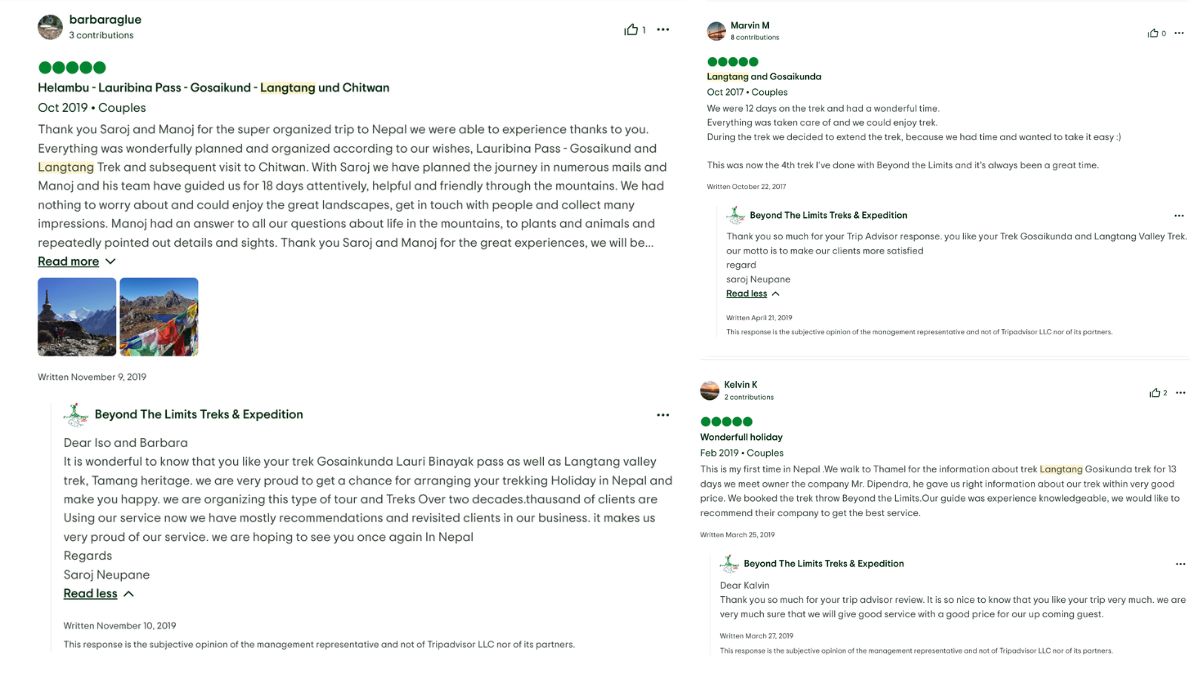
Our Langtang Valley trekkers have shared their experiences after exploring the region with Beyond The Limits Treks. Barbara Lague praised the team for organizing an 18-day journey through Helambu, Lauribina Pass, Gosaikunda, and Langtang, highlighting the friendly and knowledgeable support from Saroj and Manoj. Marvin M. enjoyed his 12-day Langtang and Gosaikunda trek and appreciated the team's care and flexibility when extending the trek. Kelvin K. also recommended the company after his 13-day Langtang and Gosaikunda trek, praising the helpful information, experienced guides, and good service. These experiences reflect our commitment to well-planned itineraries, reliable support, and memorable trekking experiences in the Langtang region.
Our Itinerary plan for: Langtang Valley Trek
Frequently Asked Questions
1. Is October or November better for the Langtang Valley Trek?
October is better for most trekkers. Daytime temperatures run 8–14°C with the clearest skies of the year and rainfall dropping to just 45mm. November is colder (4–11°C during the day, dropping to –7°C at night) but has even less rainfall (8mm) and thinner crowds a better pick if you prioritize solitude over warmth.
2. Can I trek Langtang in December?
Yes, but only for prepared trekkers. December daytime temperatures average 0–7°C, with nights dropping to –11 to –20°C at higher elevations like Kyanjin Gompa. Trails are quiet, and skies are often clear, but snowfall and freezing nights make it unsuitable for first-timers without proper cold-weather gear.
3. Do I need crampons or microspikes for the Langtang Valley Trek?
Microspikes are recommended from late November through February and are useful in early spring (March) after fresh snowfall. Snow is most likely above 3,500m in winter months, when trails above Langtang Village and around Kyanjin Gompa can turn icy.
4. Are teahouses open year-round in Langtang Valley?
Most teahouses along the main Langtang Valley route stay open year-round, since the trail sits at a lower elevation than routes like Everest or Annapurna Circuit. However, service is reduced in winter (December–February) and monsoon (June–August) due to lower trekker numbers.
5. What's the coldest it gets at Kyanjin Gompa?
Kyanjin Gompa (3,870m) sees the coldest nights in December and January, dropping as low as –10°C to –20°C. Daytime temperatures in these months stay low too, typically 0–10°C, so nighttime cold-weather gear is essential even when days feel manageable.
6. Is Langtang less crowded than Everest or Annapurna in peak season?
Yes. Langtang is consistently one of the least crowded major trekking regions in Nepal, even during peak Autumn season, because it sees a fraction of the foot traffic of Everest Base Camp or Annapurna Circuit making it a better option for trekkers who want mountain views without the crowds.
7. When do rhododendrons bloom in Langtang?
Rhododendrons bloom primarily in April, Langtang's peak spring month, with blooms starting in March at lower elevations and continuing into early May at higher altitudes. April offers the best combination of peak bloom and pleasant daytime temperatures (15–18°C).
8. What is the best month overall to trek Langtang Valley?
October is the single best month, combining the clearest skies of the year, minimal rainfall (45mm), and stable daytime temperatures of 8–14°C the highest-visibility, lowest-risk window in the region.
9. Is Spring or Autumn better for Langtang Valley Trek?
Autumn (Sept–Dec) offers more stable weather and the clearest mountain views, while Spring (March–May) offers milder nights and blooming rhododendrons. Choose Autumn for visibility and reliability, Spring for warmer nights and forest scenery.
10. Can beginners trek Langtang Valley in monsoon season (June–August)?
It's not recommended for beginners. Monsoon brings the heaviest rainfall of the year (420–476mm in July–August), muddy and slippery trails, leeches at lower elevations, and frequently obscured mountain views conditions better suited to experienced trekkers only.
Content Reviewed By
Beyond The Limits Treks & Expedition Pvt. Ltd.
A licensed trekking company in Nepal specializing in trekking and adventure travel across the Langtang, Everest, Annapurna, and Manaslu regions. The company's professional team regularly reviews trekking information, route conditions, permit requirements, and travel logistics to ensure content accuracy and reliability.
Legal document: Beyond the limits treks