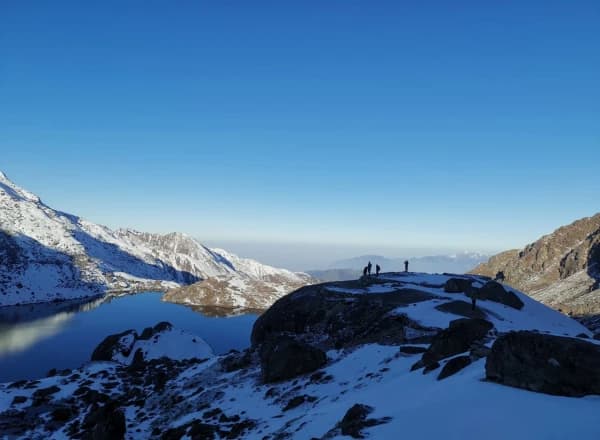
The Gosaikunda Short Trek is a high-altitude pilgrimage and trekking route in the Langtang region of central Nepal, approximately 112 km north of Kathmandu. It leads to Gosaikunda Lake, a sacred glacial lake at 4,380 metres (14,370 ft) nestled in the Langtang National Park. Unlike the Everest Base Camp or Annapurna Circuit, this trek keeps a quieter profile. That’s precisely what makes it special.
For Hindu devotees, Gosaikunda is one of Nepal’s holiest sites, believed to be the residence of Lord Shiva himself. During the Janai Purnima festival (usually in August), over 10,000 pilgrims converge on the lake, a spectacle that defies description.
For trekkers, the route offers sweeping Himalayan panoramas, dense rhododendron forests, rocky alpine terrain, and a genuine sense of remoteness that’s increasingly rare in Nepal’s popular corridors.
You can explore the full itinerary and book this experience at Gosaikunda Trek.
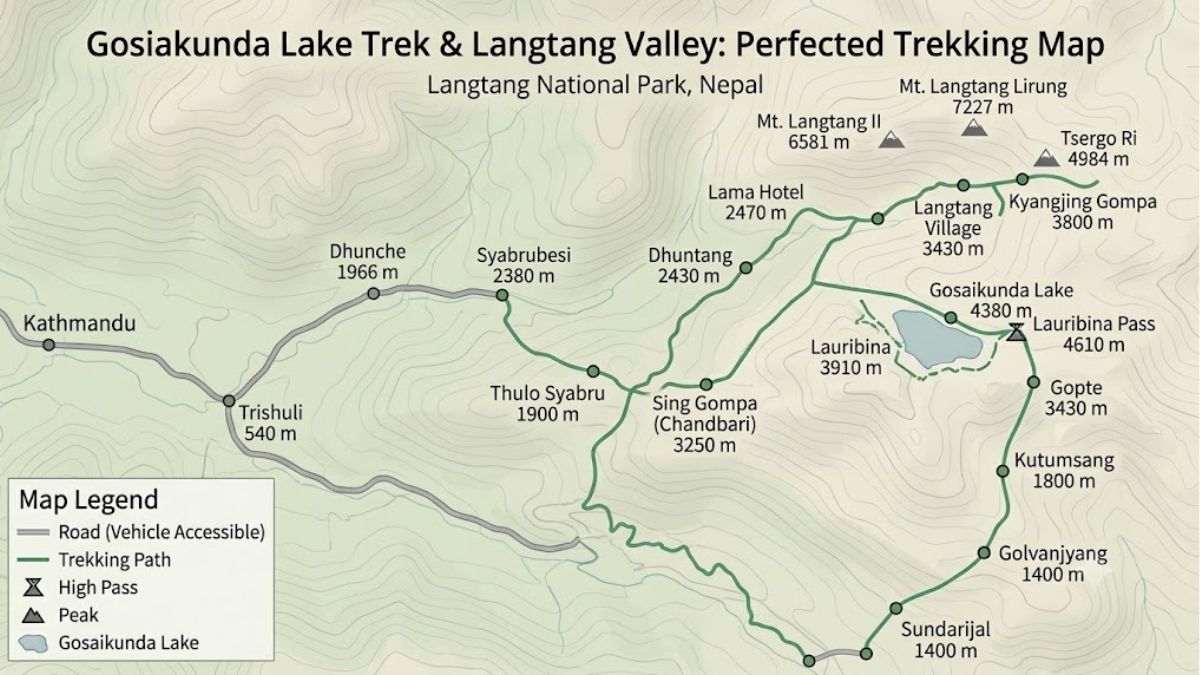
Where is the Gosaikunda Trek located
|
Stage
|
From → To
|
Elevation Change (m)
|
Route Description / Key Landmarks
|
|
1
|
Kathmandu → Dhunche
|
1,400 → 1,966
|
Travel by road via Trishuli (540 m) to the vehicle drop-off at Dhunche.
|
|
2
|
Dhunche → Sing Gompa (Chandbari)
|
1,966 → 3,250
|
Start an official trek, ascending from Dhunche along established trails toward Sing Gompa.
|
|
3
|
Sing Gompa → Lauribina
|
3,250 → 3,910
|
Continue climbing on the trekking path to the scenic viewpoint area of Lauribina.
|
|
4
|
Lauribina → Gosaikunda Lake
|
3,910 → 4,380
|
Final ascent to reach the sacred Gosaikunda Lake.
|
|
5
|
Gosaikunda Lake → Gopte
|
4,380 → 3,430
|
Cross high point at Lauribina Pass (4,610 m) then descend to Gopte.
|
|
6
|
Gopte → Sundarijal
|
3,430 → 1,400
|
Descend through Kutumsang (1,800 m) and Golvanjyang (1,400 m) to finish at Sundarijal.
|
Gosaikunda Trek Cost
Gosaikunda Trek consists of three types of trek. They are: Budget trek, Standard trek, and Luxury trek. Each trek consists of different types of styles. Gosaikunda Trek is one of the most popular treks. In the table below, you can check out the Gosaikunda Lake trek link, we have broken down each type of trek cost. As per your plan and your budget you can pick one type of trek and know in-depth about the Gosaikunda trek from our expert.
|
Trek Type
|
Estimated Cost
|
Best For
|
|
Budget Trek
|
$300–400
|
Backpackers and solo travelers
|
|
Standard Trek
|
$450–650
|
Most international trekkers
|
|
Luxury Trek
|
$800–1,200+
|
Families, friends groups and premium travelers
|
Read the details about the Gosaikunda Trek Cost
Gosaikunda Trek Itinerary: Day-by-Day
Day 1: Kathmandu to Dhunche
Instead of trekking your journey starts with a picturesque but rocky drive that winds out of the Kathmandu Valley and travels parallel to the Trishuli River to the entrance to Langtang National Park.
Day 2: Dhunche to Chandanbari (Sing Gompa)
The trail is notoriously steep on your first day. You will encounter an unrelenting, vertical ascent through thick forests of pine, oak, and rhododendron after crossing the Ghatte Khola River. Watch out for Red Pandas
Day 3: Chandanbari to Lauribina
To allow your body to properly acclimatize to the thinning air, today is a purposefully short trekking day. You will emerge from the tree line and hike along an exposed, barren ridge that offers your first jaw-dropping panoramas of the Ganesh Himal and Langtang Lirung peaks.
Day 4: Lauribina to Gosaikunda
This is the climax of the trek. You will traverse a rugged, cliffside trail known locally as the "killer ridge." As you navigate the rocky, alpine terrain, you will pass the first two sacred lakes (Saraswati Kunda and Bhairab Kunda) before arriving at the majestic, icy shores of Gosaikunda Lake.
Day 5: Return (Gosaikunda to Dhunche)
What took you three days to climb, you will descend in a single, grueling day. You will retrace your exact steps back down the ridge, through the forests of Chandanbari, all the way to the trailhead at Dhunche.
Gosaikunda Lake Trek is one of the popular, moderate-to-challenging trekking routes in Nepal : Gosaikunda Lake Trek
Is the Gosaikunda Lake Trek Possible in 3 days
|
Aspect
|
Re-optimized content
|
|
Main answer
|
Yes, Gosaikunda can be completed in 3 days, but the trek is fast-paced and physically demanding.
|
|
Best for
|
Fit trekkers, experienced hikers, and people with limited time.
|
|
Not ideal for
|
Beginners, slow trekkers, or anyone who wants a relaxed itinerary with acclimatization.
|
|
Why it works
|
The route is short enough to finish in 3 days if you start early and keep a strong walking pace.
|
|
Main challenge
|
Rapid altitude gain and long trekking hours make it tiring.
|
|
Altitude concern
|
The trek goes up to Gosaikunda Lake at 4,380 m, so altitude discomfort is possible.
|
|
Time pressure
|
There is very little room for delay, rest, or extra exploration.
|
|
Experience level needed
|
Moderate to good fitness is recommended.
|
|
Overall verdict
|
Possible, but rushed. A 4-day plan is more comfortable, while 3 days is better for trekkers who want a challenge.
|
Pros and Cons of Doing It in 3 Days
|
Pros
|
Cons
|
|
Saves time and fits a short holiday.
|
Very tiring because the itinerary is compressed.
|
|
Reaches the main destination quickly.
|
Less time for acclimatization.
|
|
Good for adventure seekers.
|
Higher chance of altitude-related discomfort.
|
|
Useful for fit trekkers with limited leave.
|
Limited time for photography, rest, and side viewpoints.
|
|
Can be a rewarding challenge.
|
Any transport delay or weather issue can affect the plan.
|
Who should choose the Gosaikunda Short Trek?
The Gosaikunda Short Trek (typically lasting 5 to 7 days) is a condensed, fast-paced version of the classic trek. Because it squeezes steep ascents into fewer days, it isn't the perfect fit for everyone.
Who Should Choose the Short Trek
|
Suitable For
|
Why It Fits
|
|
Fit trekkers
|
The short trek is fast-paced and needs good stamina.
|
|
Experienced hikers
|
They can handle longer walking hours and higher altitude more confidently.
|
|
Travelers with limited time
|
It fits well when the schedule is tight.
|
|
Adventure seekers
|
It gives a challenging, high-energy trekking experience.
|
|
Budget-conscious trekkers
|
Fewer trekking days can reduce overall trip cost.
|
|
People who want a quick Himalayan experience
|
They can reach the main destination without a long itinerary.
|
Who Should Avoid It?
|
Not Ideal For
|
Reason
|
|
First-time trekkers
|
The pace may feel too rushed.
|
|
Slow walkers
|
There is little time to rest or recover.
|
|
People sensitive to altitude
|
Rapid ascent can increase discomfort.
|
|
Travelers who want a relaxed trip
|
The short trek leaves less time for scenery and side stops.
|
|
Those seeking full acclimatization
|
Short itineraries do not allow much adjustment time.
|
Gosaikunda Trek: Best Time to Visit
The best time for the Gosaikunda trek is spring (March–May) and autumn (September–November).These windows give you stable weather, clear mountain views, and passable trails. Here’s what each season actually looks like on the ground:
Seasonal Comparison Table
|
Season
|
Months
|
Trail Conditions
|
Views
|
Crowds
|
Verdict
|
|
Spring
|
Mar–May
|
Good, wildflowers bloom
|
Excellent
|
Moderate
|
Best overall
|
|
Autumn
|
Sep–Nov
|
Best stability
|
Crystal clear
|
High
|
Most popular
|
|
Winter
|
Dec–Feb
|
Snow on high passes
|
Stunning but risky
|
Very low
|
Experienced only
|
|
Monsoon
|
Jun–Aug
|
Slippery, leeches
|
Often cloudy
|
Low (+ pilgrims in Aug)
|
Janai Purnima exception
|
One note on the monsoon season: the Janai Purnima pilgrimage (August full moon) draws tens of thousands of devotees to Gosaikunda. If you want to witness one of Asia’s most atmospheric religious gatherings, this is worth the wet trails.
Frequently Asked Questions
1. How many days are needed for the Gosaikunda Short Trek?
The Gosaikunda Short Trek can be completed in 3 to 5 days, depending on your fitness level and itinerary. While experienced trekkers can finish it in 3 days, a 4 or 5-day itinerary is recommended for a more comfortable pace and better acclimatization.
2. Is the Gosaikunda Short Trek difficult?
The trek is considered moderate to challenging due to its steep trails and high altitude. Trekkers need to walk between 5 and 8 hours daily, and the highest point reaches 4,380 meters at Gosaikunda Lake. A reasonable level of fitness is recommended.
3. Can beginners do the Gosaikunda Short Trek?
Yes, beginners can complete the trek if they are physically fit and choose a 4 or 5-day itinerary. Taking additional time helps with acclimatization and reduces the risk of altitude-related discomfort.
4. What is the highest altitude of the Gosaikunda Short Trek?
The highest point of the trek is Gosaikunda Lake at 4,380 meters (14,370 feet) above sea level. Some extended trekking routes also cross Lauribina Pass, which reaches approximately 4,610 meters.
5. What is the best time to do the Gosaikunda Short Trek?
The best seasons are spring (March to May) and autumn (September to November). These months offer stable weather, clear Himalayan views, pleasant temperatures, and ideal trekking conditions.
6. How much does the Gosaikunda Short Trek cost?
The cost depends on the trekking style. Budget treks usually cost USD 300–400, standard packages range between USD 450–650, while luxury packages can cost USD 800–1,200 or more, depending on the services included.
7. Is it possible to complete the Gosaikunda Trek in 3 days?
Yes. A 3-day Gosaikunda Trek is possible for experienced and physically fit trekkers. However, it involves long trekking hours, rapid altitude gain, and limited time for acclimatization, making it more demanding than a longer itinerary.
8. Where does the Gosaikunda Short Trek start?
Most trekkers begin the journey from Dhunche, which is around a 6 to 8-hour drive from Kathmandu. From Dhunche, the trekking route passes through Chandanbari (Sing Gompa) and Lauribina before reaching Gosaikunda Lake.
9. Is altitude sickness a concern on the Gosaikunda Short Trek?
Yes. Since the trek reaches 4,380 meters, some trekkers may experience symptoms of altitude sickness. Walking at a steady pace, staying hydrated, and allowing enough time for acclimatization can help reduce the risk.
10. Why is Gosaikunda Lake famous?
Gosaikunda Lake is famous for both its religious significance and natural beauty. It is considered one of Nepal's holiest lakes by Hindus and is believed to have been created by Lord Shiva. The lake also attracts trekkers with its stunning alpine scenery and panoramic Himalayan mountain views.
Content Reviewed By
Beyond The Limits Treks & Expedition Pvt. Ltd.
A licensed trekking company in Nepal specializing in trekking and adventure travel across the Langtang, Everest, Annapurna, and Manaslu regions. The company's professional team regularly reviews trekking information, route conditions, permit requirements, and travel logistics to ensure content accuracy and reliability.
Legal document: Beyond the limits treks